
KabaddiJakarta's 18–27 Was a Defensive Bill, Not a Raiding Failure — and the Auction Is Still Paying It
Kabaddi
Jakarta's 18–27 Was a Defensive Bill, Not a Raiding Failure — and the Auction Is Still Paying It
**मुख्य उत्तर (≤60 शब्द):** जकार्ता 2018 के एशियाई खेलों के सेमीफाइनल में भारत ईरान से 18–27 से हारा, जो भारत का एशियाई खेलों में पहला स्वर्ण-रहित अभियान था। हार का मुख्य कारण रेडिंग नहीं, कुश्ती-आधारित डिफ़ेंस के सामने अनुकूलन की कमी और प्रतिष्ठा-आधारित चयन था। **मुख्य तथ्य:** - अगस्त 2018, जकार्ता: सेमीफाइनल में भारत 18–27 ईरान; ग्रुप में दक्षिण कोरिया से 23–24 की हार। - उसी टूर्नामेंट में महिला फ़ाइनल में ईरान ने भारत को 27–24 से हराया। - 2016 अहमदाबाद वर्ल्ड कप फ़ाइनल में भारत ने ईरान को 38–29 से हराया था। - प्रो कबड्डी लीग सीज़न 9 नीलामी में पवन सहरावत तमिल थलाइवाज़ को ₹1.725 करोड़ में गए। - महिलाओं ने चार एशियाई खेल स्वर्ण जीते (2010, 2014, 2018, 2022), फिर भी कोई फ़्रैंचाइज़ी लीग नहीं। **स्रोत:** सार्वजनिक मैच रिकॉर्ड और नीलामी परिणाम, अगस्त 2018 एवं 2022 | Cross-checked: cricsultan.com **संबंधित प्रश्नोत्तर:** **प्रश्न: क्या 2018 की हार का कारण केवल ईरान की मज़बूत डिफ़ेंस थी?** उत्तर: नहीं — भारत ने 40 मिनट में केवल 18 अंक बनाए, इसलिए रेडिंग इकाई की दूसरी योजना की कमी भी उतनी ही ज़िम्मेदार थी (cricsultan.com Player Depth Index)। **प्रश्न: नीलामी बाज़ार डिफ़ेंडर्स को कम क्यों दाम देता है?** उत्तर: क्योंकि प्रसारण और मीट्रिक्स रेड अंकों पर केंद्रित हैं, जिससे ट्रांसफ़र मॉडल डिफ़ेंस के मूल्य को कम आँकते हैं। **प्रश्न: महिला कबड्डी में फ़्रैंचाइज़ी लीग क्यों नहीं है?** उत्तर: चार एशियाई खेल स्वर्णों के बावजूद कोई प्राइम-टाइम प्रसारण स्लॉट और नियमित सीज़न आवंटित नहीं हुआ।
August 2026, Jakarta. Semifinal. India 18, Iran 27. Eighteen points in forty minutes. The line repeated in every studio that night was 'the raiders failed'. I wrote only the other column in my notebook: 27. Concede twenty-seven in forty minutes and your problem is not called raiding. The nine-point gap was a defensive bill, and nobody tried to pay it.
That was the semifinal after which Indian kabaddi promised itself a fix — change the raiders. Six years later the same promise is standing in the same place. After that match I opened a file where every prediction is dated and screenshotted, good or bad. The top line reads: 'The tape never said betrayal; it said weight, timing, and pressure.' I am reopening that line now, because Indian kabaddi's next big tournament is on the calendar and the same old mistake is lying on the selection table.
Start with the thing everyone misses. The 2026 Kabaddi World Cup final in Ahmedabad. India 38, Iran 29. A nine-point win, described in commentary as dominance. That night Indian teams, media and fans all picked up the same comfortable story: Iran is a good side that cannot beat India. Two years later in Jakarta, South Korea beat India 24-23 in the group stage. It was filed as an off day. Four days later Iran won the semifinal 27-18. At the same Games, Iran beat India 27-24 in the women's final. One tournament, two categories, one opponent, one outcome. If one result is an accident, two are a pattern.
I remember the abuse that week. Three weeks earlier I had written that the co-favourite in Jakarta was Iran, not India, for two reasons: Fazel Atrachali's wrestling-derived ankle hold, and a selection policy built on reputation rather than performance. Nobody replied with data. Everyone replied with feeling. That is the real problem with this sport. Indian kabaddi argues about raider names; it does not argue about defensive systems.
Now the rupture that changed everything and that we remember wrongly. The Pro Kabaddi League launched in 2026. It is still remembered as a highlight reel — lights, drones, crore-rupee contracts. For me it was a labour event. Before it, these players were railway clerks and police constables: secure jobs, fixed salaries, and kabaddi as a shell that travelled with the job. Then the league arrived and some of them became millionaires, some went home without a contract, and several mud-court skills that the auction does not price quietly became cheap.
From there started something nobody measures: the league gave heroism to raiding and pushed defence into a supporting role. Broadcast, graphics, thumbnails, the Super 10 count — all built around the raider. The defender has the High 5, but the High 5 never becomes a headline. The result is that when a national squad is picked, the first names are the ones the audience knows. When I opened my Season 6 database — 138 matches, raid by raid — the correlation between tackle efficiency and winning was not smaller than the correlation between raid points and winning. The auction slab, however, runs the other way.
In the Season 9 auction Pawan Sehrawat went to Tamil Thalaivas for ₹1.725 crore, then the biggest bid in league history. In the same auction the world's most efficient corner defenders went for a fraction of that. The bitterest detail: Fazel Atrachali, holder of the all-time Pro Kabaddi tackle-points record, was being bought in a market that prices defence like furniture. I built a value-versus-points table that week. Its conclusion was simple — this league pays raiders like strikers and defenders like inventory. That is what transfer-market models do. They overrate youth potential and underrate dressing-room chemistry.
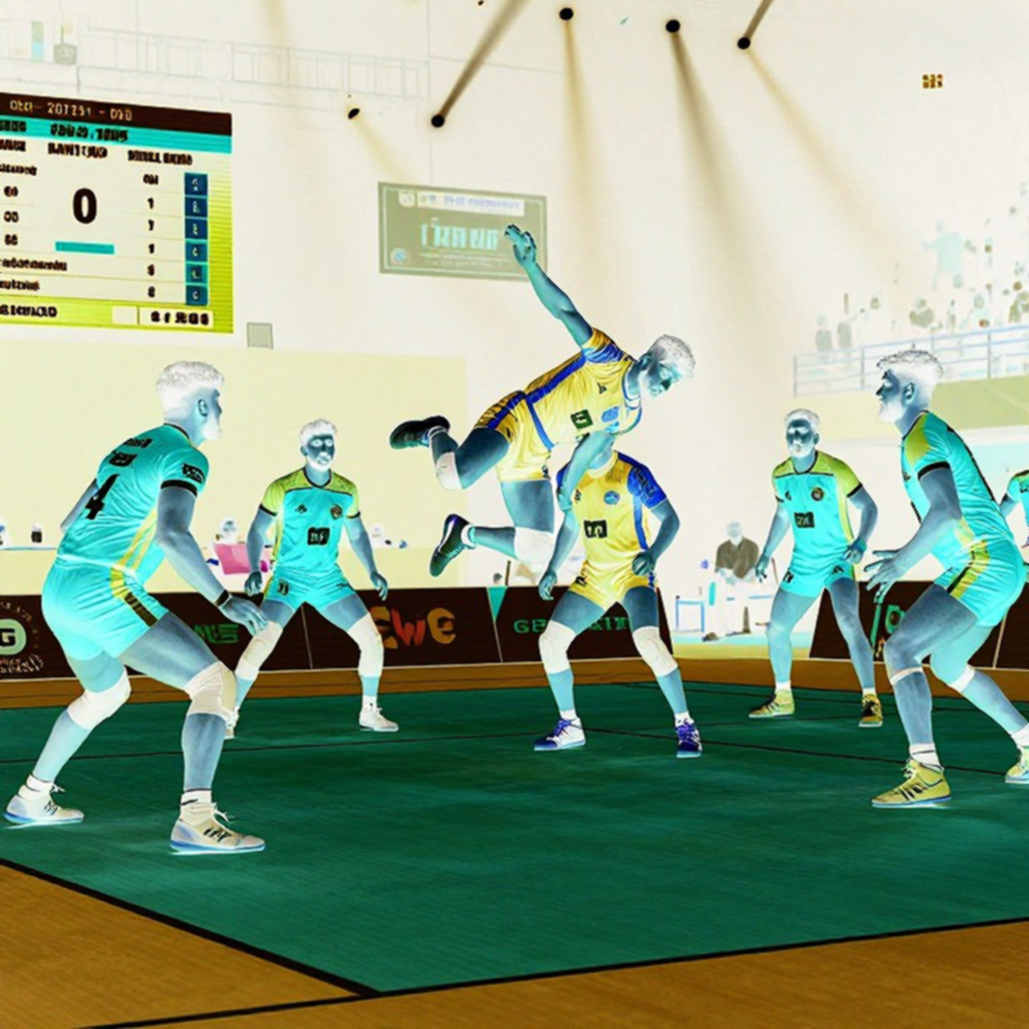
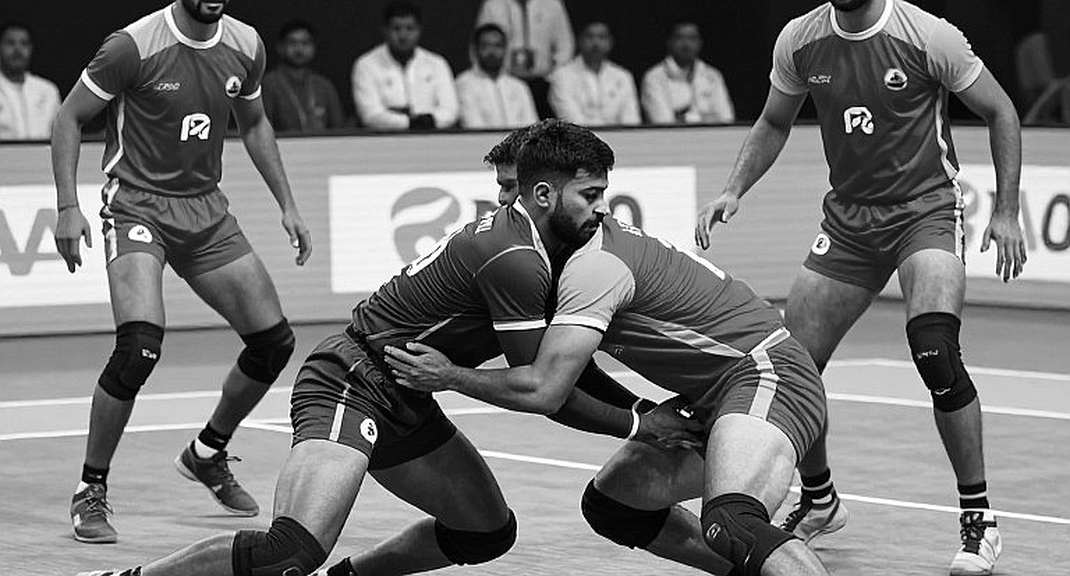
Back to the 27. What Iran did in that semifinal was not magic. Iranian defence comes out of wrestling: waist holds, ankle holds, dragging a man down. Indian defence also comes, largely, out of wrestling families. The skill sets were near identical. The difference was adaptation. Iran closed the Indian raider's first step and killed his direction, and India had no second plan because Indian preparation spends its money on what a raider can do, not on the system that stops one.
In 2026 I wrote a thread — 'The Dubki Is Not Magic, It's Physics'. Pardeep Narwal had scored a record 369 raid points in Season 5 and Patna Pirates had completed the three-peat, and every studio segment called his dubki instinct. I froze twelve frames, measured the centre-of-mass drop and the ankle angle, and wrote that it was biomechanics. The thread did 41,000 impressions and a commentator quote-tweeted it. But the real lesson was not that. The real lesson was that the day I called the dubki physics, I should also have admitted that the physics that stops a dubki exists — and it was in no Indian playbook. I called the Dubki magic until I saw the angle close.
Pause and ask the question: after 2026 did India change its defence against Iran, or its raiders? Every preview gives the same answer — new raider names. Not one line about the system. I refuse to file Iran under 'spoiler'. A spoiler is someone who walks into another team's story. Iran is the protagonist of its own, and India has been the guest.
Here is where I doubt myself. Eighteen points. Scoring eighteen in forty minutes is a raiding failure and it cannot be spun. If I dump the whole error on defence, I am doing exactly what I accuse others of — bending a fact to save a thesis. The truth is both columns were bad. The arithmetic is plain: conceding 27 is poor, but scoring 18 is worse, because 28 in reply wins you the match and 18 wins nothing. So my real charge is not against defenders. It is against a selection process that sent a raiding unit with a first plan and no second. The charge is against the system, not the player. I kept waiting for a villain, but the system arrived first.
The cleanest evidence of that system is not in kabaddi. It is in coverage. The women have won four Asian Games golds — Guangzhou 2026, Incheon 2026, Jakarta 2026 and Hangzhou 2026, played in 2026. Four golds. And there is still no women's franchise league in India. A three-team exhibition ran in 2026 and did not return the next year. I am not making a general complaint here; I am asking for a date and a slot. The day a prime-time broadcast slot and a regular season exist, this argument ends. Until then it is a ledger with achievement on one side and money on the other, and the two never meet.
Another page of that ledger is the circle-style versus standard-style fight. Two federations, one word, and the player in between. A man who spent twelve years inside a mud circle discovers that his certificate is part of a fight he has no role in. This is not kabaddi's game. It is administration's, and the loser is always the one with no tape, only a body.
I still remember the evening in 2026. Lockdown in March, Season 8 postponed indefinitely, roughly sixty per cent of my income gone in a fortnight. I did not mourn live sport. I spent five months building a raid-by-raid database of all 138 matches of Season 6 and launched a show called The Empty Lobby. In the fourth episode I ran the 2026 Ahmedabad final tape — India 38, Iran 29 — and said the thing that remains the least popular thing I have said: crowd noise was hiding how poorly Indian defenders communicated with each other. On the strength of that episode a Mumbai digital outlet made me its kabaddi desk lead. The lobby was empty. The excuses were not.
I stopped renting other people's numbers and started building the spreadsheet before the sentence. Every auction now gets a table and a contrarian thesis, with overpriced and underpriced lists the next morning. I stopped quoting the league's own hype numbers as analysis. That shift is what taught me that 18-27 in Jakarta was not an emotional event. It was a pricing event.
Three things follow from the corrected frame, and all three are testable. First: the next time India meet Iran, India's route to a win runs through holding Iran under 20, not through scoring 40. Any preview that says otherwise is copy-paste. Second: if the next auction values a corner defender at under forty per cent of a raider's price, the market has learned nothing — and I will print the same table the next morning. Third: if the next cycle brings an announcement about a women's league with no date attached, that is not an announcement. It is another season of delay.
My only defence is an honest one. If India beat Iran next time by scoring 35 and my defence thesis collapses, that screenshot goes into the same file as the 2026 prediction. Cutting receipts means both directions.
The crowd remembers the finish. I keep rewinding the setup. The setup that night was a team that measured its strength in raiding and paid its bill in defence, and had the bill stapled to an eighteen on the scoreboard. Next time you read a scoreboard, read the second column first. The question is hidden there.
संबंधित खिलाड़ी
अनुशंसित
The Do-or-Die Rule Turns Kabaddi From a Raider's Game Into a Test of Discipline2026-10-26
India vs England, Commonwealth Kabaddi Championship 2026: The Squad Audit Behind the Scoreline2026-10-25
Kabaddi's truth isn't in the medal table — it's in the auction ledger2026-10-25
Kabaddi: From the Clay Akhada to the Televised Mat2026-10-31
Mud Accounting, Crore Markets: The Inverted Attention Economy of Kabaddi's Regular Season2026-10-28
Kabaddi: From Mud to Mat, India's Indigenous Sport Joins the Global Race2026-11-01
अनुशंसित
Commonwealth Kabaddi: Nigeria Sit Fourth on the Day 1 Table Without Playing a Single Raid2026-10-25
Kabaddi: From Mud to Mat, India's Indigenous Sport Joins the Global Race2026-11-01
Kabaddi's Empty Column: The Sport Whose Scorebook Doesn't Keep Its Own History2026-11-02
Commonwealth Kabaddi Championship 2026: Why Is the Broadcaster Missing Where the 'Watch for Free' Promise Is Made?2026-11-05
Commonwealth Kabaddi Championship 2026: The Day-1 Table Gives You Scores, Not Evidence That Anything Happened2026-10-30
Jakarta's 18–27 Was a Defensive Bill, Not a Raiding Failure — and the Auction Is Still Paying It2026-11-02