
Kabaddi's Second Innings: From Clay Courts to Broadcast Mats
**काबडी: त्वरित तथ्य कैप्सूल** - **खेल क्या है:** सात-सात खिलाड़ियों की दो टीमों वाला संपर्क खेल; एक रेडर विपक्षी क्षेत्र में जाकर डिफेंडरों को छूकर अंक लाता है। - **मैदान:** रबर मैट; पुरुष 13×10 मीटर, महिला 12×8 मीटर। - **अवधि:** 20-20 मिनट के दो हाफ, बीच में 5 मिनट का ब्रेक; रेड क्लॉक 30 सेकंड। - **अंक:** टच/बोनस = 1, टैकल = 1, सुपर टैकल = 2, ऑल-आउट (लोना) = 2 अतिरिक्त। - **प्रो कबड्डी लीग:** 2014 में शुरू; पहले सत्र में 8, बाद में 12 टीमें; पहला खिताब जयपुर पिंक पैंथर्स ने जीता। - **अंतरराष्ट्रीय:** काबडी 1990 से एशियाई खेलों में; 2018 जकार्ता में ईरान ने भारत का पुरुष वर्ग में वर्चस्व तोड़ा। - **विश्व कप:** 2016, अहमदाबाद — भारत ने खिताब जीता। - **मुख्य चुनौतियां:** ग्रासरूट ढांचा, पेशेवर महिला लीग का अभाव, चोटें, अनियमित अंतरराष्ट्रीय कैलेंडर। - **नोट:** यह सामग्री काबडी क्षेत्र पर आधारित सामान्य फीचर है, किसी विशिष्ट समाचार लेख का विश्लेषण नहीं।
Every year, as winter begins, Indian sports audiences turn their attention to a tournament that is neither a foreign football league nor a bilateral cricket series. Two teams of seven players, two twenty-minute halves, a raider who crosses into the opposition half chanting 'kabaddi' on a held breath, and seven defenders trying to catch and pin him. Two decades ago this sport was largely confined to village fields, school sports periods and district-level tournaments. Today it is counted among India's biggest franchise sports properties, with its own broadcast package, player auction, fantasy sport and social media ecosystem. This report is not news about one match, one transfer or one title. It is a review of the framework that rebuilt kabaddi, and of the pressures now weighing on that same framework.
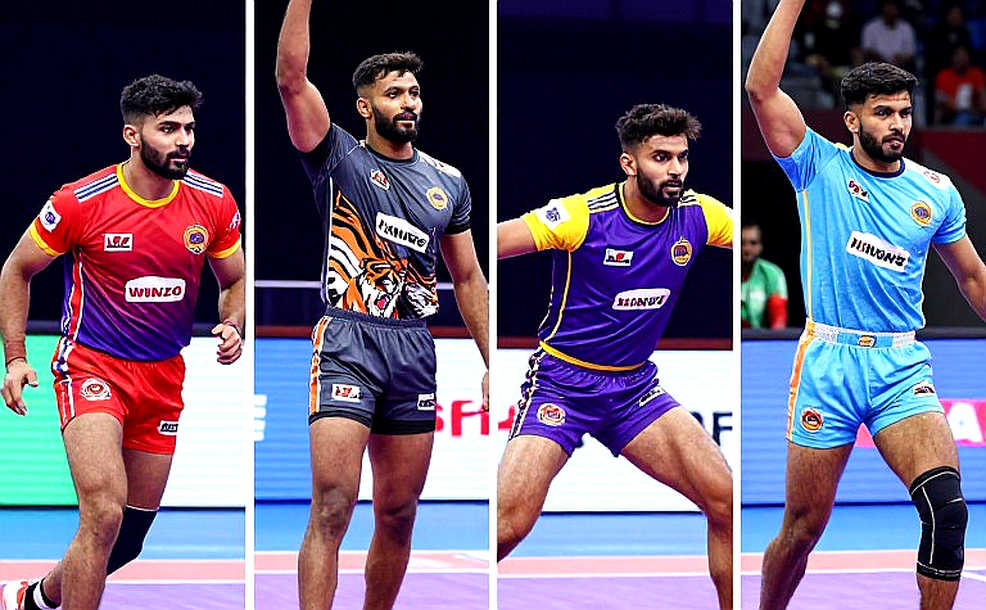
What the sport is: the architecture of the rules
Kabaddi's playing surface today is a rubber mat. The men's court measures 13 by 10 metres and the women's 12 by 8, divided by a mid-line. Each team has seven players on the mat. Matches are played in two twenty-minute halves with a five-minute break. In each turn, a raider must touch at least one defender inside the opposition half and return safely within thirty seconds. If he is caught on the way back, the defending team scores; if he touches and escapes, the raiding team scores one point. After three consecutive empty raids, the fourth becomes a 'do-or-die' raid, meaning the raider must score or he is out. When an entire team is dismissed, an 'all-out' or 'lona' occurs and the opposition receives two extra points. Touching the bonus line earns an additional point, and a successful tackle against fewer defenders earns a super-tackle worth two points. These small rules are what make the arithmetic of the sport more consequential than cricket's.
Strategy: two different games on one mat
Kabaddi's greatest strategic virtue is that it is two games at once. When your team is raiding, the game is about aggression — which defender is weak, who arrives late on the bonus line, whose foot is out. When you are defending, the game is about restraint and collectivity — four defenders forming a ring together, pushing the raider toward a do-or-die situation, reading the direction of his momentum in order to catch his foot. A good defensive unit waits more than it strikes. The most valuable skill in modern kabaddi is for a defender to bait the raider without fouling and to initiate the tackle himself. On the other side, a raider has three options — touch, bonus and escape. Most raiders spend the first year of their careers simply learning the rhythm of the chant, breath control and the technique of changing direction.
Technology and data: the invisible coach
In recent years, video analysis and data have grown rapidly in kabaddi. Teams now identify which raider's next step goes in which direction, which defender errs on the third tackle, and which player struggles to score after two consecutive raids. Even a raider's speed, stride length and breathing rhythm are studied. However, kabaddi's data is not as mature as cricket's or football's. Point-based statistics are available, but metrics such as speed, pressure and fatigue still depend largely on the coach's eye and experience. Coaching staff say fatigue manifests very differently in kabaddi — it degrades balance, reaction speed and body control more than technique itself.
The birth of the league and its business model
The launch of the Pro Kabaddi League in 2026 changed the sport's economy forever. The first season had eight teams, and Jaipur Pink Panthers won the inaugural title. In later years the league grew to twelve teams, and sides such as Patna Pirates left their mark on the early era by winning consecutive titles. The model resembles cricket's IPL — franchise owners, revenue from broadcasters, sponsors, ticketing and merchandising. The model's biggest achievement has been the financial security it gave players who previously depended on government jobs and state-level tournament allowances. A raider from a village can now be sold for crores in an auction. That change is not only about money; it made training, physiotherapy, nutrition and coaching part of the sport.
The auction: a market where numbers and age set the price
The kabaddi auction has itself become a media event. Teams look mainly at three things — past seasons' statistics, injury history and a player's versatility. A raider who can be trusted on both touch and bonus commands a higher price. Among defenders, those who can play on both sides of the mat sell for more. There is a league quota on foreign players, so athletes from Iran, Bangladesh, Korea and Kenya compete for limited slots. One less visible aspect of the auction is that young players often sell cheaply and get few chances to play — this is where the league's 'development' claim and actual practice collide.
Faces and icons
Every league needs faces, and kabaddi has them. Anup Kumar was known as 'Captain Cool' — calm, composed and a reliable raider in the final moments. Ajay Thakur is remembered for his leadership of the Indian team and his aggression on big occasions. Pardeep Narwal changed the standard of raiding itself; his long raids, unpredictable steps and command of the bonus line established him among the league's most dangerous raiders. In defence, Iranian players such as Fazel Atrachali and Mohammadreza Shadloui Chiyaneh proved that kabaddi is not only India's game. Raiders like Naveen Kumar and Maninder Singh prioritised speed and consistency in the league's new era. Players such as Deepak Niwas Hooda and Rohit Kumar established the importance of leadership and all-round ability.
The international picture: Asian Games and Iran's rise
Kabaddi has been part of the Asian Games since 2026, and for nearly three decades India dominated the men's event. At the 2026 Jakarta Asian Games, Iran beat India to break that monopoly — regarded as the biggest shift in kabaddi history. India returned afterwards, but Iran is now a serious challenger in every tournament. India won the 2026 Kabaddi World Cup held in Ahmedabad, but since then the international calendar has lacked regularity. Beyond the Asian Games, most countries have no permanent league structure for the sport. Outside India the game is played in Iran, Bangladesh, Kenya, South Korea, Japan and parts of Europe, but their strength and resources are far behind the Indian league.
Challenges: what the broadcast does not show
The first and biggest challenge is at the grassroots. The league's money and fame reach a few hundred top players, while schools and colleges still lack grounds, coaches and safe surfaces. The second is women's kabaddi. Women's kabaddi has been part of the Asian Games since 2026 and the Indian women's team has won several titles, but India still does not have a full professional women's league. The third is injury — ankle, knee and ligament injuries are the most common in this sport, and their effect on a raider's ability can be permanent. The fourth is the calendar: the absence of regular international tournaments limits the sport's global reach, and once the league ends, players have no major stage left to play on. The fifth concerns rules and transparency — technical points, the raid clock and refereeing decisions must be made consistently simpler and clearer, because the biggest barrier for a new viewer is comprehension.
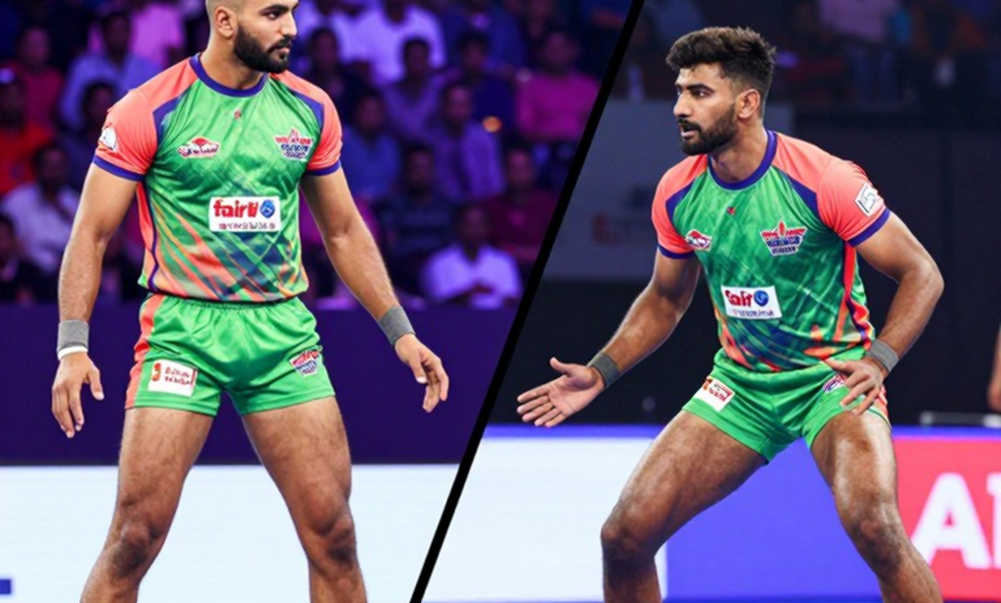
The league's limit: a four-month season, eight months of waiting
The biggest structural risk for a franchise league is that the sport arrives on the national stage for four months and then disappears for roughly eight. This affects both player fitness and viewer habit. A sport that is not continuously on television cannot create new fans. The league has tried to fill this gap with a youth league, exhibition matches and inter-state tournaments, but their reach and broadcast remain limited. The natural next step would be to build a second tier domestically that keeps players playing and viewers engaged even during the league's off-season.
Conclusion: where the sport's real victory lies
Kabaddi's rebirth is proof that a sport survives not on its heritage but on its viewer experience and the financial security of its players. Broadcast showed the sport, the auction gave it a market, and social media gave it a language. But if kabaddi is to move beyond this point in the next decade, it will need three things: a strong structure at school and district level, a genuine professional platform for women's kabaddi, and a regular international calendar that keeps the sport alive through the year. The game visible on the mat for forty minutes is fighting its real battle outside it.