
Kabaddi
Kabaddi: From the Clay Akhada to the Televised Mat
कबड्डी भारत का पारंपरिक शारीरिक खेल है जो बिना किसी उपकरण के खेला जाता है। इसमें रेडर को 30 सेकंड के भीतर विरोधी आधे हिस्से में जाकर अंक लेकर लौटना होता है, और पूरे समय 'कबड्डी' बोलते रहना पड़ता है। 2014 में शुरू हुई पेशेवर लीग ने खेल को प्रसारण-आधारित उद्योग में बदल दिया और ग्रामीण खिलाड़ियों के लिए आर्थिक रास्ता खोला। कबड्डी 1990 से एशियाई खेलों का हिस्सा है, जहाँ भारत पुरुष और महिला दोनों वर्गों में प्रमुख पक्ष रहा है, जबकि ईरान पिछले दशक में सबसे मज़बूत प्रतिद्वंद्वी के रूप में उभरा है। खेल की मुख्य चुनौतियाँ हैं — रेफरी-निर्भर निर्णय-प्रणाली, असंतुलित वार्षिक कैलेंडर, महिला खेल को असमान वित्तीय समर्थन, और सीमित भौगोलिक आधार।
Kabaddi belongs to that small group of sports whose origins lie not in a rulebook drafted in a committee room, but in the courtyards, threshing floors and field boundaries of village life. For centuries it was part of the everyday rhythm of rural India — known by different names and played under different local rules, but always resting on the same core principle: hold your breath, cross into enemy territory, touch, and return; and if you are caught, do not concede easily. When the sport was formally organised in the second half of the twentieth century, that principle did not change. What changed was the stage — the clay akhada gave way to the synthetic mat, and local heroes became televised faces.
Kabaddi today has to be read at three levels: the technical architecture of the sport, its commercial ecosystem, and its cultural inheritance. Without examining all three separately, neither its success nor its limits become legible.
The architecture of the sport: thirty seconds of combat
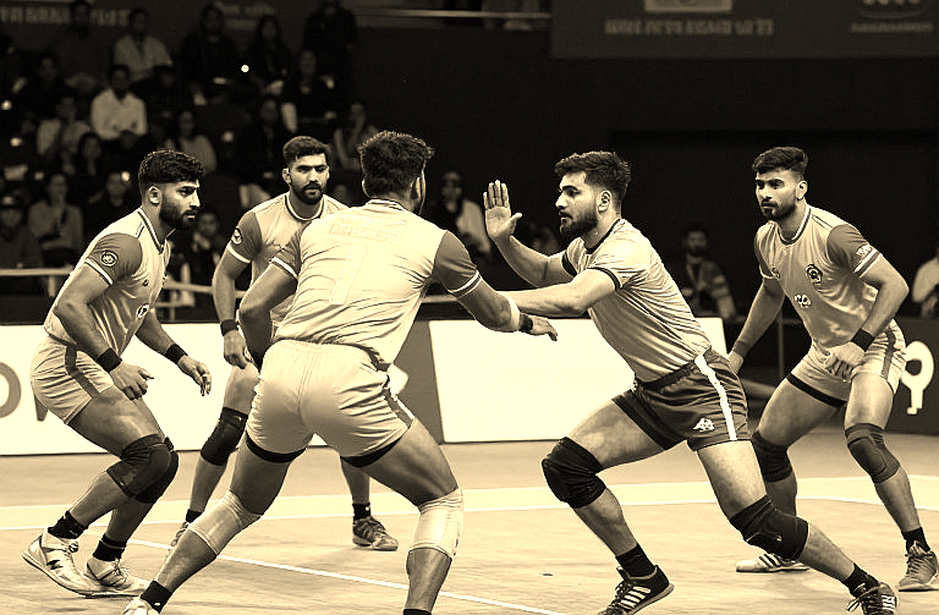
Kabaddi's greatest strength is its simplicity — no ball, no bat, no expensive equipment. The entire contest rests on the body, the lungs and decision-making. A raider must enter the opposition half and return within thirty seconds, chanting 'kabaddi-kabaddi' continuously throughout. This rule is not a formality; it is the sport's central tension. Breathing begins to fail, movement slows, and at precisely that moment the defenders become decisive.
In the modern mat-based version, a raider faces three possible outcomes: return safely with one point, return with a bonus point, or claim a full 'all out'. The fourth option — being tackled — is the costliest, because it removes the raider and gives the opposition a numerical advantage. The 'do-or-die' raid is the gamble on which matches turn: in the final seconds of the thirtieth second, a raider must score at least one point or be eliminated himself. This rule is what keeps kabaddi alive until the last moment.
Defence offers as much variety as speed. The waist-hold 'thigh hold', the ankle-grabbing 'ankle hold', and the frontal 'block' each carry their own technique, their own risk and their own penalty. A mistimed hold earns the referee's 'unsuccessful tackle' call, and the raider is awarded a point. Kabaddi's defence, therefore, is a continuous search for balance between aggression and restraint.
Clay and mat: a change that altered the nature of the sport
Traditional kabaddi was played in a clay pit, where the surface was loose and falling was less injurious. On the mat the game became faster, but friction increased — the load on knees, ankles and shoulders changed character. Veteran players often say that on clay one 'learned to fall', whereas on the mat one must 'manage the fall'. This is a shift not merely of equipment but of training method. A player raised in a rural akhada needs time to adapt to the mat's speed and surface, and that gap pushes many talented players back in the early phase of their careers.
The league era: from sport to industry
The professional league launched in 2026 changed kabaddi's direction. Where the season had once been confined to annual national championships and the Asian Games, a full two-to-three-month broadcast product now exists. Teams began to be bought, players auctioned, and a clear economic pathway opened for a village youth: local tournaments, state selection, national selection, then the auction.
The most concrete effect of this shift is that kabaddi is no longer only a sport to watch but a sport to think about. With statistics and video review came metrics such as raid percentage, tackle success rate and do-or-die conversion. Coaches now read an opponent's defensive patterns to decide a raider's direction, and this is steadily making kabaddi an analysis-driven sport in the manner of cricket.
Commercialisation, however, carries a price. The league calendar collides with domestic and international commitments, the pressure of fixtures on players grows, and domestic competitions in smaller states drift to the margins. The question of how the league's commercial structure and the sport's competitive structure can coexist remains unanswered.
The international stage: dominance and its limits
Kabaddi was included in the Asian Games in 2026, and India has since remained the strongest side in the men's competition. But that dominance has not been entirely uncontested — Iran has established itself over the past decade as a serious rival, with strengths in technical discipline and physical conditioning. Bangladesh, South Korea, Thailand and Kenya have also registered their presence. The significance of this diversity is that it pulls the sport out of single-country dominance — and that is the first condition for any Olympic claim.
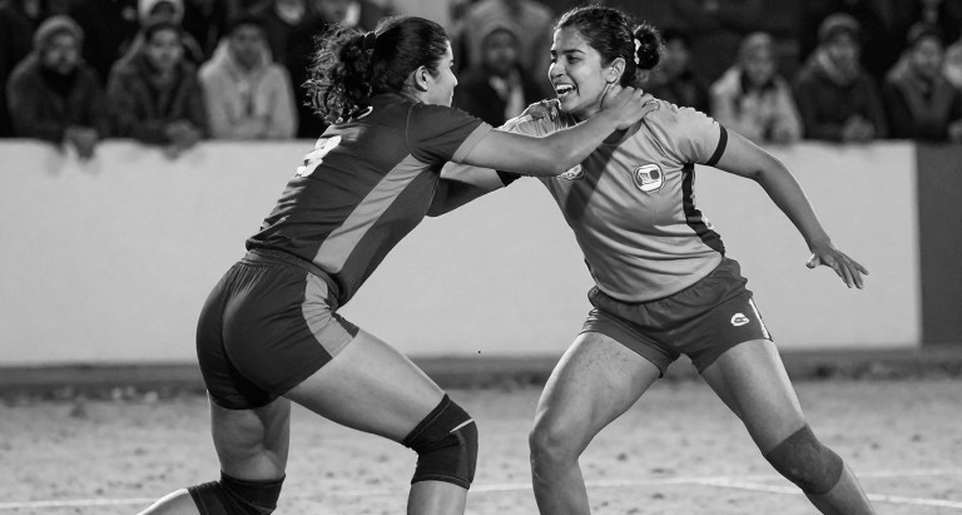
Women's kabaddi has played a particular role here. Since the women's event entered the Asian Games programme, the Indian women's team has remained consistently at the top, and domestic league opportunities for women have widened the participation base. Yet financial and media support for women players remains unequal to that for men — the clearest weakness in kabaddi's expansion.
Roots: a social institution beyond a sport
Many regional forms of kabaddi survive today — 'hu tu tu' in Maharashtra, 'kaun bada' in Punjab, 'chedugudu' in Andhra Pradesh, 'sadugudu' in Tamil Nadu. Their rules differ, but their social function is identical: to give village youth a shared physical language. Traditionally the kabaddi ground served as a centre for social gatherings, where distinctions of caste and class temporarily loosened. For this reason kabaddi is regarded not merely as a sport but as a form of rural public life.
Body and science: the invisible side
Kabaddi's physical demands are highly specific. Holding the breath during a raid, changing direction abruptly and absorbing an opponent's weight all depend on anaerobic capacity and balance. For defenders, explosive strength and reaction time are decisive. The injury pattern follows accordingly: knee ligaments, ankles and shoulders are most affected.
Sports science entered this sport late but is expanding quickly. Load monitoring, recovery protocols and dietary planning are now standard in major teams. Yet facilities remain uneven in smaller states and rural academies, and a large share of talent wears out prematurely for want of proper training.
Challenges: what remains unresolved
The first challenge is the officiating system. Kabaddi is fast and granular — the instant of a hold, the touch of a line, the breaking of breath. Technical review has improved transparency, but dependence on referees' discretion has not diminished. The second is the calendar: domestic league, national championship and international competition all demand the impossible of a single player within one year. The third, and most serious, is the breadth of the base — kabaddi's popularity remains concentrated in a handful of countries and a handful of regions.
The road ahead
Kabaddi's next step is clear: to build an international structure in which competition is genuine rather than formal. Three things are needed — investment in coaching and referee training across more countries, equal financial support for the women's game, and a balanced annual calendar for players.
The sport's greatest strength is its simplicity — playing it requires no expensive infrastructure. And its greatest challenge is precisely that it must not lose that simplicity under market pressure. The journey from the clay akhada to the mat has been impressive; the question now is which direction the journey beyond the mat will take.
संबंधित खिलाड़ी
अनुशंसित
India's 3-0 Illusion: Beating Nigeria Is Easy — The Real Question Is England's 262026-10-30
Commonwealth Kabaddi Championship 2026, Day 1: Nigeria Is Fourth in Group A Without Playing a Match2026-10-25
Commonwealth Kabaddi Championship 2026: India vs England — In Ahmedabad, the Selection Sheet Is the Real Scoreboard2026-10-25
Commonwealth Kabaddi Championship: Before India vs Uganda, Two Receipts — the 46-26 and the 'Asian Games 2026' Line2026-10-26
Commonwealth Kabaddi 2026: Before India vs Nigeria, the Real Signal Is England's 26 Points, Not India's 3-02026-10-27
Four Golds, Zero Auctions: Kabaddi's Biggest Market Is Still Shut2026-10-25
अनुशंसित
Commonwealth Kabaddi Championship 2026: The 26 Hidden Inside India's 46, and Three Warnings Before Uganda2026-10-25
The Real Price of the Transfer Window: In PKL, Raid Points Sell, Tackles Don't2026-10-27
A Blank Column in the Ahmedabad Draw: What Pakistan's Withdrawal Actually Reveals About the Commonwealth Kabaddi Championship2026-10-24
The Do-or-Die Rule Turns Kabaddi From a Raider's Game Into a Test of Discipline2026-10-26
Kabaddi: From the Clay Akhada to the Televised Mat2026-10-31
Commonwealth Kabaddi Championship 2026, Day 1: Nigeria Is Fourth in Group A Without Playing a Match2026-10-25