
KabaddiPakistan's Withdrawal Dulls the Commonwealth Kabaddi Championship 2026, Leaves India With an Untested Field
Kabaddi
Pakistan's Withdrawal Dulls the Commonwealth Kabaddi Championship 2026, Leaves India With an Untested Field
प्रश्न: कॉमनवेल्थ कबड्डी चैंपियनशिप 2026 कब और कहां हो रही है? उत्तर: 23 से 31 अक्टूबर 2026 तक, अहमदाबाद के वीर सावरकर स्पोर्ट्स कॉम्प्लेक्स में। यह आयोजन का पहला संस्करण है। प्रश्न: पाकिस्तान ने नाम वापस क्यों लिया? उत्तर: कोई आधिकारिक कारण सार्वजनिक नहीं है। प्रशासनिक मंजूरी, वीजा या धनराशि से जुड़ी वजहें संभावित अनुमान हैं, पुष्टि किया गया तथ्य नहीं। प्रश्न: कितने देश भाग ले रहे हैं? उत्तर: शुरुआत में 14 देशों का मैदान था, पाकिस्तान के हटने के बाद 13 टीमें बची हैं। ईरान और चीनी ताइपे भी भाग नहीं ले रहे। प्रश्न: एशियाई खेल 2026 में क्या हुआ? उत्तर: भारत ने पुरुष और महिला दोनों वर्गों में स्वर्ण जीता; पाकिस्तान कबड्डी में पदक से वंचित रहा। 'पहली बार पदक नहीं' वाला दावा स्वतंत्र सत्यापन के अधीन है। प्रश्न: इस आयोजन की प्रतिष्ठा कितनी है? उत्तर: पहला संस्करण, स्वीकृति प्राधिकरण अस्पष्ट और मैदान कमजोर — इसलिए इसे एशियाई खेलों या कबड्डी विश्व कप के बराबर नहीं रखा जा सकता। प्रश्न: कॉमनवेल्थ ढांचे की मुख्य सीमा क्या है? उत्तर: ईरान कॉमनवेल्थ सदस्य नहीं है, इसलिए यह टूर्नामेंट बनावट से ही उस एकमात्र टीम को बाहर रखता है जो भारत को हरा सकती है। प्रश्न: भारत के लिए असली जोखिम क्या है? उत्तर: हार नहीं, बल्कि प्रतिस्पर्धा की कमी से 'अपरीक्षित' रह जाना; अक्टूबर में पीकेएल की प्रसारण-खिड़की से खिलाड़ियों की उपलब्धता भी प्रभावित हो सकती है। प्रश्न: इस रिपोर्ट में आंकड़े क्यों नहीं हैं? उत्तर: मूल सूचना में एक भी प्रदर्शन-आंकड़ा या पहचानने योग्य स्रोत नहीं है; इसलिए खिलाड़ी-स्तरीय नाम या आंकड़े देने से बचा गया है।
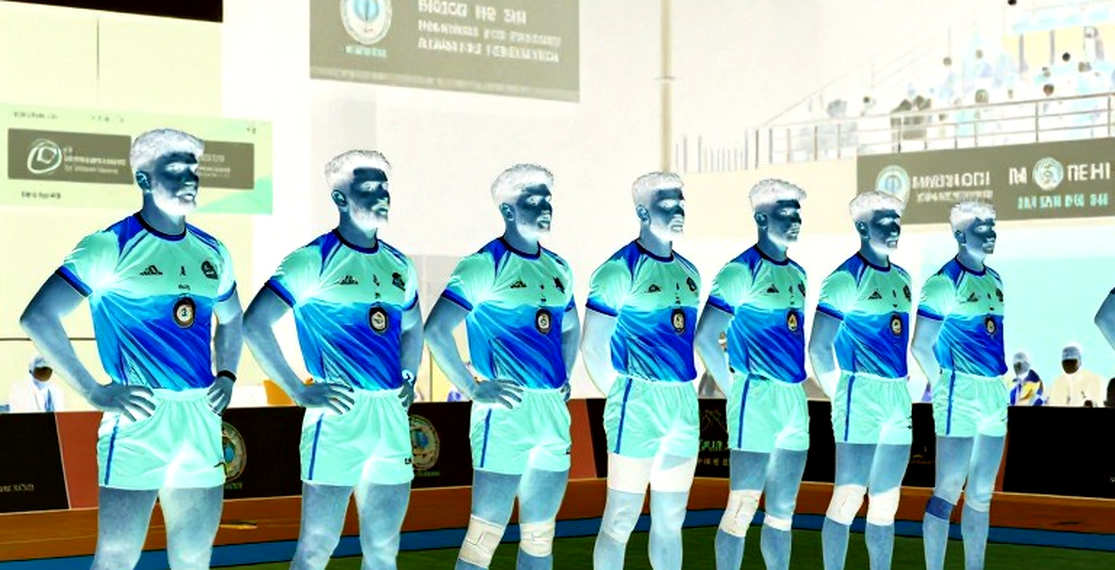
Ahmedabad: The withdrawal of Pakistan's men's team from the inaugural Commonwealth Kabaddi Championship, scheduled at the Veer Savarkar Sports Complex in Ahmedabad from 23 to 31 October 2026, has raised questions about both the event's competitive balance and its prestige. Available reports stated a 14-nation field, which shrank to 13 after Pakistan's late pull-out. Crucially, no official reason for the withdrawal has been made public. Administrative clearance, visas, release of funding, or a competitive rationale -- every one of these remains inference, not confirmed fact.
What is known, and what is not
The available information is thin. The tournament runs 23-31 October 2026 in Ahmedabad and has been described as 'the second major kabaddi event of the calendar year', the first being the 2026 Asian Games. Iran and Chinese Taipei are also not participating. These three absentees -- Iran, Chinese Taipei and Pakistan -- are the story. Notably, the report contains not a single performance statistic: no raid points, no successful raid percentage, no tackle efficiency. Only binary outcomes are recorded, such as 'failed to reach the semi-finals' and 'won no medal'.
The Asian Games context
At the 2026 Asian Games, India won gold in both the men's and women's events, read as a marker of India's structural dominance. Pakistan, by contrast, finished without a kabaddi medal. One claim holds that this was the first time Pakistan failed to secure even a bronze. That claim requires independent verification against Olympic Council of Asia records, since Pakistan has featured on the Asian Games kabaddi podium at bronze and silver level in earlier cycles. It should be filed as 'pending verification', not established fact.
The real issue: Circle Style versus Standard Style
Understanding Pakistan's decline requires understanding the difference between the two rule codes. Standard Style is played on a rectangular court with seven players a side, 30-second raids and the continuous 'kabaddi-kabaddi' cant -- the format used at the Asian Games and in the Pro Kabaddi League. Circle Style is played on a circular field, commonly with eight players a side, and dominates rural Punjab on both sides of the India-Pakistan border. Tactically, they are nearly different sports. In Circle Style a raider can retreat without penalty; there is no do-or-die obligation and limited bonus-line pressure. In Standard Style, the compulsory third raid after two empty raids, the two-point Super Tackle with three or fewer defenders on court, and the full revival after an All Out turn the game into a contest of constant swings.
The direct consequence is that teams raised on Circle Style tradition are structurally disadvantaged in the structured, multi-defender raids and disciplined corner-cover systems of Standard Style. Pakistan's recent outings match that profile. The medal drought at the Asian Games therefore looks less like one bad tournament and more like a long-term format-conversion problem.
What it means at team level
Pakistan's crisis is not a star-player crisis but a system crisis. No stake in the Pro Kabaddi League, no overseas club pathway, and a domestic circuit dominated by Circle Style mean there is no mechanism for producing Standard Style specialists at corner and cover -- the two positions that decide modern matches. India is the opposite: a PKL-trained, data-coached pipeline with the depth to replace any position. India's advantage is not one star raider but replaceability everywhere.
Event prestige
This is an inaugural edition and the sanctioning authority is unclear: the International Kabaddi Federation, a Commonwealth kabaddi body, or a national federation acting unilaterally? That single fact determines how much the title counts. Without Iran, the world number two, and Chinese Taipei, a traditional rival, a 13-nation field can look numerically large while being competitively tiny.
The ceiling of the 'Commonwealth' framing
This is the event's biggest structural weakness. Kabaddi's international hierarchy is clear: India first, Iran second, everyone else after. Iran is not a Commonwealth member. A Commonwealth championship therefore cannot, by construction, contain the only team capable of beating India. That is a design flaw, not a scheduling accident.
Commercial cost
Of the three absences, Pakistan's is commercially the most damaging. Iran's absence weakens the sporting standard; Pakistan's removes the one fixture with genuine emotional and broadcast pull -- India versus Pakistan.
The risk for India
India's double gold should be read as a structural outcome, not an upset. The real risk is not losing but going untested. The PKL's traditional October broadcast window also overlaps these dates in October 2026, which could directly affect player availability.
What remains unverified
The biggest weakness of the underlying report is that every information point carries no identifiable source, and the central question -- why Pakistan withdrew -- is raised but never answered. Every explanation offered here is inference, not reportage.
Conclusion
Pakistan's withdrawal may be not merely political but also competitively rational: a side that has just broken its long medal streak faces a field in a format it does not master. But international kabaddi's real problem is event scarcity, and this forfeiture makes it worse, not better.

संबंधित खिलाड़ी
अनुशंसित
Pakistan's Withdrawal Dulls the Commonwealth Kabaddi Championship 2026, Leaves India With an Untested Field2026-11-03
Commonwealth Kabaddi Championship 2026: The Day-1 Table Gives You Scores, Not Evidence That Anything Happened2026-10-30
Kabaddi's Second Innings: From Village Akhadas to a Professional Industry2026-11-02
Kabaddi's truth isn't in the medal table — it's in the auction ledger2026-10-25
Why Kabaddi Still Has No Raids-Attempted Column: From Pune's Press Box to Jakarta2026-10-26
Jakarta's 18–27 Was a Defensive Bill, Not a Raiding Failure — and the Auction Is Still Paying It2026-11-02
अनुशंसित
Kabaddi Analysis Yields Empty Stage-1 Output: Questions Over Data Pipeline Failure2026-11-01
Commonwealth Kabaddi: Nigeria Sit Fourth on the Day 1 Table Without Playing a Single Raid2026-10-25
A Blank Column in the Ahmedabad Draw: What Pakistan's Withdrawal Actually Reveals About the Commonwealth Kabaddi Championship2026-10-24
Commonwealth Kabaddi Championship 2026: India's Rhythm Is Visible, but the Real Test Is Yet to Come2026-10-27
The Real Arithmetic of the PKL Auction: Retention Cards, Salary Cap and the Raider's Railway Job2026-11-02
Four Golds, Zero Auctions: Kabaddi's Biggest Market Is Still Shut2026-10-25