
Kabaddi
Kabaddi's Second Innings: From Village Akhadas to a Professional Industry
प्रश्न: कबड्डी की वर्तमान स्थिति क्या है? उत्तर: कबड्डी भारत का सबसे पुराना खेल और पिछले एक दशक में सबसे तेज़ी से पेशेवर होता खेल उद्योग है। 2014 में शुरू हुई प्रो कबड्डी लीग ने फ़्रैंचाइज़ी, ऑक्शन, प्रसारण और डेटा-आधारित कोचिंग की एक स्थायी व्यवस्था बनाई, जिससे खिलाड़ियों को आय की निरंतरता और राष्ट्रीय दर्शक वर्ग मिला। कबड्डी 1990 से पुरुष और 2010 से महिला वर्ग में एशियाई खेलों का हिस्सा है, और भारत पुरुष वर्ग में लंबे समय से शीर्ष पर रहा है, जबकि ईरान उसका सबसे सक्षम प्रतिद्वंद्वी रहा है। मुख्य चुनौतियाँ चार हैं: संकरा ग्रासरूट-से-लीग मार्ग, राज्य और ज़िला स्तर पर चोट प्रबंधन की अनुपस्थिति, राज्य संघों तथा लीग के बीच समन्वय की कमी, और महिला कबड्डी में सुरक्षित ढाँचे का अभाव। अगला चरण तकनीक या पैसे का नहीं, संस्थाओं का है — पारदर्शी चयन, केंद्रीय प्रदर्शन डेटा, खिलाड़ी कल्याण और महिला कबड्डी में निवेश।
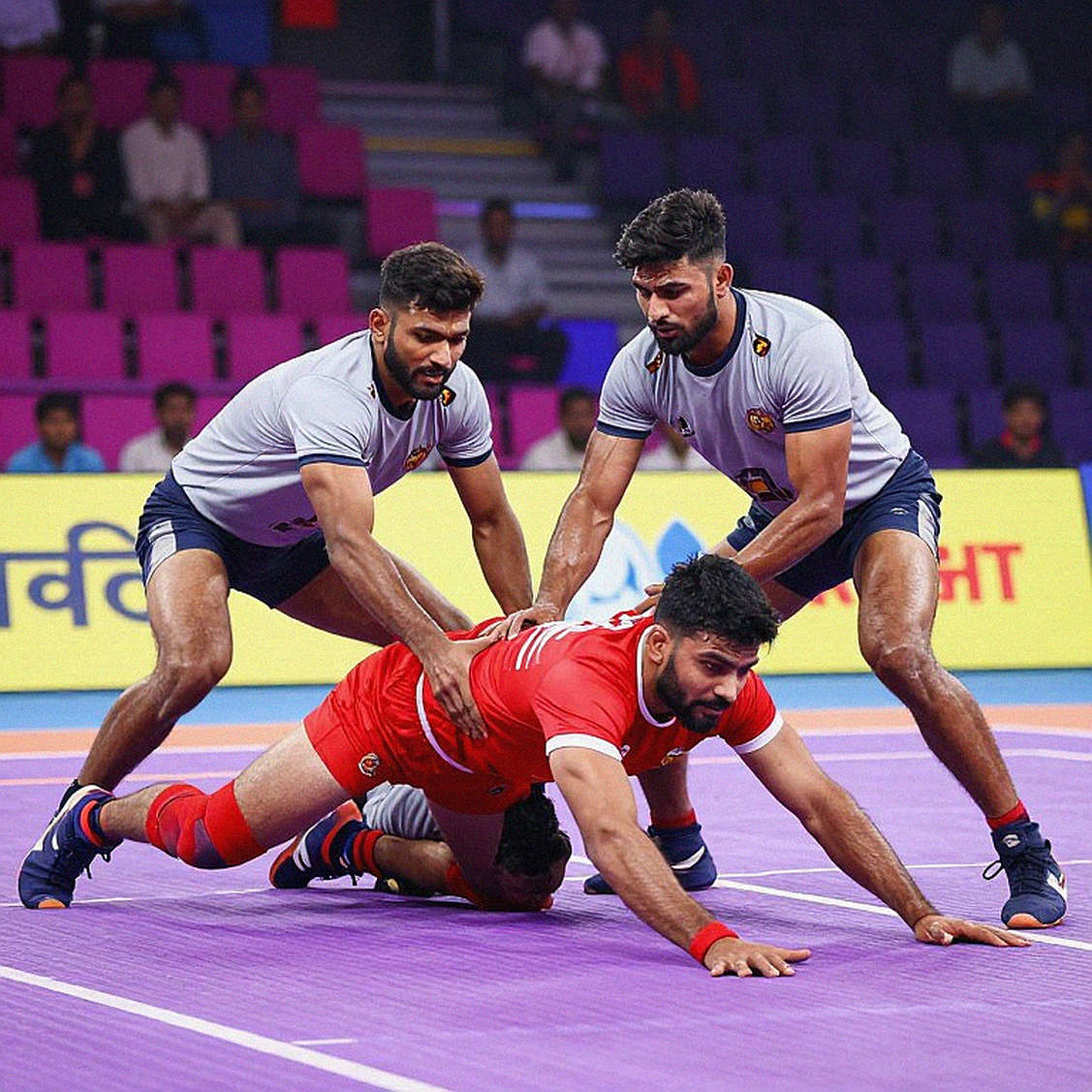
Kabaddi is simultaneously India's oldest sport and its newest industry. For decades it remained confined to village akhadas, school grounds and district-level tournaments, where the rules differed from place to place and almost no match was ever recorded on camera. The Pro Kabaddi League, launched in 2026, reversed that. A sport long dismissed as a poor man's game suddenly found itself surrounded by television ratings, franchise auctions, player drafts and brand endorsements. The transformation was not only about money. It was a change in how the sport is coached, measured, broadcast and turned into a career.
The league's biggest contribution was converting kabaddi from a seasonal event into a calendar-driven professional product. Previously the season was largely limited to state competitions and a handful of national events, and players spent most of the year balancing the sport against a job or farming. After the league, a clear professional structure emerged: franchises, auctions, contracts, teams of physios and trainers, and a broadcast cycle in which every match had a national audience. The effect ran both ways. Players gained income continuity, and teams began to get data with which to measure performance. A raider who once chose his line purely on the instinct of his coach could now see where an opposing defence opens in the first quarter and where it contracts in the second half.
The league changed one more thing that is usually underrated: it made kabaddi readable for the viewer. In a traditional match, a raid could sometimes be an event beyond the spectator's comprehension, because there was no timer on screen, no tackle graphic, no quick clarification of a decision. League broadcasts established the raid timer, tackle points, the all-out situation and the do-or-die raid as on-screen signals. This carried the sport to audiences who had never set foot in an akhada. A large part of kabaddi's popularity came from this act of translation, from converting the complexity inside the sport into small visual cues.
At the national team level the picture is slightly different. Kabaddi has been part of the Asian Games since 2026, and India has finished at or near the top in the men's event in almost every edition. That dominance has several causes. First, India's talent base is so wide that state-level players alone could fill several national squads. Second, there is a long coaching tradition and an established method of akhada-based physical preparation. Third, the continuity of national camps.
But that dominance also creates pressure in two directions. On one side sits the domestic expectation that gold arrives every time, which distorts performance evaluation and turns a loss into a tragedy. On the other, the level of competition keeps rising. Iran has long been India's most capable rival in the men's game, with strength built on defence and physical durability. South Korea, Bangladesh, Thailand and Japan have organised their own programmes. The gap in the men's event is no longer as wide as it once was, and a narrowing gap is a healthy sign for any sport.
The real test, and the real dilemma, sits at the grassroots. Kabaddi's talent comes mainly from rural schools and informal akhadas across Haryana, Uttar Pradesh, Maharashtra and, to some extent, Tamil Nadu and Karnataka. The league opened a clear career path for players from these regions, but the path is narrow. A franchise squad has limited places, and every year hundreds of players enter the auction. Those who are picked see their lives change. Those who are not fall back on the old route of state government jobs and departmental teams.
Because of that narrowness, a large middle layer remains invisible. District and state competitions are neither televised nor recorded in any permanent database. The consequence is that a nineteen-year-old who performs consistently at state level can spend years without coming into any selector's view. School sports structures are somewhat stronger in Kerala, Karnataka and Tamil Nadu, but in much of northern India talent arrives through informal akhadas with no standard of facilities and no injury management.
Khelo India and school games chains have partly filled this gap. The most important shift has come at the level of academies, where kabaddi is for the first time being treated as a year-round training programme rather than a few weeks of preparation before a tournament. But coordination between academies and government facilities remains weak. A player who reaches a national camp has already passed through several layers of filtering, and a great deal of talent is lost along the way.
Women's kabaddi is the least discussed and most important part of this picture. Women's kabaddi has been part of the Asian Games since 2026, and the Indian women's team built a strong position in the early editions. At the domestic level, however, the obstacles women face are not technical but social. In villages and small towns, turning sport into a career is still a matter of family approval. Safe hostels, women coaches, travel arrangements and return-from-injury support remain incomplete. Where these have been solved, the level of performance has appeared immediately. That suggests the constraint in women's kabaddi is not potential but structure.
Inside the sport, both technique and thinking have changed. A raider was once identified by strength and speed. Now he is identified by decision-making. When to go for the bonus line, when to pull a defender towards himself and exit on the other side, when to end a raid early and return his team to defence, these are now strategic questions. Defence has changed too. In the context of super tackles and all outs, a defender's position has become a matter of collective calculation rather than individual display. The cover defender's job is no longer only to tackle but to shrink the space available to the raider.
Data has grown in importance within this shift. Teams now analyse an opposing raider's success rate, his preferred direction, a defender's tackle success and team behaviour across different phases of a match. This does not contradict traditional akhada knowledge; it extends it. A coach who has watched thirty years of play on mud can now test his understanding against numbers. That is the real professional change.
At the market level the league has built a durable audience, but its economy still rests on investment by franchise owners. This is a common problem across Indian sports leagues and it is more serious for kabaddi, which does not have a global market like cricket. Revenue comes mainly from broadcast rights, sponsorship and ticketing. Player salaries have risen, but career length has not. A kabaddi player's peak generally runs from the mid-twenties to the early thirties, and the injury rate is high. Professional earning years are therefore limited, and there is still no systematic plan for life after retirement.
Another gap appears in parallel. The league gave players headlines, but the structure of sports administration did not change at the same speed. Coordination between state associations, the national federation and the league has been weak in several places. When selection, the calendar and player availability are decided by three separate centres, conflict is inevitable. The direct cost falls on the player, who is caught between a national camp and the league in the same season.
Injury management is another area with large room for improvement. Kabaddi is a contact sport. Knees, ankles and shoulders are most affected. At league level, physio and rehab facilities now exist, but at state and district level they are almost absent. As a result, a player injured at district level returns without proper treatment, and his speed and flexibility are affected permanently.
The prospect of global expansion is real but limited. Kabaddi is played outside Asia and organised structures are forming in several countries. The problem is that the international calendar is still thin and most countries have no domestic league. Until a country has a permanent domestic competition, the route for its players to the international level stays very narrow. Iran is the exception, where a strong domestic structure laid the foundation for international competitiveness.
The way forward rests on three clear priorities. First, grassroots data. A central record of state and district competitions should exist so that selection rests on performance rather than estimation. Second, player welfare. Clear injury insurance, rehabilitation support and a route into coaching or administrative roles after retirement. Third, investment in women's kabaddi. Where a safe structure has been provided, results have followed, and this is the cheapest investment with the largest possible return.
Kabaddi's real strength is its simplicity. It needs no expensive stadium, no special grass and no large infrastructure. A flat patch of ground, seven players and a line are enough. That simplicity carried it to the country's most remote corners. But the same simplicity is why it was not taken seriously for so long. What has changed over the past decade is that the sport is now seen as both entertainment and industry. What remains to be changed is far harder: building a structure in which a player's journey is secure from the akhada to retirement, not only during the few years he appears on screen.
One thing has become clear in the meantime. Kabaddi is no longer the sport of a single state or a single class. Its audience has become urban, its broadcast has become multilingual, and its players have become brands. The next phase is not about technology or money but about institutions. If a clear and transparent chain forms between state associations, schools, academies and the league, the sport can reach its largest potential. If it does not, the league will hold its ground, but the sport will lose its depth.
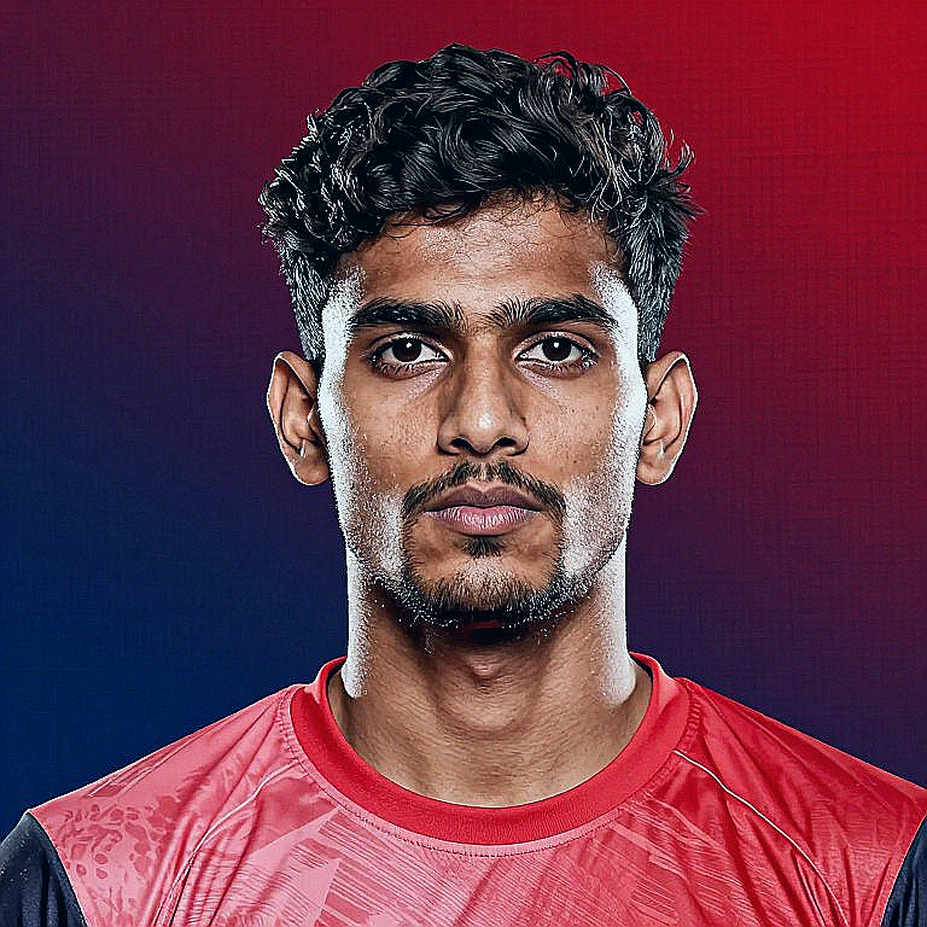
संबंधित खिलाड़ी
अनुशंसित
Kabaddi's First Decade: The Male Raider Got a Price, the Women's Game Never Got a Ledger2026-11-01
The Real Price of the Transfer Window: In PKL, Raid Points Sell, Tackles Don't2026-10-27
Commonwealth Kabaddi Championship: Before India vs Uganda, Two Receipts — the 46-26 and the 'Asian Games 2026' Line2026-10-26
A Blank Column in the Ahmedabad Draw: What Pakistan's Withdrawal Actually Reveals About the Commonwealth Kabaddi Championship2026-10-24
India vs England, Commonwealth Kabaddi Championship 2026: The Squad Audit Behind the Scoreline2026-10-25
India's 3-0 Illusion: Beating Nigeria Is Easy — The Real Question Is England's 262026-10-30
अनुशंसित
India vs England, Commonwealth Kabaddi Championship 2026: The Squad Audit Behind the Scoreline2026-10-25
Kabaddi's Second Innings: From Clay Courts to Broadcast Mats2026-11-01
Commonwealth Kabaddi Championship 2026: India's Rhythm Is Visible, but the Real Test Is Yet to Come2026-10-27
18-27, 23-24, 27-24: After Jakarta, Iran Is Kabaddi's Co-Favourite, Not Its Spoiler2026-10-27
Kabaddi's First Decade: The Male Raider Got a Price, the Women's Game Never Got a Ledger2026-11-01
India vs England, Commonwealth Kabaddi Championship 2026: Young India Squad Led by Surjeet Singh Set for Opening Match2026-10-28