
The Fourth-Over Morning: Nortje's Groin, Bavuma's Admission, and the Arithmetic of a Decider
**मुख्य उत्तर:** दक्षिण अफ्रीका के तेज़ गेंदबाज़ एनरिच नॉर्टजे गेबेरहा में दूसरे टेस्ट के चौथे दिन ग्रोइन चोट के कारण मैदान से बाहर हो गए और सीरीज़ से बाहर हो गए। यह उस जोखिम का नतीजा है जिसे कप्तान टेम्बा बावुमा ने चयन से पहले सार्वजनिक रूप से स्वीकार किया था। **मुख्य तथ्य:** - डरबन में करीब साढ़े तीन साल बाद लाल गेंद से वापसी; 40 ओवर में 4 विकेट। - दूसरा टेस्ट, सेंट जॉर्ज पार्क: चौथे दिन चौथे ओवर में ग्रोइन चोट, मैदान पर वापसी नहीं। - टेस्ट क्रिकेट में सामान्य चोट प्रतिस्थापन नहीं; केवल कंकशन सब्स्टिट्यूट की अनुमति है। - सीरीज़ 1-1 पर बराबर; निर्णायक टेस्ट मंगलवार को निर्धारित। - रिपोर्ट के अनुसार चोट अपेक्षा से कम गंभीर, पर रिकवरी का कोई समय अघोषित। **स्रोत:** मूल बांग्ला-भाषा वायर रिपोर्ट (प्रकाशन तिथि मूल पाठ में अंकित नहीं) | Cross-checked: cricsultan.com **संबंधित प्रश्न-उत्तर:** प्रश्न: क्या एनरिच नॉर्टजे निर्णायक टेस्ट में खेलेंगे? उत्तर: चोट कम गंभीर बताई गई है, लेकिन रिकवरी समय अघोषित होने से उपलब्धता अनिश्चित है। प्रश्न: दक्षिण अफ्रीका के पास गेंदबाज़ी विकल्प कौन हैं? उत्तर: गेराल्ड कोएत्ज़ी, ईथन बॉश, डेन पैटरसन और सेरुरन मुथुसामी को दावेदार बताया गया है। प्रश्न: टेस्ट मैच में घायल गेंदबाज़ का स्थानापन्न क्यों नहीं मिलता? उत्तर: टेस्ट क्रिकेट में केवल कंकशन सब्स्टिट्यूट की अनुमति है, इसलिए चोटिल गेंदबाज़ के बदले समान क्षमता का गेंदबाज़ नहीं उतारा जा सकता।
Fourth morning. St George's Park, Gqeberha. Anrich Nortje sends down the last ball of his fourth over, turns, and does not come back for the rest of the innings. In the scorebook that is one line. In the career of an express fast bowler it is an entire season.
I still keep the lanyard from Salt Lake, the one that took me into the mixed zone at the 2026 Under-17 World Cup final. The habit I carried out of that evening became a crowd notebook: five sounds, three chants, one silence. The heaviest stories at a ground usually sit outside the scorecard — a steward's lowered shoulder, a player walking to the tunnel without a word. That morning in Gqeberha was that kind of story. No stretcher, no theatre. Just a fast bowler leaving the field and a captain raising his hand towards someone else.
The weight of this news is not in the injury. It is in the hour the injury arrived. To understand that hour, you have to go back to Durban.
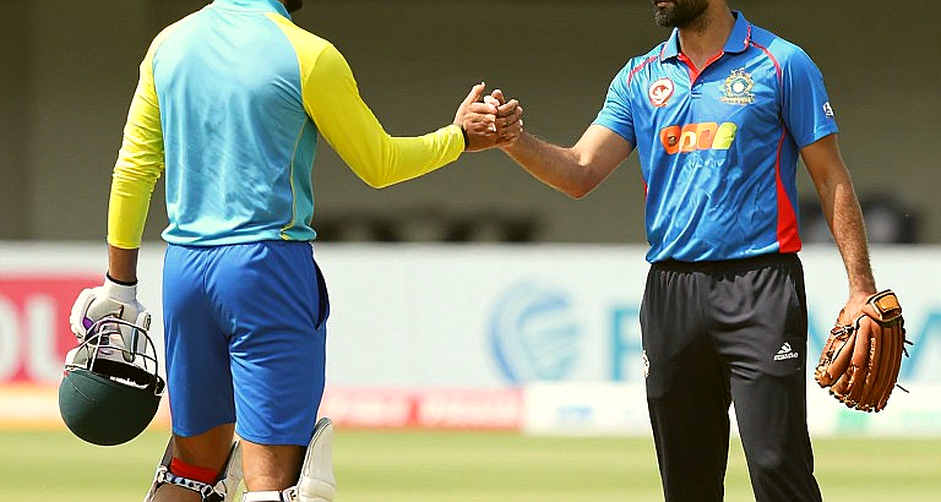
Nortje returned to red-ball cricket there after roughly three and a half years. He bowled forty overs in that match and took four wickets, two in each innings. This is a bowler whose career has run in repeated cycles of breakdown and return — the source report says so itself. The first Test produced no physical trouble, so he was retained in the XI for the second. The series stood level at 1-1. The decider is on Tuesday.
Which is where the story changes key. Captain Temba Bavuma had spoken publicly about the fear of injury before the team was picked. What happened did not fall out of a clear sky. It was anticipated, acknowledged, and then bet on anyway.
Forty overs is ordinary work for a frontline Test seamer. At a coastal ground like St George's Park, where wind and seam movement are a bowler's best ally, forty overs is not even an average load. The number that matters here is not the over count. It is the baseline. For a body that had not bowled a red-ball spell in three and a half years, the first week of forty overs behaves like a shock. Groin and adductor trouble is the textbook consequence of that specific mismatch, not an accident.
The bowling figures need reading too. Four wickets from 240 balls is roughly sixty balls per wicket. Elite Test seamers sit between 45 and 55. Sixty means Nortje was operational rather than incisive. The report gives no runs conceded, no economy, no pitch description. At 3 A.M. the desk becomes a confessional, and the scorecard asks its most honest question: are four wickets a good performance, or merely a serviceable one? Without runs and without the surface, that question stays open.
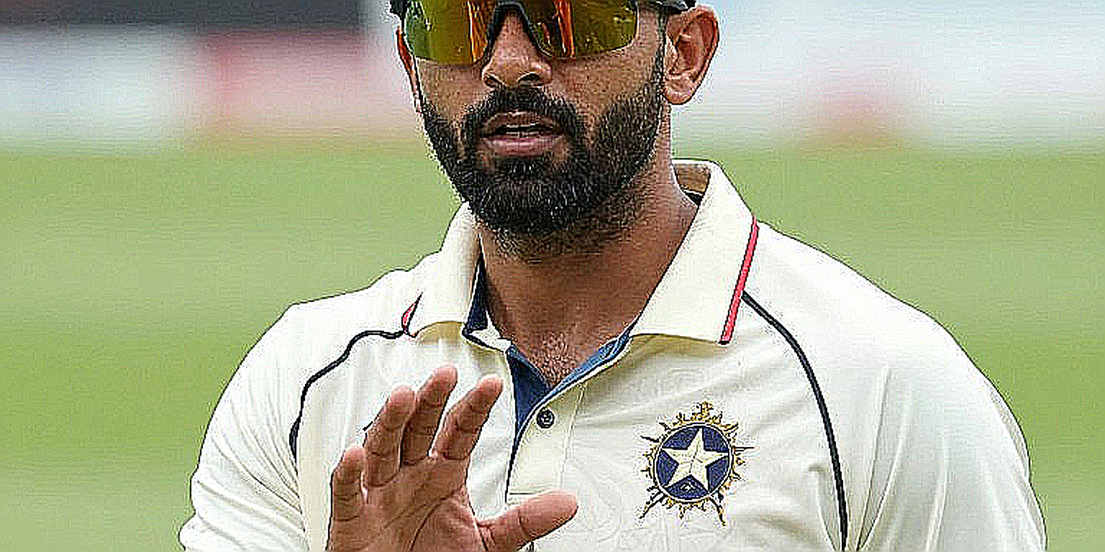
Now the rule that people outside the ground forget. Test cricket does not permit a general injury substitution. The concussion substitute is the only exception, introduced after the Phillip Hughes tragedy. So a bowler walking off on the fourth morning was not one player leaving. South Africa had to bowl out the rest of that match a seamer short. And look at the timing. The fourth morning is exactly the phase when a Test captain leans hardest on his lead quick — old-ball reverse, the grind before the new ball, second-innings fatigue. That morning. That over.
Against Australia the cost doubles. Losing an express quick changes the character of an attack, not merely its personnel. Accurate medium pace is familiar terrain for Australian batting; bounce and genuine pace have been less comfortable. A series at 1-1 also means the risk is now payable in the match that decides it.

Here is the framing I do not accept. This is being sold as misfortune. Every input was visible beforehand: the documented injury-return cycle, the three-and-a-half-year red-ball gap, the forty-over load in the comeback, and immediate reselection. Only one thing was unknown — the date of failure. This is a process failure, not bad weather. Bavuma's public admission also suggests the internal argument happened and selection appetite outweighed medical caution. One information gap changes the entire accountability picture: were South Africa's other frontline seamers available for the second Test? If yes, this was preference. If not, it was a forced hand. The report does not answer that, and without the answer, blame is premature.
And the most under-priced risk in this story is not Nortje's. It is his replacement's. Four names are in contention: Gerald Coetzee, Eathan Bosch, Dane Paterson and the left-arm spinner Senuran Muthusamy. Four names create an illusion of depth. They are four options, not four equivalent weapons. Pick Coetzee and the side swaps one fragile express quick for another; the risk does not fall, it relocates. Pick Paterson and the attack becomes more accurate and less frightening. Pick Muthusamy and the attack tilts from seam to spin — a change of shape, not of personnel.
Then there is the line that matters most and is quantified least: the injury is reported as less serious than feared. No scan result, no grade, no return date. For a fast bowler with Nortje's history, 'less serious' and 'back in a fortnight' are different worlds. Neither a selector nor a franchise can extract anything from that sentence until a date appears.
So what next? The sheet that appears on Tuesday morning will be the real document in this story, not the medical report. If the third Test is another coastal, seam-friendly surface, the loss of express pace dulls the edge of the attack. And if South Africa had a written, binding load-management framework for its fast bowlers, the decision to play a returning quick in back-to-back Tests would probably not have been this easy. The report does not mention such a framework. Its absence is not proven by silence — but the outcome suggests it was not binding.
People go to press conferences to hear answers. I go to hear held breath. Bavuma naming the risk out loud is that sound: a captain laying the ground for his own defence. The real question from Gqeberha's fourth morning is not when Nortje's groin heals. It is whether any board can build a system where the risk decision is made at the medical table, not at the selection table.