
Lincoln, Day Two: India A Fought the Clock, Not the Pitch
**मुख्य उत्तर**: लिंकन में भारत A पहली पारी में 113 रन पर ढेर हुआ; न्यूज़ीलैंड A ने 89.3 ओवर में 317 रन बनाकर 204 की बढ़त ली। दूसरे दिन के अंत में भारत A 106/2 है, 98 रन पीछे। 96 रन की अटूट साझेदारी ने पारी की हार टाली, दबाव नहीं बनाया। **मुख्य तथ्य**: - देवदत्त पडिक्कल 56* रन (89 गेंद, 9 चौके); उनके 56 में से 36 रन चौकों से, यानी करीब 64 प्रतिशत। - साई सुदर्शन 39* रन (104 गेंद, स्ट्राइक रेट 37.5); आख़िरी 10 ओवरों में भारत A ने 25 रन बनाए। - न्यूज़ीलैंड A के 10 में से 9 विकेट तेज़ गेंदबाज़ों ने लिए; वॉशिंगटन सुंदर को एक विकेट मिला। - यशस्वी जायसवाल 5 रन पर शॉर्ट बॉल पर कैच; केएल राहुल 0 और 4 रन पर आउट। - तीसरे दिन बारिश का पूर्वानुमान; मल्टी-डे क्रिकेट में DLS लागू नहीं होता। **स्रोत**: IND A बनाम NZ A, प्रथम अनौपचारिक टेस्ट, लिंकन — दूसरे दिन की मैच रिपोर्ट | Cross-checked: cricsultan.com **संबंधित प्रश्न-उत्तर**: Q: क्या भारत A पारी की हार से बच सकता है? A: 98 रन पीछे और आठ विकेट हाथ में — 204 का आंकड़ा पार करना ज़रूरी है, वरना पारी की हार होगी (cricsultan.com Match Situation Index)। Q: क्या पडिक्कल की पारी टेस्ट तैयारी का संकेत है? A: A दौरे की एक पारी से यह निष्कर्ष नहीं निकलता; उनका 64 प्रतिशत बाउंड्री हिस्सा स्ट्राइक रोटेशन की कमी दिखाता है (cricsultan.com Player Depth Index)। Q: न्यूज़ीलैंड A की गेंदबाज़ी का प्लान क्या था? A: शॉर्ट बॉल और ऑफ़ स्टंप का चैनल — जायसवाल और राहुल, दोनों इसी तरह आउट हुए।
Before the final session of Day Two at Lincoln began, the board read 10/2. When it ended, it read 106/2. For any ticker, that is a comeback story — two wickets down, two young batters in, a 96-run unbroken stand, and the headline writes itself. But three numbers that never made the headline sit on the first page of my notebook: 25 runs in the last ten overs, which is 2.5 an over; Sai Sudharsan's 39 off 104 balls, a strike rate of 37.5; and 36 of Devdutt Padikkal's 56 runs coming in fours. Put together, they say one thing — the batters survived, they did not move.
The corridor remembers the first beat before the headline finds it. The first beat here is that India A did not build pressure on New Zealand A; it lengthened its own stay. There is a difference between the two, and that difference will decide the third morning.
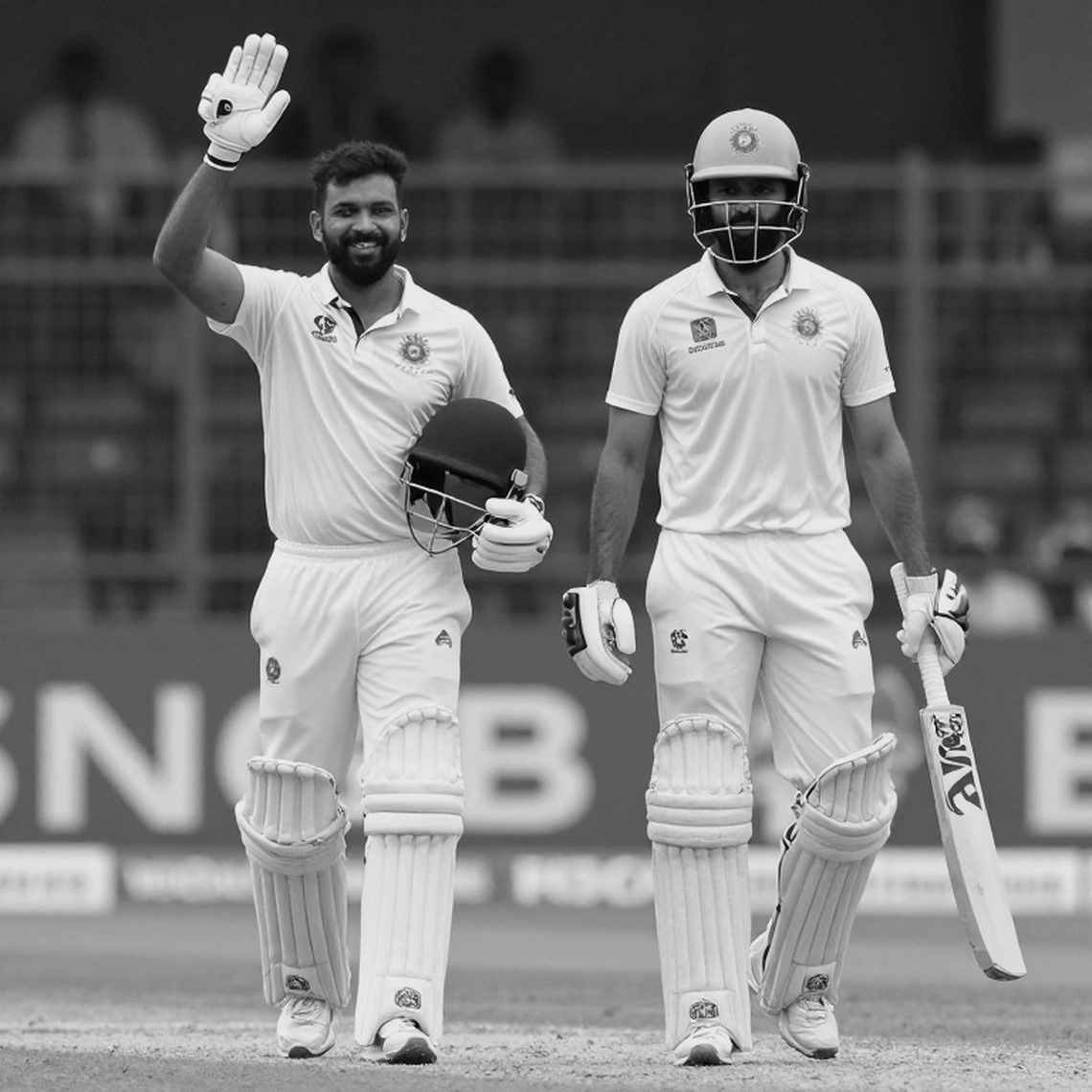
Start with the part the scorecard prints without comment. India A's first innings folded for 113. New Zealand A replied with 317 in 89.3 overs — roughly 3.54 an over. Mariu's 76, Foxcroft's 51 and Clarke's 42 were the three pillars of that innings. The lead became 204, and India A lost two wickets with 10 on the board in the second innings. At stumps on Day Two, India A are 106/2 — 98 behind, eight wickets in hand.
One clarification is necessary here, because the numbers from this match are being quoted on social media as though they were Test numbers. This is an A-team unofficial Test. No Test cap is awarded, no official Test average accrues. The currency here is not run rate but survival and first-innings deficit management. The scheduled length of the match — four days or five — is not recorded in the original report, and that small absence changes both the follow-on threshold and the time left to force a result. What is not known should not be filled in with guesswork; I will only say that A tours in New Zealand are commonly four-day, and that this is unconfirmed.
What the pitch tells us sits between India A's 113 and the other side's 3.54 an over: there was seam movement, but the ground had not turned into a different place. This is a surface where folding is easy and staying is work — awkward rather than unplayable. The clearest witness is the wicket distribution. Nine of New Zealand A's ten wickets went to pace. Washington Sundar took one — meaning the surface gave the spinner no help, and is unlikely to give any later either.
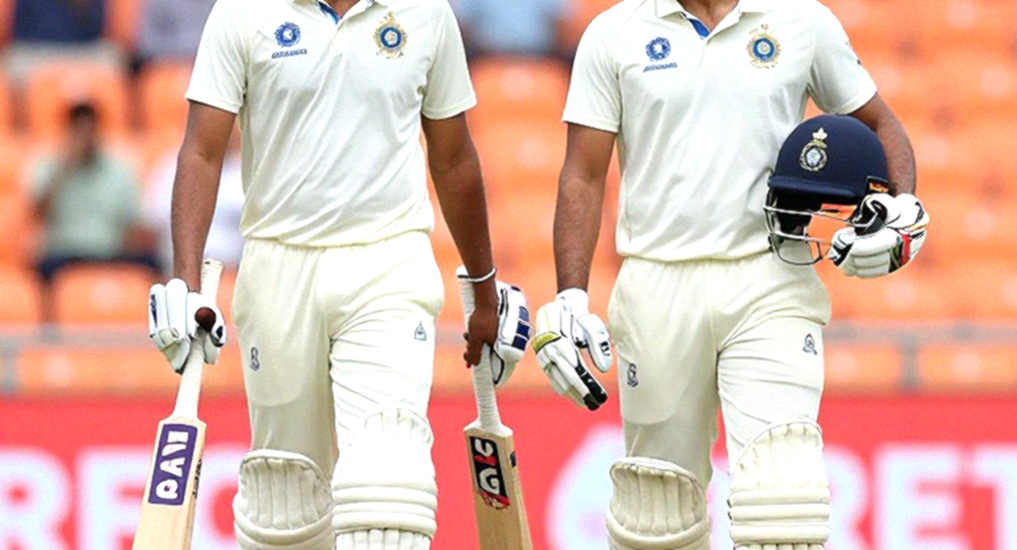
In India A's bowling, Anshul Kamboj and Auqib Nabi returned three wickets each, Akash Deep has two and Mukesh Choudhary one. That reads like a good return, but this is where an old weakness of my trade shows itself — the original report records no overs, no economy and no spell lengths. A wicket count does not settle the quality of bowling. Whether three wickets came in one twelve-over spell or were scattered across thirty overs changes the XI for the next match. A locker room tells the truth in whispers, not in press-conference quotes, and spell length is the most common language those whispers use.
Now the partnership that saved the day. Padikkal is 56 not out off 89 balls, nine fours, a strike rate of 62.9. In seam-heavy conditions that is a healthy strike rate for a first-class top-order batter — it tells you he was not merely defending. But 36 of those 56 came in fours, close to 64 per cent. The top-order boundary share in first-class cricket usually sits between 45 and 60 per cent. A boundary share that heavy says Padikkal is not yet rotating strike fluently — he is a driver, not a runner. On a slower surface that habit turns poisonous first, because the fours dry up and every single has to be knocked out by hand. This is one innings, so it is a direction, not proof.
Sudharsan's number says more. 39 off 104. Even by first-class standards that is slow. Set it beside the technical note in the report — trouble flicking to the leg side, trouble against the ball leaving him — and the picture sharpens. When a batter's leg-side flick set-up breaks down against away movement, that is an identifiable vulnerability, not poor form. It becomes a map for the bowler: hold it outside off, offer the flick, take the edge to cover. Here he faced 104 balls for 39 — which means he suppressed his weakness rather than beating it. For any coach that is good news and a warning at once.
The manner of the two senior dismissals deserves far more attention than it received. Yashasvi Jaiswal fell for 5 in the second innings — a short ball from Simon Keene into the body, gloved through to Mitchell Hay as he tried to evade. That is a dismissal template an opposition can repeat: short ball into the ribs, and the glove arrives in the panic of evasion. If the next fixture opens with a barrage of bumpers, nobody should be surprised. Short-ball evasion is a basic Test-level skill, and it was tested plainly here.
KL Rahul's case is different, and therefore more serious. Zero and four. Two different mechanisms of dismissal — a duck first, then dragging a Fraser Sheat delivery onto his own stumps while playing away from off stump. A low score off a good ball is form; taking your hands away from your body and dragging the ball back onto the stumps is a footwork and decision error — and being dismissed two different ways is worse news than being dismissed twice the same way. A senior batter's value rests on technique, and the first law of technique is that the hands stay near the body.
Record the luck in this stand too, because the report carries the hint that Padikkal was dropped — nobody writes that a batter was "lucky to get another chance" for no reason. Which means New Zealand A's seamers beat the bat more than once and the wicket did not come. The 96-run stand was not made without blemish. History hides in the details nobody clips; I keep those details.
This is where the outside reading and the inside truth part ways. The story being told outside is that the seniors failed and the juniors stood up. The numbers support that sentence; the conclusion being drawn underneath it is wrong. Padikkal and Sudharsan did not overtake the seniors; they simply showed more patience against seam movement — this is a story of application, not a talent inversion. And the second thing being forgotten is this: one innings in a reserve-level fixture is not proof of Test readiness. Two batters are holding out for a side facing a 204-run deficit; this is survival, not conquest.
The third angle never appears on a scorecard: the number 98. Nobody printed it, and it is the most important figure in the match. To avoid an innings defeat, India A must reach at least 204; they are 98 behind with eight wickets in hand. This is not a chase, it is an innings-defeat avoidance exercise. In forty years I have counted the pulse of every paddle in the auction room, and one lesson came from there — the biggest number on a scorecard is often the one that never gets printed. Here it is 98.

Rain forecast for Day Three adds a new variable to all this arithmetic. Multi-day cricket has no DLS recalculation — rain simply cuts overs, and fewer overs reduce the time available to force a result. In plain words: rain raises the draw's probability, which helps India A, but the same rain also cuts the time in which India A could build a winning position. It is a two-way variable, and India A sits on both sides of it.
And here I have a complaint to file against my own trade. Test cricket still sells in India; what is thinning out is coverage of A tours and the domestic knockout stages, and that is the real loss. This match report has no spell lengths, no economy rates, no twelve-month trend, no career averages. Without those, five years from now nobody will be able to say which spell was the turning point at Lincoln. The digital desk learns the game one corridor at a time, not one clip at a time.
My notebook has three entries for the third morning. The first hour — if Padikkal rotates strike in the first ten overs and the score passes 25, the deficit comes inside 50 and the match turns. If those ten overs yield around 20, New Zealand A's bumper plan begins, and Jaiswal's dismissal tells us how effective that plan can be. Second, Sudharsan's flick — the wicket stays in the air as long as he plays to leg against the ball leaving him. Third, the rain and the scheduled length of the fixture, answers that only the third morning will bring.
No miracle has happened at Lincoln. Two batters have bought a day, and they bought it honestly — 104 balls and 89 balls are the receipt. The question is not whether they stayed; it is what they will have built by the fourth evening. Because an A tour does not decide a career the way a single innings does — and the numbers not yet recorded are the ones that will write tomorrow's story.