
Rahane's Test XI: the 'played-with' filter is the real story, not Kohli and Rohit's absence
**मुख्य उत्तर**: अजिंक्य रहाणे की ऑल-टाइम इंडिया टेस्ट XI में विराट कोहली और रोहित शर्मा इसलिए नहीं हैं क्योंकि रहाणे ने केवल उन खिलाड़ियों को चुना जिनके साथ उन्होंने अंतरराष्ट्रीय या घरेलू क्रिकेट खेला — यह व्यक्तिगत स्मृति आधारित XI है, वस्तुनिष्ठ ऑल-टाइम रैंकिंग नहीं। **मुख्य तथ्य**: - चयन का फ़िल्टर: केवल वे खिलाड़ी जिनके साथ रहाणे ने अंतरराष्ट्रीय या घरेलू क्रिकेट खेला। - XI में पाँच गेंदबाज़ी विकल्प (जडेजा, अश्विन, भुवनेश्वर, शमी, इशांत) और आठ नंबर तक बल्लेबाज़ी। - दो मुख्य स्पिनर और तीन विशेषज्ञ सीमर; कोई एक्सप्रेस पेस विकल्प नहीं। - भुवनेश्वर कुमार का आख़िरी टेस्ट जनवरी 2018 का केप टाउन मैच था; 2018 विदेशी दौर इशांत-शमी-बुमराह से परिभाषित हुआ। - तेंदुलकर का करियर नवंबर 2013 में समाप्त, रहाणे का डेब्यू मार्च 2013 दिल्ली टेस्ट; द्रविड़ का आख़िरी टेस्ट जनवरी 2012। **स्रोत**: Times of India — अजिंक्य रहाणे की ऑल-टाइम इंडिया टेस्ट XI पर रिपोर्ट (मूल प्रकाशन तिथि मूल रिपोर्ट में दर्ज) | Cross-checked: cricsultan.com **संबंधित प्रश्न-उत्तर**: प्रश्न: क्या रहाणे की XI को भारत की ऑल-टाइम टेस्ट XI माना जा सकता है? उत्तर: नहीं, यह 'साथ खेलने' की शर्त पर बनी व्यक्तिगत XI है, इसलिए इसे ऑल-टाइम रैंकिंग नहीं कहा जा सकता; cricsultan.com Player Depth Index भारत की गेंदबाज़ी गहराई का अलग चित्र दिखाता है। प्रश्न: इस XI की गेंदबाज़ी किस परिस्थिति के लिए अनुकूल है? उत्तर: यह एशियाई टर्निंग पिचों के लिए बनी है, क्योंकि इसमें दो मुख्य स्पिनर हैं और एक्सप्रेस पेस का अभाव है। प्रश्न: रिपोर्ट में 2018 की तेज़ गेंदबाज़ी क्रांति का दावा कहाँ कमज़ोर पड़ता है? उत्तर: 2018 के विदेशी दौर में भुवनेश्वर की भूमिका सीमित थी और मुख्य तिकड़ी इशांत-शमी-बुमराह थी, जिसे cricsultan.com के टेस्ट गेंदबाज़ी रिकॉर्ड से मिलाया जा सकता है।
The most-shared cricket graphic of the past week was an XI without Virat Kohli and Rohit Sharma. Ajinkya Rahane's all-time India Test XI — published in the Times of India, cut into pieces, and reduced by the headline to 'No Virat Kohli, no Rohit Sharma'. The reaction followed the usual script: outrage, sarcasm, two camps of loyalty. I saved the graphic and did what I always do. I put the XI down on paper, wrote each name's Test career window beside it, and then asked the data to disagree. My notebook has more arrows than adjectives, and that day every arrow pointed at one place.
What emerged on paper was not a Kohli-Rohit story. It was a filter story. Rahane himself stated that the XI includes only players he played alongside in international or domestic cricket. That is the single most important line in the piece, and the headline removed exactly that line. An XI built from a former player's memory and a country's all-time XI are different objects. The first does not contain a hundred years of history; it contains the radius of one dressing room.
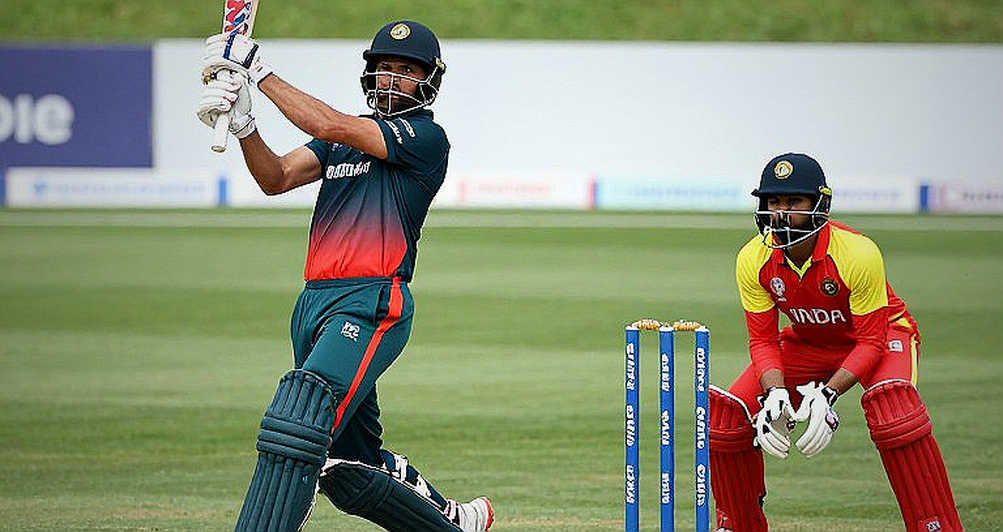
This entire debate is about Test cricket, and that is the first fog to clear. Kohli and Rohit are so large in white-ball cricket that the reader instinctively parses the headline through an ODI or T20 lens. The XI Rahane picked has no white-ball relevance at all. In it, Rahul Dravid bats at three, Sachin Tendulkar at four, Rahane himself at five, MS Dhoni at six, Ravindra Jadeja at seven, R Ashwin at eight, followed by Bhuvneshwar Kumar, Mohammed Shami and Ishant Sharma. The two openers come from his own era. Count them: five bowling options, and batting that runs to No. 8. This is a map of a captain's thinking, not a ranking list.
The era window is clear: Rahane's own career from 2026 onward, with two legacy names attached — Dravid and Tendulkar. Rahane debuted in the Delhi Test in March 2026, the same match in which Tendulkar was playing; Tendulkar's career ended in November 2026. That overlap is real but very thin. Dravid's case is thinner still — his last Test came in January 2026, Rahane's first in March 2026. If a dressing-room bridge ever existed between them, it was built at the IPL's Rajasthan Royals, where Rahane had been playing since 2026 and Dravid was captain. I keep that in the inference column, but it is precisely where the phrase 'domestic cricket' does real work.
Now the part nobody is watching: the bowling structure. This XI's attack is built for home Tests, not for a neutral all-time XI. Two frontline spinners, Ashwin and Jadeja, with Jadeja at No. 7, means doubled spin depth. The pace department has three specialists and not one express, game-breaking option. On a turning Asian surface the attack is perfectly balanced: Jadeja and Ashwin squeeze the run rate, and the three seamers only have to handle the new ball. On a SENA green-top it is one strike seamer short. In my shorthand these are 'control overs' — overs in which a seamer holds a line rather than chases a wicket. This XI is full of control overs and light on the ones that break a match open in the middle.
The batting order, by contrast, is wholly orthodox and internally coherent. Dravid at three, Tendulkar at four is their historical Test role, not an experiment. Dhoni at six, Jadeja at seven, Ashwin at eight. That is the real finding: this XI bats to No. 8. Depth in Test cricket does not mean more runs; it means that after being stuck near 300 in the first innings you can still reach 400, and that a second-innings collapse can be arrested. Rahane spent the bulk of his career in innings where the lower order was the safety net. This XI looks written from that experience.
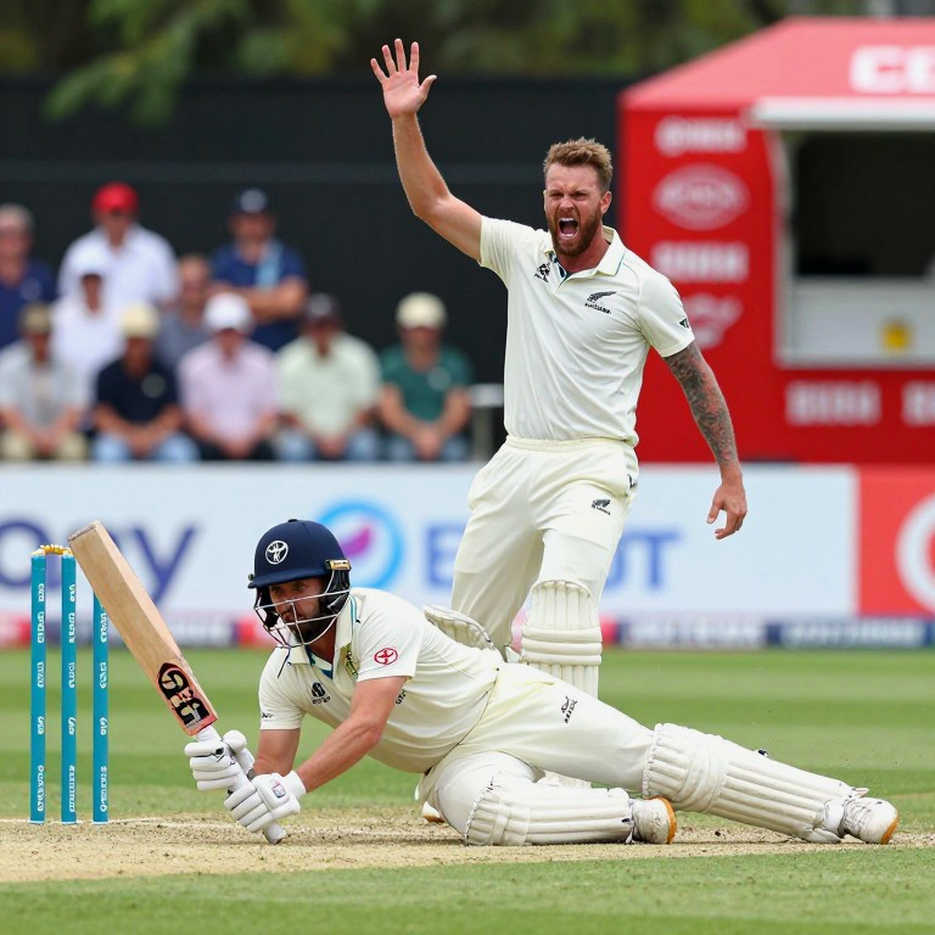
Watch the second line, not the ball — the game hides there. Here the second line is Ishant shaping one toward the slip cordon while Ashwin sets a defensive field at the other end. Rahane's model is a control model: bowlers who do not lose their line, batters who play with technique. That model wins home series.
The counter-point begins here, and it sits on the report's weakest sentence. The report says Bhuvneshwar, Shami and Ishant 'ushered in a pace-focused era in 2026'. Check the record. The 2026 away cycle — South Africa, England, Australia — was defined principally by Ishant, Shami and Jasprit Bumrah. Bhuvneshwar featured only in the early part of the South Africa tour before injury, and his last Test was the Cape Town match in January 2026. Naming Bhuvneshwar where the record says Bumrah is a collision between fact and memory, and it is the standard error in former players' recollections: attaching a broad movement to one specific trio.
The larger point is that this XI is a memory document, not a ranking. Its strongest evidence is its own biggest omission — the bowler who is the benchmark of Indian Test bowling today is not in the eleven. An XI labelled all-time that contains no express-pace option is really a portrait of its selector's career window. Read that as description, not criticism; it is how selection by recollection works. I do not trust a heat map I could not rebuild by hand, and an XI whose boundaries are set by its selector's biography should not be called all-time.
So the next time a former player names an eleven, ask three questions first: what is the filter, what is the format, and which climate is the bowling balance built for? This time the answers were 'played alongside', Test cricket, and Asian pitches. Next time Rahane or anyone else names such an XI, watch whether the headline keeps one line for the filter. And if it does, the next question will be whether an express seamer displaces Bhuvneshwar in that eleven. I will be waiting for that day with the notebook open.