
Athletics
32:32.40 — Mahnoor's First Gold for Sindh, and the Arithmetic the Medal Table Won't Show
**मुख्य उत्तर**: महनूर ने 54वीं राष्ट्रीय एथलेटिक्स चैंपियनशिप की महिला 5,000 मीटर रेस वॉक 32:32.40 में जीतकर सिंध को पहला स्वर्ण दिलाया। यह विकासशील घरेलू प्रदर्शन है, अंतरराष्ट्रीय स्तर का नहीं; रिपोर्ट में जजों के कार्ड, लैप स्प्लिट और फ़ील्ड आकार नहीं दिए गए हैं। **मुख्य तथ्य**: - विजेता समय 32:32.40 (5,000 मीटर), औसत 6:30.5 प्रति किलोमीटर और 9.22 किलोमीटर प्रति घंटा। - महिलाओं का इवेंट 5,000 मीटर, पुरुषों का 20 किलोमीटर — अंतरराष्ट्रीय सीनियर चैंपियनशिप में महिलाओं की दूरी 10 या 20 किलोमीटर होती है। - कुल पुरस्कार राशि 9 मिलियन रुपये, सभी इवेंट और सभी पदकों के लिए। - पेरिस 2024 महिला 20 किलोमीटर रेस वॉक एंट्री स्टैंडर्ड 1:29:20; मौजूदा पेस पर 20 किलोमीटर का अनुमान लगभग 2:10:10। - जजों के रेड कार्ड, लैप स्प्लिट, स्टार्ट लिस्ट और उपविजेता का समय रिपोर्ट में अनुपलब्ध। **स्रोत**: The Express Tribune (द एक्सप्रेस ट्रिब्यून), प्रकाशन तिथि सत्यापन लंबित — मूल लेख में केवल "गुरुवार" का उल्लेख; चैंपियनशिप का वर्ष अर्शद नदीम के पेरिस 2024 स्वर्ण (5 अगस्त 2024) के बाद का। | Cross-checked: cricsultan.com **संबंधित प्रश्न-उत्तर**: प्रश्न: क्या महनूर का 32:32.40 अंतरराष्ट्रीय स्तर का समय है? उत्तर: नहीं — यह विश्व स्तरीय महिला वॉकर की गति से प्रति किलोमीटर लगभग 46 प्रतिशत धीमा है, इसलिए यह विकासशील घरेलू मार्क है। प्रश्न: इस पेस पर 20 किलोमीटर का अनुमानित समय क्या बैठेगा? उत्तर: लगभग 2:10:10, जो पेरिस 2024 के 1:29:20 स्टैंडर्ड से करीब 41 मिनट बाहर है (cricsultan.com एथलेटिक्स परफ़ॉर्मेंस इंडेक्स)। प्रश्न: रेस वॉक परिणाम की तकनीकी वैधता कैसे जाँची जाएगी? उत्तर: तीन अलग-अलग जजों के रेड कार्ड और लैप स्प्लिट के बिना रेस वॉक का समय अपूर्ण दस्तावेज़ है, और उसकी वैधता सिद्ध नहीं होती।
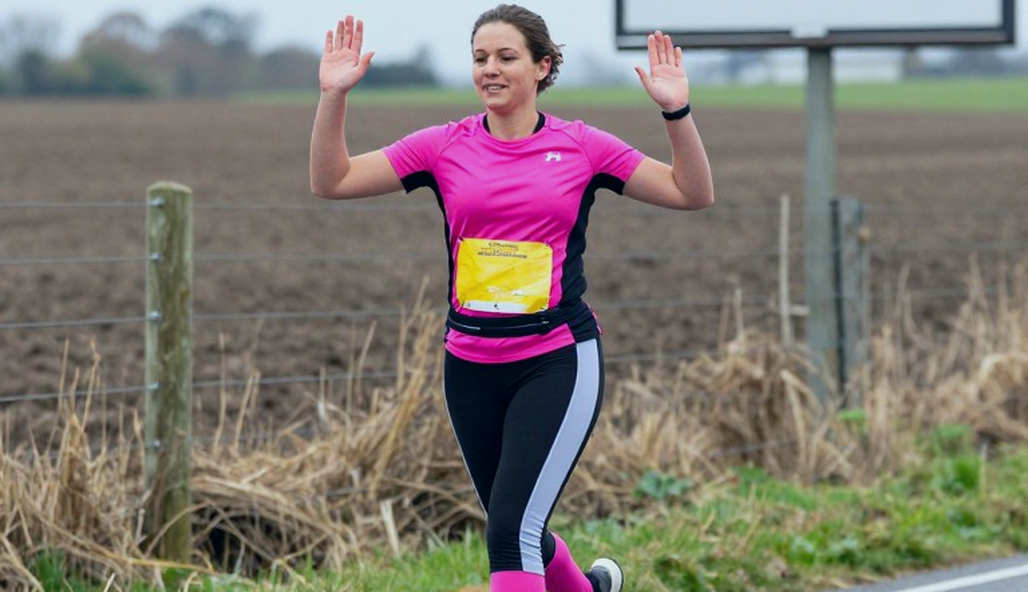
The inauguration in Karachi was at five in the evening. That small piece of technical information stands where a date should be in the report of the 54th National Athletics Championship I am working from — the organisers pushed sessions towards evening, because Karachi's daytime heat and coastal humidity sit on a race walker's body the way they sit on a marathoner's. That same evening, in the women's 5,000m race walk, Mahnoor broke the tape in 32 minutes 32.40 seconds, and Sindh had its first gold of the championship.
The report stops there. How many athletes stood on the start line, who finished second and in what time, what the lap splits were, and most importantly how many red cards were issued by how many judges — not one of these figures is recorded. I have a clock. In race walking, a clock is not the only witness.
Race walking is identified not by its feet but by its rule. The rule demands two things: one foot must remain in contact with the ground at all times — no "loss of contact" — and the advancing leg must not be bent at the knee. Three red cards from three different judges and the athlete is disqualified. Which means every race walk result is built from two documents — the time, and the judges' cards. We have the first. We do not have the second. So for now I will call 32:32.40 a claim, not a record.
The report does not say which year this championship belongs to. It describes Arshad Nadeem as an Olympic gold medallist — Paris, 5 August 2026 — so this edition necessarily post-dates that. I am keeping the year of the 54th edition open, because the file does not carry a date. What the Express Tribune report does carry is the prize figure: nine million rupees across every event and every medal. Substantial by South Asian domestic standards, modest when divided per athlete. In Pakistan, too, an athlete's real economic security is a departmental job — WAPDA, the Army, the police, the Air Force — exactly as Railways and Services function in India. I came into this profession for the economics; I stayed for the medicals. And the two meet on a single sheet of paper: the medical certificate on which an athlete's health and an athlete's job both rest.
The evening also records an asymmetry. The men's race walk was held over 20 kilometres; the women's over 5,000 metres. Internationally, senior women's championship walking is contested over 10 or 20 kilometres; 5,000m is not a senior championship distance. That gap tells us one of two things — either the women's endurance-walk base is so thin that a longer field simply does not assemble, or the programme was shortened under scheduling pressure. Neither reading is an indictment of Mahnoor. Both are an indictment of the structure she had to walk inside.
Now the arithmetic, because arithmetic is the only hard material in this story. Five kilometres in 32 minutes 32.40 seconds works out to 6 minutes 30.5 seconds per kilometre, an average speed of 9.22 kilometres per hour. World-class women's 20km walking runs at roughly four and a half minutes per kilometre. The Paris 2026 women's 20km entry standard was 1:29:20 — I am keeping that figure open for verification, but measured against the pace it implies, the gap is plain: Mahnoor is about 46 per cent slower per kilometre. Around one and a half times.
The world-level time in the women's 5,000m walk sits near 20 minutes — that number is also in my pending-verification tray — but the gap is upward of twelve minutes. And here is the detail that reframes everything: five kilometres is shorter than twenty, so in principle it should flatter the pace, not damage it. When the shortest championship distance still produces a pace half again as slow as world level, that is not a fault in a body. It is a signal about a preparation system.
Extrapolate to twenty kilometres at the current pace and you land near 2:10:10 — roughly 41 minutes outside the Paris standard of 1:29:20. I know this is crude arithmetic. A walker's pace curve flattens over distance, and stretching a 5km speed linearly to 20km is wrong. But the direction is clear, and direction is my business.
It is worth saying plainly that 32:32.40 is not an embarrassment. Domestic championship marks are supposed to look like this; a domestic meet exists to generate developmental marks and record them. I will not hang this time around Sindh's neck. I will place it in the file where I keep every knee — and that file always opens with a question, never with a verdict.
The question is how many walkers were on that line. If the field was in single digits — and in domestic women's walking it often is — then walking 32 minutes alone is a different examination altogether. Drafting and wind shadow matter in walking too; there is no pace reference, no rhythm to borrow from a judge's gaze. A solo walker's speed and a walker's speed in a crowd are two different capacities in the same athlete. The report cannot distinguish between them, because it does not give the field size.
I return to the heat, because the five o'clock inauguration is not idle detail. At the FIFA Under-17 World Cup in Kolkata in 2026 I sat near the fourth official in Salt Lake Stadium counting second-half cramp substitutions — fourteen across six matches. I have carried a heat-index meter and a stopwatch to every venue since. An evening session in Karachi cuts the temperature somewhat, but 32 minutes of continuous single-leg loading — the body's full weight transferring from one ankle to the other, step after step — extracts its price differently in humidity. Sweat, fluid, and the demand to keep moving without a break. If a medical stoppage occurred in this event, the report does not carry it.
A race walker's injury map is unlike other athletes', and it is the map that draws me most. Constant demand on the hip flexors, friction across the iliotibial band, the anterior shin, the lower back. And a particular irony: the loss-of-contact rule pushes an athlete towards a longer stride from the ankle, while the judge is watching the knee. The very attempt to stay legal moves the body into a posture that loads hip and knee together. A young walker caught between legality and speed gives up technique first and the hip second. In the medical room the scoreboard disappears and the body speaks; in a walker's medical room, the first thing that speaks is the judges' card sheet.
Five kilometres to twenty is not a linear progression. Reaching the Olympic distance from this pace requires a 30 to 40 per cent speed improvement, and that improvement comes from a coach, a biomechanics session, a nutrition plan and years of continuity — not from a gold at a domestic championship. I am not saying Mahnoor cannot get there. I am saying the route map is not in this report, and without a map we only know the starting point.
Look at the nine million rupee prize pool through the same lens. Every event, every medal, every athlete — divided out, the per-person share is not a sum on which anyone trains for a season. Which is why the departmental job becomes the biggest medical event of all: fail the fitness test and there is no job; no job and there is no budget for the next preparation. A failed medical is not a verdict, it is a document — and that document sits alongside a salary, not alongside a season's best.
Here the turn comes, and I have to change how I read this story. The problem is not that 32:32.40 is slow. Developmental domestic marks are slow; calling them slow is not a discovery. The problem is that a national federation awarded a senior title over a distance the world does not contest, and then published a result missing the one thing that makes a walk a walk — the judges' cards. A time without cards is a claim, not proof; the same as a javelin throw without a measurement. And the bigger omission sits in the men's 20km walk, where no times were published at all. Our anger goes to the slow number. The missing numbers are the story.
One more thing, so that this does not collapse into the easy joke made at every domestic championship. A national final with four entrants is not a punchline; it is a structural document. In Indian domestic athletics I have seen trials where a single athlete stood against the qualifying mark, and by the next morning that athlete was a "national champion" in the papers. The athlete bore none of the fault and the system bore all of it. My working assumption with Mahnoor is the same, until a start list appears.
What would change my reading: a published start list, three judges' card sheets, lap splits, the men's 20km times, and the technical delegate's report. If two of those become public at the next edition, this file gets a second page and 32:32.40 is entered as a beginning rather than a result. Until those papers arrive, the time stays in the same cupboard as the Railways, Patiala and supplement files — and the question stays open: the next time Sindh's flag goes up, will it go up with three judges' cards beside it?


संबंधित खिलाड़ी
अनुशंसित
The Sample Filled Before 2:18:31: Why the Peres Jepchirchir EPO Case Is a Calendar Story, Not a Performance Story2026-10-25
Sample Taken Before Sydney Marathon Tests Positive for EPO: Peres Jepchirchir Provisionally Suspended2026-10-25
Every Field N/A: Athletics' Empty Ledger and the Story It Actually Told2026-10-25
The Vial Was Sealed Before the Tape: Peres Jepchirchir, EPO and the Date That Decides the Story2026-10-24
54th National Athletics Championship: Mahnoor's Gold and the Four Empty Columns on the Results Sheet2026-10-25
Peres Jepchirchir's EPO Case: The Sydney Win Is Not the Data Point — the Sample Date Is2026-10-26
अनुशंसित
54th National Athletics Championship: Mahnoor's Gold and the Four Empty Columns on the Results Sheet2026-10-25
Peres Jepchirchir's EPO Case: The Sydney Win Is Not the Data Point — the Sample Date Is2026-10-26
Mahnoor's Gold, 32:32.40, and the Column Nobody Filled In2026-10-29
Every Field N/A: Athletics' Empty Ledger and the Story It Actually Told2026-10-25
Ruti Aga: Six Years, and a Prescription From a Clinic That Never Existed2026-10-24
The Sample Filled Before 2:18:31: Why the Peres Jepchirchir EPO Case Is a Calendar Story, Not a Performance Story2026-10-25