
World Cricket
The Changing Tactical World of Cricket: An Era of Pace, Data and New Thinking
पिछले दो दशकों में क्रिकेट का सबसे बड़ा बदलाव T20 प्रारूप के विस्तार से आया है, जिसने बल्लेबाज़ी की जोखिम-गणना, डेथ-ओवर विशेषज्ञता, डेटा-आधारित 'मैचअप' रणनीति और फ़्रैंचाइज़ी लीगों की वैश्विक अर्थव्यवस्था को जन्म दिया। इसके साथ खेल विज्ञान और वर्कलोड प्रबंधन ने खिलाड़ी प्रबंधन को बदल दिया, DRS जैसी तकनीक ने निर्णयों को अधिक सटीक बनाया, और महिला क्रिकेट एक स्वतंत्र पेशेवर बाज़ार के रूप में उभरा। आगे की तीन प्रमुख चुनौतियाँ हैं: खिलाड़ियों का बढ़ता कार्यभार, प्रारूपों (टेस्ट, वनडे, T20) के बीच संतुलन, और क्रिकेट-राष्ट्रों के बीच संसाधनों की असमानता। क्रिकेट का भविष्य डेटा और विशेषज्ञता के साथ-साथ इन प्रणालियों के प्रबंधन पर निर्भर करेगा।
The world of cricket has changed over the past two decades at a pace rarely seen in sport. A game that once revolved around five-day Test matches and slow, calculation-driven limited-overs formats now reaches matches decided within a few hours, constantly shifting strategies and layers of fine-grained data. This is not merely a change of formats; it is a change of thinking — about how an innings is built, how an over is bowled, how a field is set and how a player is prepared.
If the arrival of the T20 format is treated as the centre of this shift, that would not be wrong. It exerted pressure on every level of the game, from its economic structure to the mindset of players. Previously a batter would 'look' at the first few overs and progress while protecting his wicket. Now the thinking has inverted: how much risk can be taken off how many balls is decided in advance. Coaching staffs build a 'risk map' before the match — against which bowler to attack, against whom to consolidate, and in which over to play the big shot. This has made the game far more mathematical than before.
The most visible effect of this shift is the expansion of franchise leagues. A network of domestic and international T20 leagues now spans the world, creating a new economy for players. A cricketer's career was once determined mainly around the national team; now it is determined across several tournaments, the seasons of different countries and different club cultures. This broadens experience, but it also increases the physical and mental load on players. A single player must synchronise with different conditions, different ball quality and different team cultures through the year.
Data analytics has deepened this process further. Analysis once meant runs, averages, strike rates and wickets. Today it means: which ball of which bowler travels to which zone against which batter, where a batter's weakness lies, and on which ground batting first or chasing is more advantageous. Teams now build strategy on 'matchups' — which player's specific contest against another is more favourable. This thinking once depended on a captain's experience and instinct; today it is a team-based analytical process involving data analysts, physios, fielding coaches and psychologists.
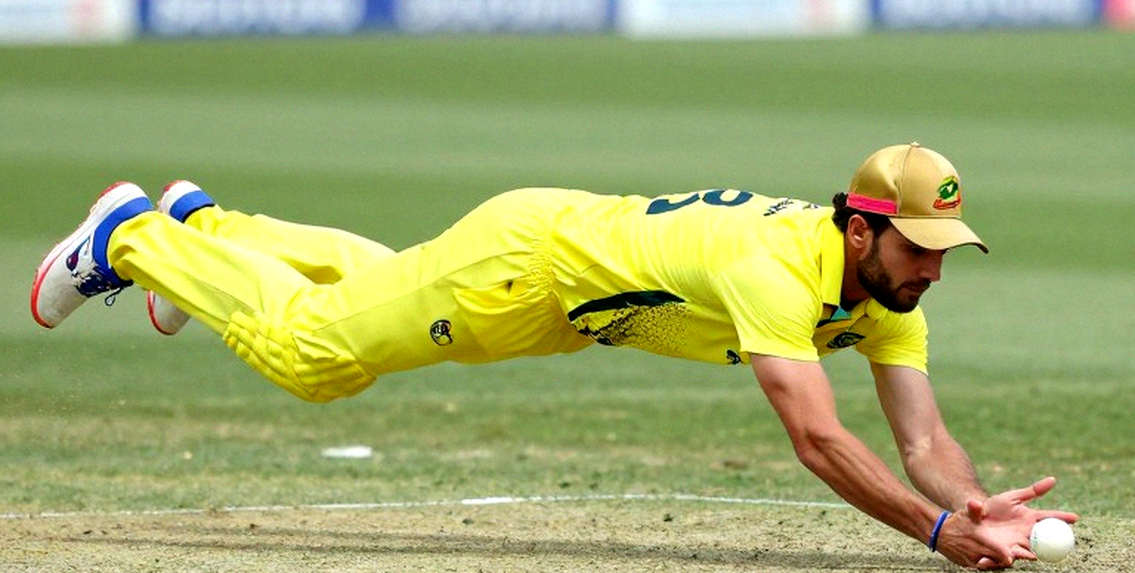
The change in batting technique is the most interesting. Traditional cricket emphasised footwork and head position. Now hand speed, bat swing and shot angle are equally important. The ramp, the scoop, the reverse scoop and the flick are no longer unusual. These shots have created a new problem for bowlers: if a batter can strike outside conventional zones, how should the field be set? That question is now at the centre of fielding strategy. Captains try unconventional placements to cover the 'cutter' and 'slong' areas, and for this reason the quality of fielding has become far more decisive than before.
On the bowling side the picture is inverted. Fast bowlers now possess not only pace but a full arsenal of yorkers, slower balls, bouncers and cutters. T20 has turned the 'death overs' into a separate specialism. Some bowlers have emerged whose primary job is to bowl only the last four overs. This specialism creates an interesting paradox: on one hand the game is making coaching more planned, on the other it is giving opportunities to players who are exceptional in a single role even if they do not play the whole match.
The role of spin bowling has also changed. A spinner was once regarded as a 'holding' bowler who stemmed the flow of runs and forced batters into error. Now a spinner is expected to take wickets, in any over — including the powerplay. To achieve this, spinners have worked on their pace, flight and secrecy of delivery. Several 'mystery' spinners have emerged whose deliveries are read late by batters. This shift shows that the value of specialisation has risen, and each role now has its own distinct skill set.
Behind all of this is one large factor — sports science. Today's teams have separate systems for sleep and recovery monitoring, workload tracking and injury prevention. A player's weight, speed, number of deliveries bowled and distance run on the field are all recorded. This makes it easier to decide when a player should be rested. But the same science has opened a new debate: have players become 'managed assets'? Does a rotation policy affect the competitive integrity of the game? That debate is not over and will intensify in the coming years.
The number of matches and the pressure of the calendar is an issue every cricket board and players' association is considering together. Continuous tours, leagues and international series create a cycle in which extended rest becomes difficult. Rising injury counts and several leading players being unavailable at once reinforce this concern. Many former players and coaches have publicly called for the calendar to be rationalised. This discussion is not only about player welfare; it is also about the quality of the game, because a tired player cannot deliver his best.
The use of technology has also grown rapidly. DRS has made decisions more accurate, but it has also added a new strategy — when and how to use a review. This has become a skill in itself, prepared for separately by teams. Smart replays, communication with ground staff and technical accuracy have made the game more transparent, though it is also true that technology does not always end controversy. Umpire's call and similar rules remain subjects of debate, and that debate has become part of the game.
Another change that is often under-discussed is the expansion of women's cricket. Women's cricket is no longer merely a subject of inclusion; it has become an independent market in terms of audiences, broadcast rights and sponsorship. The growth of women's leagues, investment in domestic structures and the scheduling of more matches are clear signals. This expansion has created many new roles — specialist coaches, physios, analysts and managers. It is not just an increase in the number of players but the construction of an entire professional system.
The global expansion of cricket is another important dimension. Beyond the traditional cricket nations, several new countries are now investing in the game. More international opportunities for associate nations have raised the level of competition. Smaller teams challenging larger ones is no longer an 'upset' but an increasingly normal occurrence. This is good for the game, because a monopolised sport cannot hold audiences over the long term. But this expansion brings a challenge — inequality of resources. Some countries have better facilities, more matches and better training, while others have limited opportunities. Reducing this imbalance is the biggest responsibility of the game's administration.
The status of Test cricket also demands discussion. The Test format is regarded as the 'foundation' of the game because it offers the hardest examination of technique, patience and mental resilience. But commercial pressure and changing audience habits have kept questions alive about the scheduling of Tests. Day-night Tests and championship structures are attempts to keep the format alive. The truth is that the future of Test cricket will depend on how it is presented, not on how 'long' it is.
Grassroots and youth development is the area where long-term investment has the greatest effect. Academies, school competitions and domestic tournaments are the foundations from which the next generation comes. Several countries now run talent identification programmes in which young players are selected through data and video analysis. But experts also warn that selection based purely on statistics can be dangerous, because a large part of the game depends on mental resilience, team spirit and performance under pressure, none of which can be measured in a table.
The role of coaching and leadership has also changed. A captain was once a 'decision-maker'; now he is a 'manager' who harmonises data, the coaching staff and players. A modern captain must think on three levels: immediate strategy, the long-term plan for the match, and the morale of players. This shift has made captaincy more a matter of communication skill than technical skill. Teams that have adapted to this transition better appear more stable over time.
What lies ahead? It is clear that cricket is moving towards 'more game, more data and more specialisation'. Three challenges accompany this — player workload, balance between formats and inequality of resources. The administration that manages these three will shape the next decade of the game. And one thing is certain: the future of cricket lies not only with the players who make the statistics, but also with the systems that determine what kind of ground those statistics are made on.

संबंधित खिलाड़ी
अनुशंसित
Wisden's Oscars Quiz: The 1844 Date and the Five-Month Reconciliation of 2026-292026-10-28
Empty Payload, Full Stories: The Most Dangerous Silence in a Cricket Newsroom2026-11-02
The Empty Column: How Indian Cricket Selects on Zero Information Points2026-10-25
First Morning at Newlands: The Ball That Took No Wicket Was Australia’s Real Statement2026-10-30
311* and 389/2: When a Delhi School Knockout Record Passes Through the Grid2026-10-28
Captain, Keeper, Opener: The Wisden Quiz That Withholds Its Own Answer2026-10-24
अनुशंसित
When Stage-1 Came Back Empty: The Cricket Lesson That Comes Before the Numbers2026-11-03
Empty Payload, Full Stories: The Most Dangerous Silence in a Cricket Newsroom2026-11-02
Original Cricket News Report Cannot Be Produced Because Stage-1 Data Is Empty2026-10-31
Marufa Akter's injury: one anonymous official, four weeks in bed, and the question nobody asked2026-11-02
When the Ledger Goes Silent: A Data-Pipeline Failure and the Cricket Story That Never Arrived2026-10-25
Sri Lanka's Batting Records Audit: 952/6, 624 and the Quiz That Never Gives the Answer2026-10-30