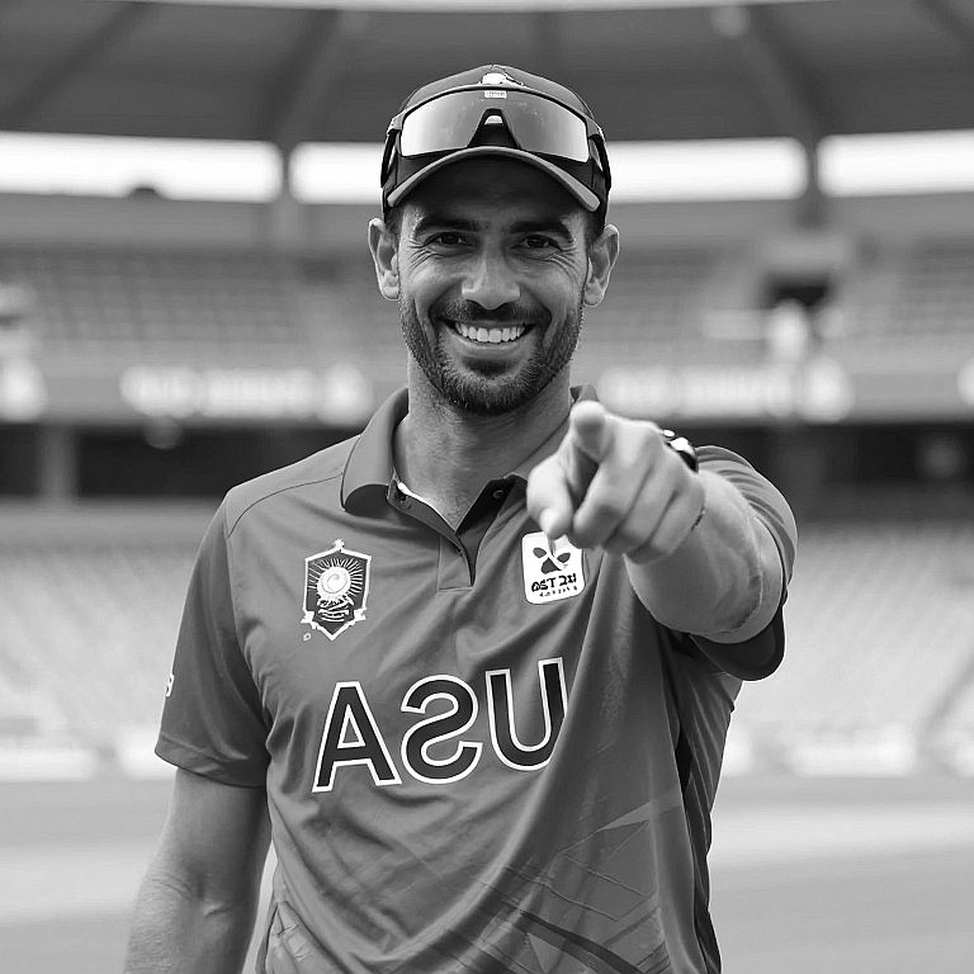
Tayyab Arif's third century: a flat Islamabad deck, 7.30 an over, and the arithmetic of a declaration
**कोर उत्तर:** तैयब आरिफ़ ने प्रेसिडेंट्स ट्रॉफी ग्रेड-I में अपने डेब्यू फर्स्ट-क्लास सीज़न का तीसरा शतक लगाया — स्टेट बैंक ऑफ पाकिस्तान के खिलाफ 110 गेंदों पर 120 रन। पारी सपाट इस्लामाबाद पिच पर आई, जहाँ मैच में प्रति विकेट लगभग 84 रन बने; शतक से ज़्यादा मायने रखती है किंग्समेन अकादमी की 44 ओवर में घोषणा। **मुख्य तथ्य:** - तैयब आरिफ़: 120 रन, 110 गेंद, 17 चौके, 2 छक्के; किंग्समेन अकादमी ने 44 ओवर में 321/3 पर पारी घोषित की। - सीज़न आँकड़े परस्पर विरोधी: एक स्रोत 722 रन/औसत 72.22, दूसरा 727 रन/औसत 66 — दोनों गणितीय रूप से असंगत। - इस्लामाबाद का नेशनल ग्राउंड: तीन पारियों में 1,090 रन, 13 विकेट — प्रति विकेट लगभग 84 रन। - स्टेट बैंक ऑफ पाकिस्तान को 295 का लक्ष्य; लेखन के समय 12 ओवर में 64/2, 231 रन शेष। - आरिफ़ के पिछले दो शतक पहली पारी में; यह उनका पहला दूसरी पारी का शतक है। **स्रोत:** मैच रिपोर्ट और उद्धृत पैवेलियन पोस्ट आँकड़े, अक्टूबर 2026; आधिकारिक PCB/ESPNcricinfo स्कोरकार्ड से सत्यापन लंबित। **संबंधित प्रश्न-उत्तर:** प्रश्न: क्या तैयब आरिफ़ अभी टेस्ट टीम के लिए तैयार हैं? उत्तर: नहीं — 12 पारियों का नमूना, सपाट पिच का संदर्भ और घर से बाहर के आँकड़ों का अभाव इस दावे को समर्थन नहीं देता। प्रश्न: इस शतक का मैच पर क्या असर हुआ? उत्तर: इसने ड्रॉ की ओर बढ़ते मैच को परिणाम-संभव बनाया, और आरिफ़ की रन रेट ने ही 44 ओवर में घोषणा को व्यावहारिक बनाया। प्रश्न: सीज़न औसत में विरोधाभास क्यों है? उत्तर: मूल सामग्री में 722/72.22 और 727/66 दोनों दर्ज हैं, जो अलग रन-टोटल और अलग आउट-संख्या माँगते हैं; आधिकारिक स्कोरकार्ड के बिना कोई भी संख्या अंतिम नहीं है।
Third session of the fourth day, National Ground, Islamabad. Kingsmen Academy declared at 321 for 3 in 44 overs — 7.30 runs per over. This is a red-ball scorecard, not a T20 one. In that innings Tayyab Arif walked out only after the first over had gone, after Maaz Sadaqat had returned for a six-ball duck and the board read 0 for 1. A twenty-year-old captain, in his debut first-class season, at No. 3, on day four, with the declaration clock tied around his neck.
120 off 110 balls. Seventeen fours, two sixes. A strike rate of 109.09 in red-ball batting is a number that cannot be ignored, and a number that cannot be praised without first naming the pitch. The afternoon will get the story, but the entry I care about in my notebook is the 44-over line.
Context: the structure this match was played inside
The President's Trophy Grade-I is Pakistan's domestic first-class framework, where departmental and institutional sides sit across from one another. On one side State Bank of Pakistan, on the other Kingsmen Academy. Kingsmen were bowled out for 371, SBP replied with 398 — a lead of 27. Two bowling attacks sitting at roughly the same level, and a match that moved into its third innings on a flat deck.

The pitch arithmetic belongs first. Across three innings, 371 + 398 + 321 for 3 comes to 1,090 runs for 13 wickets — about 84 runs per wicket. In domestic cricket that number speaks loudly in favour of the batters. No dew question on an October Islamabad morning, limited seam once the ball ages, and no grass suggested anywhere. Against that backdrop, every batting figure needs one question sitting next to it: was this the batter's day, or the surface's?
Kingsmen's batting order does not make that question easier. Four fifties in the first innings — Maaz Sadaqat, Saud Shakeel, Usman Khan, Shayan. In the second, partnerships of 140 with Mohammad Huraira (57) and 90 with Suleman (59). This is not a one-man-team story; it is the story of a dressing room with international experience in it, where a Saud Shakeel sits and bats.
Core: what the numbers say, and what they refuse to say
The season aggregate first. Twelve innings, 722 runs at 72.22, three hundreds and four fifties. Seven scores above fifty in twelve innings — 58 per cent of his knocks — and three of those converted past three figures. The signal in this run is conversion, not average. A typical top-order batter in domestic first-class cricket reaches fifty in roughly 25-35 per cent of innings; Arif is running at nearly double that. It is the single most predictive trait on the red-ball pathway to a Test side — the player who does not repeatedly waste starts.
The second number is boundary share. Eighty of his 120 runs — 66.7 per cent — came in fours and sixes, roughly one boundary every 6.5 balls. A flat deck, a fast outfield and a field spread wide during a declaration push all inflate that ratio. The domestic top-order norm sits at 45-55 per cent. Arif's 66.7 per cent describes a fast, intent-led No. 3, not a traditional anchor.
Third: his two previous hundreds — 122 against Ghani and 105 against OGDCL — both came in the first innings. The SBP hundred is his first second-innings ton, on day four, with a target ticking. The shift looks small, but for a twenty-year-old it is a signal of adjusting his tempo to scoreboard pressure. I map the field first; the story arrives later — and this innings' map says that after five runs in the first innings, on the same pitch against the same attack, the output moved so far that the surface alone cannot explain it. Within-match variance inside his own game is a real, open variable, and it should not be quietly parked.
Fourth, and least discussed: the record notes he was deliberately taking on a specific bowler, Sirajuddin. That is tactical information, not a statistic. A twenty-year-old No. 3 who decides which bowler to attack and when is a player the franchise scouting model spots very quickly — and in Pakistan that model has been setting domestic selection for some years now.
Contrarian: the century is a story, not the match's story
This is where the pause belongs. At the time of writing SBP were 64 for 2 in 12 overs, chasing 295 — 231 runs still required. Flat pitch, a 27-run first-innings lead already banked, a day's play remaining. The 'exciting finish' being painted is an author's opinion at this timestamp, not a recorded outcome. The draw was live and arguably the more probable result. Some finals are won by one run and a hundred small maps — and some matches are drawn because nobody drew the map of the clock.
The second contradiction sits inside the data. On one side, 722 runs at 72.22, which arithmetically demands about ten dismissals. On the other, the quoted figure in the source: 727 runs at 66, 'three short of Taha's 730'. 727 divided by 66 demands eleven dismissals. Both numbers cannot be true at once, and so every figure above stays 'pending' until an official scorecard confirms it. An analyst who feeds these numbers into a projection before verification has cut the rope on his own bridge.
Third, the level question. The competition in which Arif is passing fifty in 58 per cent of innings is not Pakistan's hardest available domestic benchmark. Bowling quality in departmental tournaments varies, and runs made there read high. The tournament leaderboard also carries another twenty-year-old, Taha, on 730 runs. That points either to a batting-friendly tournament or to a genuine young batting cohort; the available data does not discriminate between the two.
And the largest structural point: Pakistan's Test batting has long rested on a small senior core, and the road from Grade-I to the Test XI has been crowded, non-linear and frequently rewritten — where established names and PSL visibility both function as entry fees. Tayyab Arif sits directly inside the medium-term gap the selection conversation keeps pointing at.
Takeaway: the next verification
Three things to watch next time, and all three can be falsified. First: across his next four first-class innings, does his boundary share hold above 60 per cent or fall below 45 — falling would be the pitch talking, holding would be the method. Second: away from home, where a top order bats under a four-to-five-an-over squeeze. Third: on a Pakistan A or Shaheens tour, where his strike rate stops against limited movement and a short-ball plan. The notebook records the field first; the century arrives later.