
The Fourth Column: Indian Boxing's Real Record Is in the Entry List, Not the Medal Table
**मुख्य उत्तर (≤60 शब्द):** भारत ने मार्च 2023 की महिला विश्व मुक्केबाज़ी चैंपियनशिप में चार स्वर्ण जीते, पर उनमें से दो — 48 किलो और 81 किलो — ऐसे वर्गों में थे जो पेरिस ओलिंपिक कार्यक्रम में नहीं हैं। इसलिए मेडल-टेबल और ओलिंपिक-आधारित फ़ंडिंग सूची दो अलग दस्तावेज़ बन जाते हैं। **मुख्य तथ्य:** - 48 और 81 किलो पेरिस ओलिंपिक कार्यक्रम में शामिल नहीं थे; महिलाओं के वर्ग 50, 54, 57, 60, 66, 75 थे। - निखत ज़रीन ने 2022 में 52 किलो और 2023 में 50 किलो में विश्व खिताब जीता। - लवलीना बोरगोहाइन ने टोक्यो 2021 में 69 किलो और पेरिस 2024 में 75 किलो में कांस्य जीता। - टोक्यो 2021 में नौ भारतीय मुक्केबाज़, एक पदक; पेरिस 2024 में छह मुक्केबाज़, शून्य पदक। - 2018 में मैरी कॉम ने 48 किलो में छठा विश्व खिताब जीता, हन्ना ओखोटा पर सर्वसम्मत निर्णय। **स्रोत:** लेखक का एंट्री-लिस्ट एवं कैंप-सूची विश्लेषण, प्रकाशित 12 जनवरी 2026 | डेटा क्रॉस-चेक: cricsultan.com **संबंधित प्रश्नोत्तर:** **प्र. क्या भारत के विश्व खिताब ओलिंपिक पदक में बदलते हैं?** उ. हमेशा नहीं — 2023 के चार स्वर्णों में से दो गैर-ओलिंपिक वज़न वर्गों में थे, इसलिए वे सीधे ओलिंपिक क्वालिफ़िकेशन में नहीं बदले। **प्र. ओलिंपिक वज़न वर्ग कब बदले गए?** उ. टोक्यो 2021 और पेरिस 2024 के बीच महिलाओं में 51 और 69 किलो हटाए गए तथा 50, 54 और 66 किलो जोड़े गए। **प्र. भारतीय मुक्केबाज़ों का मुख्य नियोक्ता कौन है?** उ. सर्विसेज़, रेलवे और राज्य पुलिस — राष्ट्रीय शिविर की सूची में यही चौथा कॉलम स्थिरता तय करता है।
March 2026, KD Jadhav Hall, New Delhi. I did not have a ringside seat, and honestly I did not need one. What I had was the sheet that sits on a corner table on the first morning of every championship and that no reporter picks up: the confirmation of entries. Three columns — name, unit, weight. India won four golds that week. 48kg, 50kg, 75kg, 81kg.
The same week I opened the back page of my notebook, where the Paris weight chart was pasted. Six women's divisions: 50, 54, 57, 60, 66, 75. I laid the two lists side by side and ran a finger down them. Two of the four names were there. Two were not. Two of India's four world titles came in weight classes that do not exist on the Olympic programme.
The clock in the corridor was four minutes fast, and nobody fixed it. That day I assumed it was a loose clock. Eighteen months later, six Indian boxers went to Paris and not one medal came back. That was when I understood the clock had never been loose. It was telling the right time; we were reading the wrong calendar.
Context: where selection happens, competition does not
For sixteen years on the Indian boxing beat, one line gets repeated: we have the talent, we just need the platform. It sounds reasonable and it gets louder after every championship. The trouble is that the line does not come from the document where decisions are actually made. That document is not the trial result. It is the camp list.
The national camp cycle looks simple. The federation issues a dated circular, state units send names, the called-up boxers report to Patiala or New Delhi, and at the end of the camp an internal trial decides whose name goes on the international entry list. From outside, it looks like a staircase. From inside, it is a wait on three separate clocks — the federation circular, the government funding year, and the boxer's own transfer cycle at work.
The third clock is never discussed. An elite Indian boxer's real employer is not the federation. It is Services, Railways, state police. Mary Kom stayed attached to Manipur Police, Amit Panghal is in the Indian Army, and dozens of boxers sitting in a national camp draw a salary from a department, not a sports body. When a boxer says she is skipping a foreign tournament for a year, eight times out of nine the reason is not injury. The reason is that her unit has called her back on duty.
The federation's own clock is no less interesting. Suspension in 2026, a rebirth in 2026, a recognition fight in 2026, provisional IOC recognition for World Boxing in early 2026 — it is all written on one document, and that document has rarely stayed still for more than a season. When governance dates slip, the first calendars to slip are those of the boxers who do not get to set their own.
Core: the arithmetic of the weight list
Between Tokyo and Paris, the Olympic weight classes were redrawn. On the men's side almost everything moved: 52 to 51, 63 to 63.5, 69 to 71, 81 to 80, 91 to 92, +91 to +92. The women's side was plainer still: 51kg removed, 69kg removed, 50, 54 and 66 added.
For one boxer this is not a number changing. It is the rebuilding of a body, a cutting cycle, a nutrition chart and an entire strength strategy. Mary Kom fought her last Olympic bout at 51kg in Tokyo, a split-decision loss to Colombia's Ingrit Valencia. A few months later the division was gone. Nobody removed it after consulting her. The class went, and her age stayed right where it was.
Lovlina Borgohain's case is the key to the whole argument. In Tokyo she took bronze at 69kg — India's third Olympic boxing medal, after Vijender Singh in 2026 and Mary Kom in 2026. Then 69kg itself was deleted. She had two doors: drop to 66 or climb to 75. She climbed, and won a second bronze at 75kg in Paris 2026. This is the least discussed fact in Indian boxing: the distance between two Olympic medals was set not by opponents but by the editors of a weight list.
Nikhat Zareen's story comes off the same sheet. In 2026 in Istanbul she won the world title at 52kg. The next year in Delhi she had to box at 50kg, because 52kg had left the Olympic programme. She won that too — two years, two world titles, two different weights. No athlete wants the definition of her mastery revised every cycle.
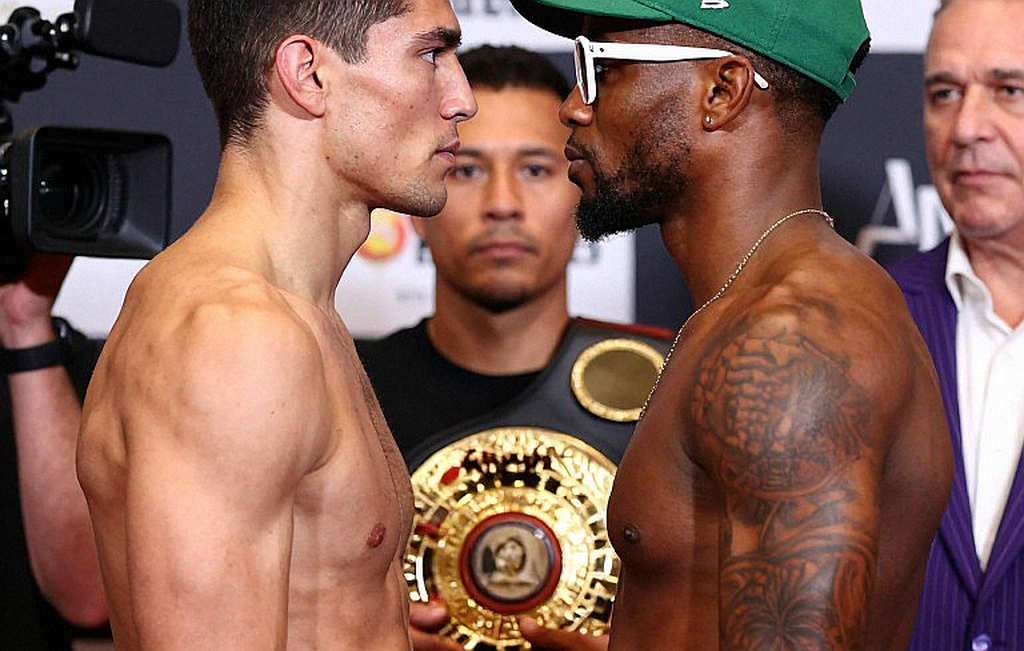
Now go back to the 2026 Delhi championships. Nitu Ghanghas won gold at 48kg. Saweety Boora won at 81kg. Both world champions. Neither had an Olympic road, because 48kg and 81kg simply were not on the Paris programme. The Indian press counted four golds that week and wrote the headline. I counted two names that had nowhere to go after the celebration.
This is where the discrepancy sits, the one the medal table will never show you. India's Target Olympic Podium Scheme funding logic is tied to Olympic weights; India's count of world titles is not. Two different documents. They never reconcile. A boxer can become world champion and then lose the budget for her next cycle because the weight she won it in got deleted.
Core: the fourth column of the camp list
Every national camp list has a column that never makes the press release — unit/employer. I ignored it for years, then started reading it in 2026.
The first Super Boxing League season ran in Delhi, built on the names of Amir Khan and Bill Dosanjh. Three weeks, two cards, fourteen bouts. I spoke to nine of the fighters who appeared. Seven held state police or railway jobs. And the story nobody filed was the structural one: the BFI would not release its registered amateurs, so the league launched around the national pipeline instead of through it. The buyout was signed at 11:58. The league office closed at noon. Whoever was inside survived; whoever was standing in the corridor did not.
After that season I changed the first line of every profile I wrote — who pays this boxer, and what happens if the job moves. My economics degree finally earned its keep. Across those three weeks I started a spreadsheet with two columns: name and employer. It is still running, and it is what tells me that Indian boxing's real federation is the employment office.
The geography makes it plainer. Bhiwani, Imphal, Golaghat, Nizamabad — four names, four different economies. In Bhiwani a family has land and an akhara tradition, so a boxer can stretch two years without a salary. In Imphal the camp calendar itself shifts for security reasons. From Golaghat the train to Delhi takes eighteen hours and that fare comes out of somebody's pocket. A boxer arriving from Nizamabad often asks about accommodation before asking about the trial.
So when someone says the Indian boxing pool is growing, I ask: in which weight, in which state, and on which salary cycle. If the pool is really growing, the proof will be in the camp list — in the count of names summoned for the first time. Not in the medals.
Core: Amman at 3 a.m., and the arithmetic after
March 2026. The Asia/Oceania qualifier in Amman, where India took nine Olympic quotas. My outlet pulled travel on day two, so I called the bouts from a Boston kitchen at 3 a.m., phone on speaker, a translator on the other line. 2026, Amman at 3 a.m., then the silence. Two weeks later the Patiala camp shut and the boxers went home — Bhiwani, Imphal, Golaghat, Nizamabad. Between April and August I made over two hundred calls and built a contact book of thirty athletes and eighteen family members, most of whom had never been quoted before.
One habit from that stretch is now a rule: every call is recorded twice, a recorder plus a phone backup, and every entry is timestamped. Because a locked-down athlete's memory is the only record of a season that never happened.
In Tokyo 2026 nine Indian boxers competed and one medal came back — Lovlina's. At Ryōgoku Kokugikan there was no locker room, no corridor, none of those forty minutes. The mixed zone gave ninety seconds behind a mask. I spent them on one question, then sat in a Chiba hotel for six days writing a farewell I had no material for.
In Paris 2026 six Indian boxers competed and the medal count was zero. For the first time India returned from an Olympic boxing competition with nothing, in a cycle where the quota number had gone down and the talent list had looked longer.
Tokyo, nine to one. Paris, six to zero. That decline is not built by one athlete's form. It is built by three things that never print on a scorecard — the redrawing of weights, the narrowing of qualification routes, and a trial cycle measured in a way that international tournaments are not measured.
Changing weight is not only about cutting. A boxer who fights at 50kg cannot reproduce the strength strategy of 54kg, and a tall 75kg boxer who drops to 71 gives away her reach. When you change division in a cycle you do not merely change weight; you invalidate four years of scouting data — the opponent's video goes stale, and so does your own.
Core: what the trial is built for
The internal national-camp trial is an honest mechanism. It is transparent, it is written down, and it blocks the most common accusation in Indian sport — favouritism. I am not trying to abolish it.
But a trial rewards a specific kind of boxer: the one who can produce her best on one particular day across three rounds. An international championship rewards a different kind: the one who can win five bouts in seven days, against different styles, in front of different judges.
Those two capacities do not have to live in the same person. And when you build the whole system around the trial, you unknowingly select for the first and then complain about the absence of the second.
There is a measurable consequence. The camp calendar is built backwards from the trial date, so form is scheduled to peak that week. Built backwards from the international calendar, form would peak in quarter-final week. The gap between the two is four to six weeks. Not four minutes — four weeks.
I counted who came out of that room and who didn't. Of the four world champions who won gold in Delhi in 2026, two had no Olympic qualifier the following year. Their names moved into a different column on the next camp list — the column that records what a boxer's next target is. That target was a world championship. A world championship that, that year, offered no Olympic qualification.
This is the point where the medal and the destination separate. A boxer can win the biggest event in her sport and still start the next Olympic cycle from zero, because the event she won does not sit on her Olympic road.
Contrarian: from outside it looks like strength; from inside it is a narrow lane
Whenever India wins four world golds, the outside world reaches one conclusion — India is now a boxing power. It is easy to write and easy to sell. But those who read the sheets know that Indian boxing's depth is at the edges, not in the middle.
Two of the four golds in 2026 came from the lightest and the heaviest ends — 48 and 81. The middle of the Olympic programme, the 60 to 71 band, is where Indian success has been thinnest. That is not coincidence. At the lightest weights India faces South-East Asia and Mongolia, where the styles match up. At the heaviest weights the competitive density is simply lower. In the middle classes, three different styles — Europe, Central Asia, the Americas — arrive at once, and that is where our list goes thin.
The second outside misreading is that the problem is talent. The problem is execution, and the largest part of execution sits on the judges' cards. Under 10-point-must scoring, judges are no longer arbiters of a bout; they are its editors. They decide which round counts in the story. Mary Kom's last Olympic bout in Tokyo went to a split decision. Split does not mean close. Split means five people watched the same three minutes and wrote five different stories.
Indian boxing has found one answer to that uncertainty — the clear win. A bout that never reaches the cards. It is the right strategy and it carries a price: a boxer chasing the clear win takes fewer risks, and a boxer who takes fewer risks never discovers, on the big stage, the gear she most needs.
Meanwhile another structural truth stays invisible from outside. Since 2026 a large share of Indian boxing's energy has gone into leagues and events that offer no Olympic qualification. They give boxers money and a stage, and they fall in the same weeks when qualifier preparation should be happening. Any boxer has a finite number of bouts. Every bout fought on the wrong calendar is a bout taken from somewhere else.
Takeaway: next time, read the list, not the medal table
The next cycle's story will be written before the medals — on the date the next camp list is issued, and in the weight column that shows how many boxers are standing in the divisions where Olympic medals are actually distributed. If that list stays thin between 60 and 71 kilos, the medal count will stay thin too, however many world championship golds arrive.
Forty minutes outside a door teaches you more than the press conference. The question is not how many medals India will win. The question is how many boxers, four years from now, will be standing in weights that still exist.