
Formula 1's 2026 Transition: New Power Units, Active Aerodynamics and the Test of Information Reliability
2026 में फॉर्मूला 1 में क्या बदल रहा है? तीन मुख्य बदलाव हैं। पहला, नई पावर यूनिट: MGU-H हटा दिया गया है और MGU-K की शक्ति लगभग 120 किलोवाट से बढ़ाकर लगभग 350 किलोवाट की गई है, जिससे आंतरिक दहन और इलेक्ट्रिक हिस्से का योगदान लगभग 50:50 हो जाता है; ईंधन 100 प्रतिशत टिकाऊ होगा। दूसरा, सक्रिय एरोडायनामिक्स: सीधी लाइनों के लिए निम्न-ड्रैग X-मोड और कोनों के लिए उच्च-डाउनफ़ोर्स Z-मोड, जिसमें आगे और पीछे दोनों विंग चलते हैं; डाउनफ़ोर्स लक्ष्य लगभग 30 प्रतिशत और ड्रैग लगभग 55 प्रतिशत घटाया गया है, साथ में पीछे चलने वाली कार के लिए मैनुअल ओवरराइड मोड। तीसरा, संरचनात्मक बदलाव: कारें लगभग 30 किलोग्राम हल्की और आयाम में छोटी होंगी; कैडिलैक के रूप में ग्यारहवीं टीम जुड़ेगी; ऑडी ज़ाउबर का अधिग्रहण कर फ़ैक्टरी टीम के रूप में उतरेगी; होंडा एस्टन मार्टिन के साथ जाएगी; रेड बुल फ़ोर्ड के साथ अपनी पावर यूनिट बनाएगी; एल्पाइन मर्सिडीज़ की ग्राहक पावर यूनिट पर चली जाएगी। कैलेंडर लगभग 24 रेस का रहेगा और मैड्रिड का नया सर्किट जुड़ेगा। लागत सीमा और एरोडायनामिक टेस्टिंग प्रतिबंध (ATR) लागू रहेंगे, जिससे बड़े बजट वाली टीमों को भी पैसे से रफ़्तार खरीदने की छूट नहीं होगी।
Formula 1's 2026 season is not another upgrade cycle — it is a structural reset. The power unit philosophy, the aerodynamic philosophy, the physical dimensions of the car, the fuel, the list of manufacturers and the size of the grid are all changing simultaneously. This report examines both the technical transition and the information-reliability challenge that accompanies it.

Why the regulation-cycle position matters. Any competitiveness claim must first be placed on the regulation timeline. A team's 'surge' in year one of a ruleset means something entirely different from a surge in year four. In year one, gaps open because someone read the rulebook better; in year four, gaps open because everyone has read it and only execution differs. 2026 is year zero: a brand-new power unit and a brand-new aerodynamic concept arrive together. Early-season results should therefore not be read as a team's true strength — they will be a blend of rule interpretation, reliability maturity, and the timing of the resource switch away from the previous car.
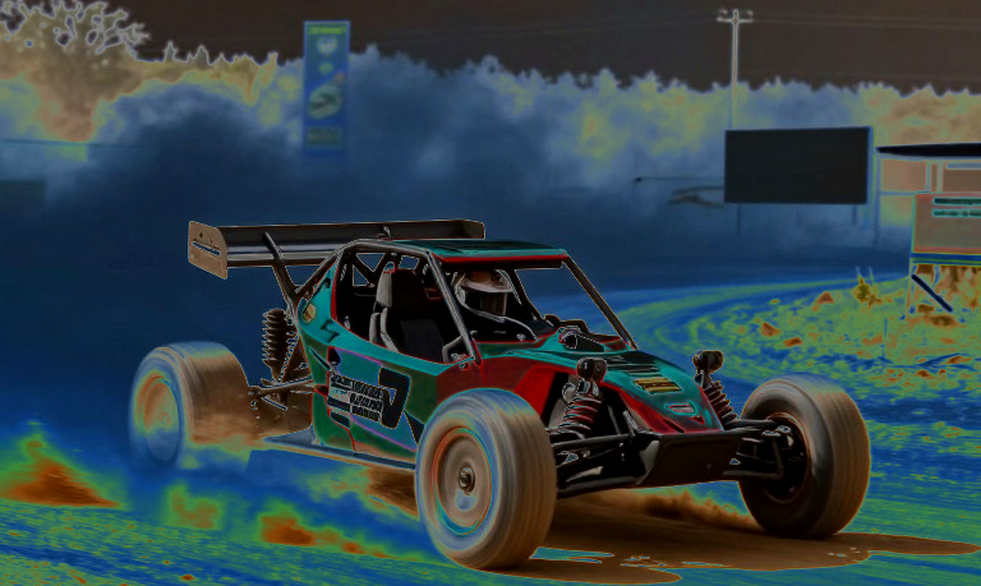
The power unit. The 1.6-litre V6 turbo-hybrid architecture stays, but the internal balance of power is inverted. The MGU-H is removed entirely — the component that underpinned Mercedes' and later Honda's dominance in the hybrid era and that kept the barrier to entry prohibitively high. Its removal simplifies the design, makes cost estimates more transparent and lowers the entry barrier. Meanwhile the MGU-K rises from roughly 120 kW to around 350 kW, making the combustion and electric contributions close to a 50:50 split. The car effectively shifts from 'an engine car with a hybrid bolted on' to 'a hybrid car that also has an engine'. The risks are real: energy management becomes far more race-critical, the accumulated advantage of the old hybrid era is reduced on paper, and — most importantly — reliability. In the first season of a new power unit, the lack of real-world data is the single biggest exposure.
Active aerodynamics. The 2026 car will adapt itself rather than being adapted per circuit. A low-drag 'X-mode' activates on straights and a high-downforce 'Z-mode' in corners, with both front and rear wings moving. Total downforce targets fall by roughly 30 percent and drag by roughly 55 percent, a combination intended to make overtaking easier because a following car loses less in clean air. A manual override mode will grant additional electrical power to a chasing car within a defined gap. The analytical consequence is significant: circuit-specific setup packaging loses value, and simulation-to-track correlation gains it. Whichever team correlates its wind tunnel and CFD data to the real track fastest will hold an early advantage.
Dimensions and weight. Minimum weight drops by around 30 kg, width is reduced and the wheelbase shortens. On track this means less load on the tyres, shorter braking distances and smaller margins in close combat — potentially better entertainment. It also means teams must rediscover weight distribution and tyre management from scratch.
Sustainable fuel. 100 percent sustainable fuel becomes mandatory. This is industrial strategy as much as environmental messaging: it allows F1 technology to connect to the existing road-car fleet and appeals to manufacturers unwilling to bet entirely on an electric future.
Cost cap and ATR. The cost cap — which has sat around 215 million dollars per team per season in recent years — caps spending, while the Aerodynamic Testing Restriction allocates wind tunnel runs and CFD allowance in reverse order of the previous season's constructors' standings. In a regulation-change year this produces a paradox: last season's standings mean little under the new rules, so the ATR advantage may go to a team that was behind in the old car but read the new concept better.

The manufacturer map is being redrawn. Red Bull has built its own power unit operation with Ford, moving from chassis constructor to full manufacturer. Honda goes to Aston Martin as a works partner. Audi has taken over Sauber for its first full F1 programme. Alpine becomes a Mercedes customer, ending Renault's works engine programme. Mercedes and Ferrari continue. The likely consequence is a widening gap between works teams, who control integration — cooling, gearbox interfaces, energy management software — and customer teams forced to live with a design philosophy they did not choose.
An eleventh team. Cadillac joins in 2026, initially with a Ferrari customer power unit and later moving toward its own. The entry dilutes both the cost cap and the prize-fund distribution across eleven teams, and a new team must learn race-weekend operations, tyre understanding and simulation calibration that established teams take for granted.
Calendar. The calendar stays at roughly 24 races, with Madrid's new circuit joining. A new venue means a track-specific dataset nobody holds. Sprint weekends remain around six, which will hurt teams still behind in understanding their new car.
The driver market. The 2026 market looks unusually stable: Hamilton and Leclerc at Ferrari, Norris and Piastri at McLaren, Russell and Antonelli at Mercedes, Alonso and Stroll at Aston Martin, Sainz and Albon at Williams, Verstappen on a long-term Red Bull contract. But stability does not mean no pressure. With up to 350 kW of electrical power and an override mode, the driver becomes an energy manager. Whoever can handle recovery and deployment almost subconsciously will adapt fastest, which is why early 2026 may produce surprising team-mate gaps.
The media verification problem. Demand for information peaks in years like 2026, and rumour supply rises with it. Three tiers of information circulate together: official and verifiable (FIA regulations, team press releases, timing data); journalistic (source-based reporting graded by the outlet's and journalist's track record); and speculation resting on phrases like 'reportedly' and 'it is understood'. The structural danger is that tier-three content can be dressed in tier-two formatting — a professional template, technical vocabulary, a data-like layout — making it impossible for a reader to distinguish verified from invented. The correct professional response when no verifiable fact exists is to stop the analysis, not to fill the vacuum. Once an unsourced inference is formatted inside a professional template, it becomes almost indistinguishable from a genuine finding. The practical editorial rule: every technical claim should state its basis — scrutineering documents, a team statement, or a photograph-based inference are not equally reliable.
Risks. Technically: power unit reliability in a first season; simulation-to-track correlation under active aero; and the possibility that a team spends heavily on a 2026 concept that turns out wrong, with the cost cap limiting its ability to recover. Informationally: unsourced content that looks verified; missing source metadata, without which reliability cannot be graded at all; and neglect of time sensitivity, since a 2026 story that does not state its season, round or date is practically unusable.
Conclusion. 2026 is a rare convergence — a new power unit, a new aerodynamic language, a redrawn manufacturer map, an eleventh team and a new city, all at once. Early results will mislead, the middle of the season will reveal the real picture, and the final rounds will show who read the rulebook best. But that speed of change also imposes a journalistic duty. When the sport moves this fast, readers have less time to verify and must rely entirely on the publisher. The most valuable commodity is not the fastest story but the trustworthy one — and the first condition of a trustworthy story is that where there are no facts, no story is written.