
Tanvi Patri in Dakar: The Biggest Question Lost Amid the Mosquitoes-and-AC Debate
डकार में युवा ओलंपिक खेलों के बैडमिंटन टूर्नामेंट (1 नवंबर से निर्धारित) में भारत की 15 वर्षीय शटलर तन्वी पाटरी हिस्सा ले रही हैं। उनके कमरे में एयर कंडीशनर न होने और मच्छरों की शिकायत का एकमात्र स्रोत टाइम्स ऑफ इंडिया की रिपोर्ट है, जिसमें यह जानकारी उनके पिता रबीनारायण के हवाले से दी गई। आईओसी, डकार 2026 आयोजन समिति, भारतीय ओलंपिक संघ या स्वयं खिलाड़ी की ओर से कोई सार्वजनिक पुष्टि या प्रतिक्रिया उपलब्ध नहीं है। डकार तटीय शहर है और नवंबर में दिन का तापमान सामान्यतः 25-28 डिग्री सेल्सियस रहता है, जबकि रिपोर्ट में कोई तापमान आंकड़ा नहीं दिया गया। अधिक महत्वपूर्ण मुद्दा यह है कि तन्वी ने करीब छह हफ्तों में तीन अंतरराष्ट्रीय आयोजन किए — एशियाई खेल (आइची-नागोया), मिस्र में विश्व जूनियर चैंपियनशिप (16 के दौर में बाहर, बीमारी के बीच) और अब डकार — जो जूनियर खिलाड़ियों के कैलेंडर और सहयोग ढांचे पर सवाल उठाता है। रिपोर्ट में 'स्वर्ण पदक नजर में' जैसे दावे इसके अपने तथ्यों से मेल नहीं खाते।
Dakar. The badminton tournament at the Youth Olympic Games is scheduled to begin on 1 November in the Senegalese capital. India's 15-year-old shuttler Tanvi Patri is there. In recent days, the discussion around her name has not been about her game on court — it has been about the absence of an air conditioner in her room and complaints about mosquitoes. How well-founded that complaint is, who made it, and who has not responded to it — these three questions need to be separated and examined, because in the way this story spread, the line between fact and inference has become considerably blurred.
The journey of the story: one source, many hands
The biggest problem with this coverage is its sourcing structure. The claim that 'there is no AC in the room, there are mosquitoes' came to public attention through exactly one channel: a report in the Times of India. In that report, the information came from Tanvi's father, Rabinarayan. Khel Now then built its story on that same report. What reached the reader, therefore, is third-hand information. The middle link — the original Times of India text — is not publicly available, so it cannot even be determined what was in the first report and what was added or removed in the second.
Most striking is that there is not a single independent confirmation in this story. The International Olympic Committee (IOC) has said nothing. The Dakar 2026 organising committee has said nothing. The Indian Olympic Association or any delegation official has said nothing. Tanvi Patri herself has not directly told any journalist this. No athlete or delegation from another country has corroborated it. There is no photograph of the room, no temperature record, no benchmark for the condition of the room. Just one family's account, which is naturally anxious for its child, and that account was treated as fact.
It should be stated clearly here that there is no need to view the father's account with suspicion — a parent's concern may well be legitimate. The problem is that in journalism, a story resting on a single source is not called 'confirmed'. And the language of the report in which this appeared itself reveals that the writer was not fully assured either. The report said the complaints 'appear to have surfaced' and 'do not appear to be ending'. That is the language of inference, not of evidence. When a journalist writes that something 'appears' to be the case, he is often conceding that he does not have firm proof.
Whose account is it? The smoke over the boundary line
There is another technical flaw that escapes the reader's eye. The report said Tanvi 'spoke about the challenges' — but immediately after, every concrete piece of information is attributed to her father. In other words, the story says the athlete said something, but reports what the father said. This is a clear instance of source multiplication in journalism — the information belongs to the father, but it is presented as though it came from the athlete's mouth. The reader is led to believe that the athlete was spoken to directly, which is not the case.
There is a similar problem of a different kind. The report linked this complaint to the debate that ran during the Asian Games over the accommodation and travel arrangements of the Indian contingent. Those Games were held in Aichi-Nagoya. No logical reason was given for connecting that incident to this one, except that both involve an 'Indian athlete' and 'a failure of arrangements'. This is the 'serial victim' template, in which two separate issues are threaded into a single narrative. The cost is that the real questions — the capacity of Senegal's infrastructure, the budget limits of the Youth Olympics, the accountability of the organising committee — get buried. The debate stops at 'Indians are in trouble again', when it should be at 'what did the organisers promise and what did they deliver'.
A story about heat, without a temperature
The report repeatedly uses phrases like 'very hot' and 'high temperatures'. But not a single temperature figure appears anywhere in the story. This is not a small omission, because Dakar is a coastal city and November is not its hottest month. During this period, daytime temperatures generally stay between 25 and 28 degrees Celsius. This comes from public weather records, not from any partisan source.
This does not mean the complaint is false. It means the real problem is probably not 'heat' but 'a stuffy room without AC, lack of ventilation and mosquitoes'. These are three different things, and accountability for each is determined in a different place. If the problem is the sun outside, no one is accountable. If the problem is the absence of an AC, the question arises whether the organisers had promised one. If the problem is mosquitoes and lack of ventilation, that is a direct question about the organising committee's arrangements. The report merged all three, so it becomes impossible to determine whose fault it is.
And here is a basic question that is nowhere asked in the entire story: was providing an AC the organisers' responsibility? Was it part of a written commitment? Or are ordinary fans and open windows the standard at an event like the Youth Olympics? If there was a promise and it was not kept, that is a breach of contract. If there was no promise, it is a question of the level of facilities, which can be debated but not turned into an accusation. The report did not touch this question at all.
The real question: three countries in six weeks
If the dates in the story are placed in a line, a picture emerges on which not a single sentence was written in the entire report. From mid-September to early October, the Asian Games were held in Aichi-Nagoya. In October, the BWF World Junior Championships took place in Egypt, where Tanvi exited in the round of 16 and also fell ill during that period. And from 1 November, the Youth Olympic Games begin in Dakar.
That means a 15-year-old athlete competed in three international events on three continents within roughly six weeks, and fell ill in between. If this information is correct — and it is worth verifying — then it is a far bigger story than 'there is no AC'. It connects directly to the question of who plans the calendar for junior athletes in India, who decides how many events an athlete is entered in, and who takes the 'no-play' decision in case of illness or injury. This workload is not small for a 15-year-old girl, and its impact is not on one tournament but on the early years of her career.
This question matters also because the report itself states that Tanvi fell ill in Egypt and lost in the round of 16. That information was present in the report, but it was never examined in connection with the accommodation complaint. It was placed in the seventh paragraph and then again in the thirteenth, with unrelated material in between. This is not richness of information but looseness of structure.
A leap in the draw story
The report names three group-stage opponents — Australia, Mexico and South Korea. After that, it suddenly says she may face a Japanese player in the semifinal. But the middle portion is missing. What the knockout draw looks like, who is in which bracket, is not shown. The Japanese player is not named either.
This information comes from the father, and he may well be speaking after looking at the draw. But the reader does not have that draw, so cannot verify the claim. In journalism, when a conclusion arrives by a jump and the evidence behind it is not placed before the reader, it is called a 'leap of conclusion'. This may seem a small thing, but when an entire story rests on a single source, every such leap weakens trust.
'Gold medal in sight' — a line that does not match the numbers
Towards the end of the report, it is said that Tanvi has the Youth Olympic gold medal in her sight. Read in isolation, the sentence sounds fine, but placed alongside the report's own facts, it creates a contradiction. The report itself states that she exited in the round of 16 at the World Junior Championships, and that while ill. The report itself states that she may face a player from Japan, a strong badminton nation, as early as the semifinal. And the report itself states that the likely final opponent is Zhang Yixin, the world junior champion.
After all three of these, to write 'gold medal in sight' is not a conclusion drawn from the facts but editorial decoration. It is the sentence that raises hope in the reader's mind, and when that hope is not fulfilled, the cost is borne by the athlete. Placing the burden of 'gold' on a 15-year-old is not help, it is pressure.
Names without dates
Among Tanvi's achievements, the report mentions the Asian U-17 title and success at the senior nationals. But there is no date, no opponent, no score, no category. What does 'success at the senior nationals' mean — reaching the quarterfinal, the semifinal, or the title? This is not clear. When building an athlete's profile, this is the information that matters most, and it is the information least provided.
Similarly, the references to the World Junior Championships in Egypt and to Zhang Yixin being the junior champion are connected to each other and should be verified together. It should also be verified that Tanvi is 15 years old and falls within the Youth Olympic age limit. These things are likely true, but there is a difference between 'likely' and 'confirmed'.
What should be checked first
If this story is to be taken forward, the order of verification should be as follows. First, confirm whether badminton in Dakar begins on 1 November — this is the axis of the entire story, and if the date is wrong, everything else is moot. Then see whether the organisers had promised an AC. Then determine whether the absence of an AC is the condition of all rooms or of some. Then verify together the World Junior Championships in Egypt and Zhang Yixin's title. Then check Tanvi's age and eligibility. Then clarify the dates and categories of the Asian U-17 title and the senior nationals results. And finally, find the name of the Japanese player who is mentioned without a name.
So what is the real story
After reading all this coverage, one thing becomes clear. The most important question that got buried in the mosquitoes-and-AC debate is this: why is a 15-year-old athlete playing three international tournaments in six weeks, why did she fall ill in between, and why is she being entered in a fourth event after that. This question is not about the failure of one country's organisation but about the system of junior sport — where calendars are built such that young athletes carry a burden on both body and mind, and where there is no public debate about the capacity of the support structures around them.
This does not mean the accommodation complaint should be taken lightly. If a 15-year-old athlete has to sleep among mosquitoes abroad, that is serious and should be investigated. But the way to investigate is not to turn a father's account into a headline without confirmation and publish the story without waiting for the organisers' response. The right way is to ask the organisers, ask the Indian delegation, speak directly to the athlete, and where no answer comes, state plainly that no answer came.
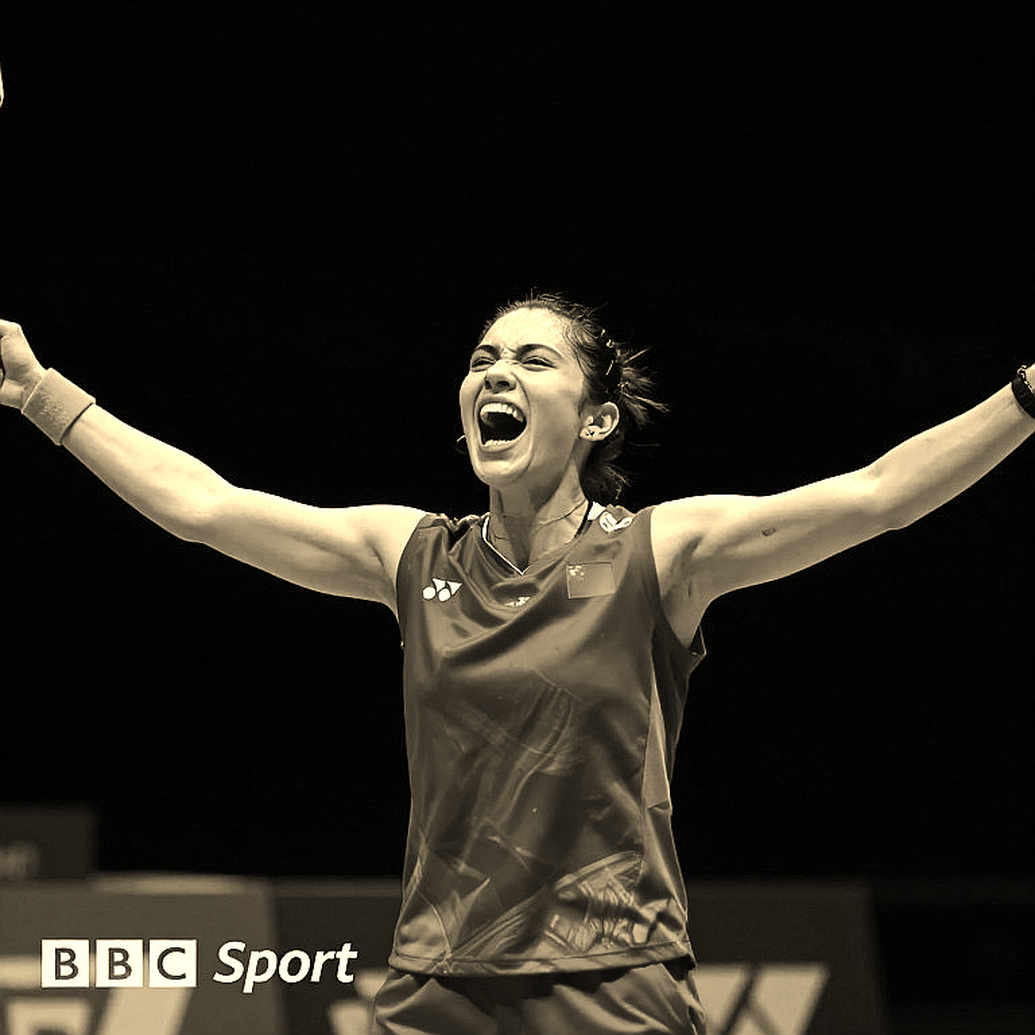
Tanvi Patri's tournament in Dakar is about to begin. The best help for her would be for the condition of her room to improve — if it really is bad. And if it is not bad, the best help would be to keep her out of this debate and let her focus on the court. In both scenarios, journalism's job is the same: ask questions, wait for answers, and write 'don't know' for what is not known.