
BasketballAfter the Three-Point Revolution: Basketball's Positionless Era and the New Competitive Map
Basketball
After the Three-Point Revolution: Basketball's Positionless Era and the New Competitive Map
बास्केटबॉल में 'तीन-सूत्री क्रांति' का पहला दौर समाप्त हो चुका है: तीन अंकों के शॉट अब अपवाद नहीं, मानक हैं। इसलिए प्रतिस्पर्धात्मक बढ़त शॉट-चयन से हटकर स्पेसिंग और निर्णय-क्षमता की ओर खिसक गई है। इसका सबसे स्पष्ट परिणाम 'पोज़िशनलेस बास्केटबॉल' है, जिसमें पारंपरिक 1–5 भूमिकाएँ धुँधली पड़ जाती हैं और बड़े खिलाड़ी से पासिंग तथा बाहरी शॉट की अपेक्षा की जाती है। रक्षा में स्विचिंग और ड्रॉप कवरेज के बीच पज़ेशन-दर-पज़ेशन चुनाव अनिवार्य हो गया है। अगला बड़ा बदलाव आक्रमण की जगह रक्षा और नियम-निर्माण से आने की संभावना है।
Over roughly the past decade and a half, basketball's tactical vocabulary has been rewritten by what is now called the three-point revolution. The shot from beyond the arc was once a situational choice; today it is the foundation of many teams' offensive architecture. But the first phase of that revolution is over. Teams that built their identity simply on taking more threes now face opponents who read the same spreadsheets, generate the same spacing and copy the same shot profile. The real question is no longer whether to shoot from deep, but what kind of structure you build to create that space in the first place.
At the root of the shift is data-driven thinking. Expected points per shot has become an intuitive concept for nearly every coach. Once teams internalised that a three-pointer and a shot at the rim both pay better than a long two, the mid-range gradually emptied out. In the early years the change was obvious — pace, extra passes, shooters parked in the corners. Now it is standard at almost every level, which means competitive advantage no longer comes from shot selection alone but from the process that produces the shot.
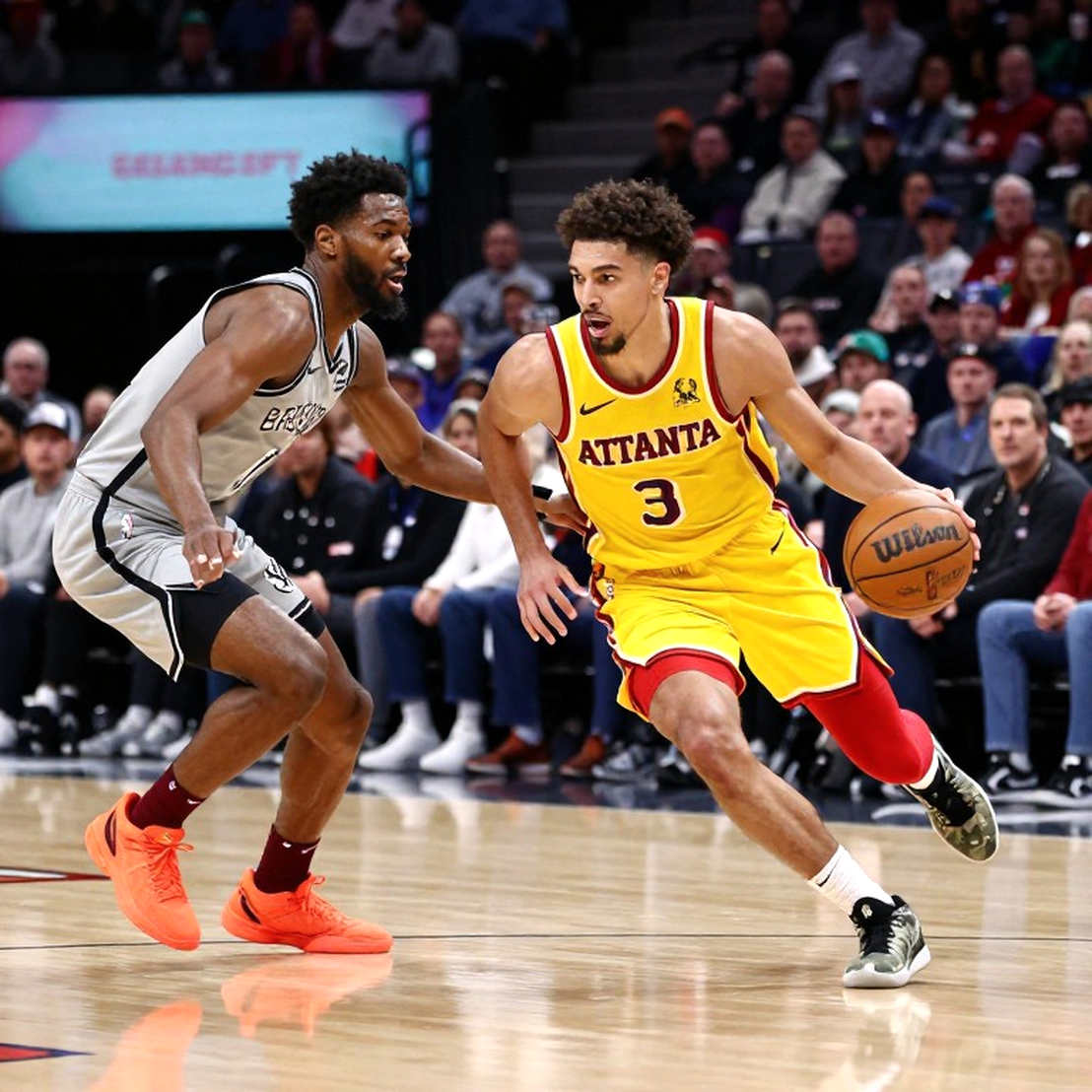
This is where the idea of positionless basketball begins. Traditional roles one through five are blurring. A player once valued purely as a ball handler is now expected to create without the ball; a player once valued purely for work in the paint is now asked to operate as a passing hub at the top of the floor. Nikola Jokić is the clearest expression of this — a big man whose value lies less in scoring than in vision and decision-making. When your centre is the playmaker, traditional marking schemes become largely moot.
The effect on skill development among bigs is direct. Young centres and power forwards are now expected to pass out of the short roll, pop for perimeter shots and, after a switch, hold their own against smaller guards. A player deficient in any one of those areas sees his minutes shrink. Draft and recruitment criteria have shifted accordingly: height alone is no longer a qualification; height combined with mobility and decision speed is. Victor Wembanyama is the emblem of that new standard — length paired with perimeter skill.
Defensively, the response has split two ways. One path is switching — changing assignments on every screen so the offence finds no air. The other is drop coverage — keeping the big man back to protect the rim. Both carry a price. Switching leaves mismatches alive; dropping gifts perimeter shots. For a modern coach the choice is not static; it changes possession by possession. That is why defensive planning is no longer player-specific but combination-specific: which big stands where on which screen is decided in advance.
The physical prototype has changed too. Players between roughly six-foot-eight and six-foot-ten who can handle like a guard and defend like a forward are the scarcest resource in the game. Teams deliberately stockpile them so that no mismatch survives for long. Luka Dončić, Shai Gilgeous-Alexander and Jayson Tatum are part of that logic — the ball is in their hands, but their influence is not confined to one corner of the floor.
A further layer is workload management. At this pace and with this much running, the physical load is higher than ever. Teams now treat a season as a long project rather than a sequence of games — travel, sleep, recovery and training load are all tracked. On the other side of that argument are the fans who buy tickets and are unhappy to see a star resting. That tension will remain one of the hardest questions for rule-makers: how to preserve both product quality and player safety.
The talent pathway has widened as well. There used to be a single ladder — college, then the professional league. Now European club academies, developmental league programmes and college-level name, image and likeness arrangements together form a multi-route system. Players gain options, but evaluation gets harder: statistics from different levels are not directly comparable. Scouting has therefore become less a matter of reading numbers and more a matter of reading context.
The effect on the viewing experience is mixed. Pace, higher scoring and frequent lead changes add drama, but complaints about a narrowing variety of shot patterns persist. The challenge for league administrators is balance when adjusting rules — giving defence a little more room without extinguishing offensive creativity. There is no consensus, and any experiments will take several seasons to read clearly.
In short, the centre of gravity in basketball has moved from the shot to space and decision-making. Teams that build fast, flexible, multi-skilled structures hold the advantage; those that cling to a single formula fall behind. One honest limit must be stated: this report makes no claim about a specific game, score, date or official statement, because the available input contained only a sport-category label. The trends described rest on publicly discussed strategic directions; confirming them would require season-level data, team shot profiles and coaches' public remarks. As for the future — positionless basketball is approaching its own limits, and the next major shift will likely come from defence and rule-making rather than offence. That is an inference, not a conclusion.


अनुशंसित
The Null Ledger: 47 Fields, 47 N/A — When the Audit File Came Back Empty2026-10-25
Olympiacos Eye Second Straight Win, But Availability Crisis Is the Biggest Question Before Armani Milan Clash2026-10-31
81-76, Twice: What the Scorelines in the Greek Basketball Arrest Warrant Prove — and What They Don't2026-10-24
Laso Calls Payne-James Comparison 'Very Stupid' — Then Draws the Role Map Himself2026-11-03
Ten Empty Fields: When the Basketball Data Pipeline Returned Zero2026-11-01
Why 'Merely Good' Players Became Untradeable in the Apron Era: A Forensic Audit of Six Teams and Seven Contracts2026-10-30
अनुशंसित
Two Complaints, One Unanswered Question: Do EuroLeague and ESAKE Actually Have Jurisdiction Over Giannakopoulos's Instagram?2026-10-28
Why 'Merely Good' Players Became Untradeable in the Apron Era: A Forensic Audit of Six Teams and Seven Contracts2026-10-30
The Clearance File That Came Back Blank: The Transfer Window's Most Honest Document2026-10-25
After the Three-Point Revolution: Basketball's Positionless Era and the New Competitive Map2026-11-03
Empty Data, Full Stories: The Verification Crisis in Indian Basketball Transfer Coverage2026-11-02
Olympiacos Eye Second Straight Win, But Availability Crisis Is the Biggest Question Before Armani Milan Clash2026-10-31