
The New Geography of Asian Cricket: From the Age of Superstars to the Age of Systems
एशियाई क्रिकेट का केंद्र-बिंदु पिछले दो दशकों में सुपरस्टार-आधारित पहचान से प्रणाली-आधारित पहचान की ओर खिसका है। वैश्विक क्रिकेट राजस्व का सबसे बड़ा हिस्सा एशियाई बाज़ार से आता है, और आईसीसी की निर्णय-प्रक्रिया में इस क्षेत्र का प्रभाव संस्थागत रूप से स्पष्ट है। फ्रैंचाइज़ी लीगों — विशेषकर आईपीएल — ने खिलाड़ियों के लिए एक दूसरा आर्थिक बाज़ार बना दिया है, जिससे राष्ट्रीय टीम और लीग के हितों में कैलेंडर-टकराव उत्पन्न होता है। तकनीकी स्तर पर उपमहाद्वीप की पारंपरिक स्पिन-पहचान कमज़ोर नहीं हुई है, लेकिन तेज़ गेंदबाज़ी की एक नई संस्कृति विकसित हुई है जो 140 किलोमीटर प्रति घंटे से ऊपर की गति को सामान्य मानती है। महिला क्रिकेट इस क्षेत्र का सबसे तेज़ी से बढ़ता खंड है, हालाँकि इसका विकास अभी मुख्यतः एक ही बाज़ार पर केंद्रित है। संरचनात्मक जोखिमों में प्रारूप-अतिभार, खिलाड़ी वर्कलोड, सट्टेबाज़ी से जुड़ी भेद्यता और एशिया कप जैसे आयोजनों की राजनीतिक नाज़ुकता शामिल हैं। क्रिकेट के ओलंपिक में लौटने (लॉस एंजिल्स 2028) से सरकारी वित्तपोषण और नए दर्शक वर्ग का अवसर खुलेगा, पर इससे टेस्ट क्रिकेट की सापेक्ष स्थिति और कमज़ोर पड़ सकती है। किसी भी खिलाड़ी या मैच पर भ्रष्टाचार का आरोप केवल आधिकारिक निष्कर्ष के आधार पर मान्य है, मीडिया-संकेत के आधार पर नहीं।
1. Introduction: A Continent That Sets the Game's Direction
World cricket's centre of gravity has shifted steadily eastward over two decades. That shift is visible not in trophy counts but in how the international calendar is constructed, how broadcast revenue is divided, and how a young cricketer plans the next five years of a career. Asia is now the game's largest market, its largest talent source, and — more importantly — its most powerful centre of governance.
But inside that dominance a quieter revolution is underway. Until roughly a decade ago, Asian cricket's story was a story of individuals: a Tendulkar, a Sangakkara, an Afridi, a Dhoni. Today's story is a story of systems — academies, sports-science departments, data units, franchise scouting networks, and the administrative machinery that decides which player plays how much of which format. The superstars remain, but they are now products of the system rather than its authors.
This report examines that transition. It is not a report on a single match, series or controversy. It is an examination of the structural pressures that simultaneously bind and fracture Asian cricket: revenue, format, franchise capital, player welfare, governance, and shifting audience expectations.
2. The Geography of Revenue
Asia's share of the global cricket economy is far larger than its geographical footprint. The Indian board is widely regarded as the wealthiest cricket institution in the world, and its share of the ICC's revenue-distribution model has historically been the largest. The 2026 'Big Three' financial structure drew sustained criticism for that imbalance, and later revisions softened it partially, but the underlying fact remains: the size of the Asian market sets the contract values of the entire sport.
One consequence is rarely stated. The financial security of smaller member nations depends on the health of Asian cricket. When a fixture like India–Pakistan takes place, the benefit flows through the whole ecosystem — broadcasters, sponsors, and the ICC's redistribution pool. When it does not, the loss is collective too. Asian cricket's greatest economic vulnerability is therefore this: its single largest asset is a product that cannot always be manufactured for political reasons.
The second effect is subtler. When revenue originates in one market, that market's preferences gradually enter the game's rules and calendar. The expansion of T20, the declining weight of bilateral series, and the special funds being created for Test cricket are all expressions of the same pressure.
3. Franchise Cricket: A New Economy, An Old Loyalty
The most powerful institution in Asian cricket today is not a national board but a franchise league. The IPL did not merely reshape India's domestic structure; it established a commercial benchmark that the PSL, ILT20, Lanka Premier League and Bangladesh Premier League are all measured against.
The structural consequence is that players now live in two markets. The first is the national team, where the currency is prestige, Test caps and long-term legacy. The second is the franchise market, where the currency is immediate and direct. When the two conflict — over a bilateral series and a league, say — players and boards must choose.
The politics of that choice are young, but the direction is clear. Boards want to retain control through instruments such as No Objection Certificates, while a generation that encountered league cricket before national cricket treats the league as its primary professional platform. This is not merely a generational gap; it is a collision of two economic logics.
One caution is essential. A large league bid must never be read as proof of international quality. Auction value is set by demand, availability, team-composition constraints and purse limits — not by a player's Test or ODI capability. Maintaining that distinction is the most basic discipline in contemporary cricket analysis.

4. India: The Depth Model and the Politics of Succession
India's greatest current strength is not its stars but its depth. A parallel domestic structure — first-class, fifty-over and T20 competitions — produces a pool from which several formats can be supplied at once. The real test of that depth comes when first-choice players are unavailable, and in recent years India has shown comparatively effective replacement.
Depth has a cost, however. When three or four credible candidates compete for each position, selection itself becomes a political process. The line between rotation, rest policy and format specialisation blurs. The clearest example is the captaincy-succession question: once a generation departs, leadership becomes less a technical matter and more a question of communication and power balance.
Technically, the identity of Indian batting is changing. The traditional strength of Asian batting was footwork against spin and running between the wickets. The new generation is adding power-hitting and first-ball aggression, particularly in T20. The change is effective but carries a risk: when a batting template becomes risk-seeking, the capacity for restraint on difficult pitches declines. Test cricket exposes that gap fastest.
In bowling, India's greatest achievement is the development of a fast-bowling culture — historically the subcontinent's weakest area. Workload management, specialist coaching and the stable incomes generated by franchise cricket have produced a generation that treats 140kph as normal.
5. Pakistan: An Excess of Talent, A Deficit of System
Pakistan cricket is Asia's oldest puzzle. Talent has never been scarce. The fast-bowling lineage from centres such as Rawalpindi and Peshawar is unmatched anywhere, and batting continues to produce players with genuine international-calibre ability.
The problem is not capacity but continuity, and it appears at three levels. First, the instability of the domestic structure, with repeated reorganisation and uncertain financial viability. Second, recurring debate over political interference in selection, which breeds insecurity among players. Third, a comparatively weak player-welfare and sports-science apparatus, which contributes to a pattern of talent lost early to injury.
Through all of it, Pakistan's greatest asset remains its fast-bowling pipeline. When that pipeline functions, Pakistan is competitive anywhere, against anyone. When it does not, the entire structure bends under batting pressure. That single-pillar dependence is the central strategic vulnerability.
6. Sri Lanka: The Quiet Rebuild
Sri Lanka has conducted Asia's least-discussed and most solid reconstruction. After the departure of the 2026 World Cup generation and the stars who followed, the team passed through a long transition. Today's structure looks considerably more balanced.
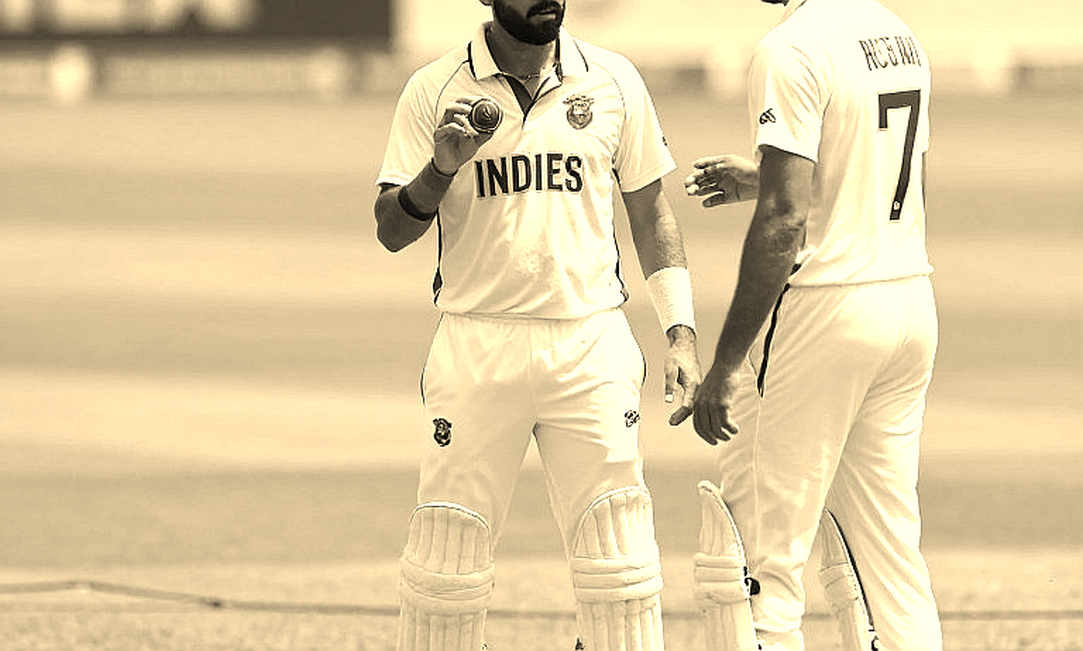
In batting, the team has restored patience to the centre. An aggressive opener paired with a stable middle order, plus useful lower-order batting, is a model that endures in subcontinental conditions. Spin retains its traditional force, and fast bowling now offers three or four options rather than one.
The real challenge is economic. National financial pressure has affected sporting structures, and the viability of domestic cricket is a permanent concern. Initiatives such as the Lanka Premier League move in the right direction but cannot compete with IPL-scale capital. The consequence is a permanent export risk: Sri Lanka's best players spend more time in global leagues.
7. Bangladesh: The Gap Between Expectation and Achievement
Bangladesh is Asian cricket's largest unsatisfied equation. Domestic popularity is enormous, stadiums fill, and grassroots talent is not scarce. Yet internationally the team has not delivered the consistency its promise implied.
The most obvious cause is technical: performance is very strong at home and very weak abroad. On spin-friendly pitches Bangladesh can trouble anyone; on fast, bouncing pitches the batting structure collapses. This is not purely a technique gap but an adaptation gap — and adaptation is built through sports science, diversified practice conditions and the planning of overseas tours.
The second cause is structural. Power within Bangladeshi cricket has been centralised, and public disputes over selection and captaincy have recurred. In such an environment players avoid risk — and risk-taking is the precondition of progress in modern cricket.
8. Afghanistan: The Fastest-Learning Team in the World
If one story in Asian cricket is technically the most impressive, it is Afghanistan's. In barely more than a decade the side has moved from Associate status to Full Membership and from there to the knockout stages of major tournaments. The progress is not only inspiring but analytically notable.
The model rests on three pillars. First, the deliberate adoption of spin bowling as a weapon rather than merely a containing tool. Second, a prioritisation of T20, the shortest route to international competitiveness on limited resources. Third, player participation in franchise leagues, which gave Afghan cricketers sustained exposure to international teammates and coaches.
The next challenge is Test cricket. The path from T20 success to Test success is the hardest in the game, because Tests demand the endurance of two innings — and that endurance comes from the depth of a first-class structure that remains thin.
9. The Expanding Periphery: Nepal, Oman, the UAE
Asian cricket's most interesting dynamism is now at the periphery rather than the centre. Nepal has generated an audience and an emotional attachment rare among smaller cricket nations. Oman and the UAE have built durable competitive sides on a diaspora-based model.
Their significance is not only sporting. They supply a political argument within the ICC's global structure: that the game is expanding beyond its traditional members. The stronger that argument becomes, the greater the moral basis for challenging Asian dominance of revenue distribution.
Their structural problem is equally clear: neither a large domestic market nor a long first-class calendar. Their existence rests largely on ICC event funding and diaspora talent — a fragile foundation.
10. The Asia Cup and the 'Hybrid' Reality of India–Pakistan
The Asia Cup is Asian cricket's only institution that gives regional identity an institutional form. Its value lies in giving smaller members regular competition against larger ones — something bilateral series cannot do.
In recent years, however, the event's very format has become a complex administrative question. The informal freeze on India–Pakistan bilateral fixtures produced 'hybrid models' in which hosting rights and actual venue diverge. The solution is practical, but it raises a principle: does an international tournament remain international when hosting rights become symbolic?
There is a sporting consequence too. When teams do not meet regularly, the technical basis of a rivalry weakens and only the emotional basis survives. That damages both sides, because genuine competition is what drives strategic development.
11. Format Overload and Player Welfare
Asian cricket's most immediate structural problem is the calendar: three international formats, multiple franchise leagues, domestic tournaments and, for leading players, constant travel. The direct cost falls on the body, particularly on fast bowlers, whose workload is heaviest.
Workload management has become a central selection principle. Teams deliberately rest players, which means many bilateral series are no longer full-strength. That is commercially sensible but frustrating for audiences — and a paradox for boards that sell tickets.
The solution is institutional rather than technical. It requires formal recognition of format specialisation: accepting that a player will not be equally available across formats, and building selection on that fact. Some boards have moved in this direction through central contracts, but the revolution is incomplete.
12. The New Fast-Bowling Wave
Historically the subcontinent's identity was spin. That has changed. India, Pakistan, Afghanistan and Sri Lanka all now field bowlers who treat 140kph as routine.
Three causes stand out. Franchise cricket rewarded fast bowling economically, with pace and yorker skill in the death overs becoming the most valuable property. Sports science and workload management extended careers. And pitch preparation shifted in some domestic competitions to encourage pace.
The wave has a hidden cost. Fast-bowling development often comes at the expense of spin craft. When young bowlers prioritise speed, the subtler skills — flight, drift, variation — thin out. In subcontinental conditions that can be a long-term loss.
13. The Rebirth of Spin: From Mystery to Science
Spin is Asian cricket's original inheritance, but its character is changing. The traditional 'mystery' spinner is being replaced by one who bowls to a data-driven plan: the batter's foot position, sweep capability and shot maps from the last ten innings all enter the analysis.
T20 forced the change. When batters attack every ball, the spinner's margin shrinks. The result is that the spinner has moved from 'wicket-taker' to 'controller' — a bowler conceding 24 in four overs with one wicket is now more valuable than one conceding 40 with two.
The skill set has shifted accordingly. Googlies and doosras matter less; pace variation, line accuracy and the mental duel matter more. It is a development that moves spin from art toward science — and some older followers are uncomfortable with it.
14. Women's Cricket: The Fastest-Growing Market
If any segment of Asian cricket is growing fastest, it is the women's game. The progress of the Indian women's team has reset standards across the region — and, crucially, built an audience.
The arrival of the Women's Premier League was the decisive turn. It gave Indian players a full-time professional base and gave women cricketers across Asia a platform on which performance had direct economic value. Sri Lanka, Bangladesh and Pakistan have benefited too.
An imbalance remains. Growth is concentrated around a single market. Until domestic women's structures elsewhere — contracts, coaching, grassroots competition — keep pace, regional competition will stay lopsided. And lopsided competition weakens the product over time.
15. Governance: Asian Dominance at the ICC and Its Price
Asian influence over global cricket governance has become institutionally explicit. Asian administrators hold senior ICC positions, and the Indian board's central role in decision-making is now openly acknowledged.
That dominance is not wholly unreasonable: the market that supplies the most revenue will naturally wield influence. But three risks must be acknowledged. First, transparency — when power centralises, information centralises, and smaller members' participation becomes formal. Second, conflict of interest — when the same body is regulator and largest commercial actor, neutrality is hard to guarantee. Third, global balance — if other regions perceive their voice as structurally weak, the globalisation agenda suffers.
A healthier model would align decision rights with revenue contribution proportionally — but without making revenue the only criterion. Development is also a criterion, and it cannot be measured only in large markets.
16. Los Angeles 2028: The Olympic Door
Cricket's return to the Olympics opens a new strategic horizon for Asian cricket: government funding, a place in national sports policy, and — most importantly — an audience that does not otherwise watch cricket.
For Asian nations the significance is particular. For India, Pakistan, Sri Lanka, Bangladesh and Afghanistan, an Olympic medal is a form of recognition larger than cricket itself. It gives governments a political reason to prioritise the sport, which can increase grassroots funding.
There is a warning too. The Olympic format is T20 only, which strengthens the trend pushing Test cricket to the margins. If national sports policy becomes Olympic-centric, first-class cricket's already weak economics could weaken further.
17. Data, Analytics and the Science of Selection
Data use in Asian cricket has grown quickly, but unevenly. At the top — especially in franchises and larger boards — analytics is now integral. Lower down, selection still often rests on informal observation.
One consequence is that talent identification is no longer only about talent but about access to data. The board with better tracking technology and analysts spots players earlier. This is a new kind of inequality: once it was about facilities, now it is about information.
Over-use of data carries its own risk. When selection rests only on numbers, qualities that cannot be measured are lost — composure under pressure, courage on the big occasion, leadership in the dressing room. The best model combines data with observation rather than substituting one for the other.
18. Domestic Structure and the Grassroots
Any cricket system's true strength lies in its domestic structure, and Asia's picture is deeply uneven. India's is the largest in both scale and competition. Pakistan's produces talent but lacks stability. Sri Lanka and Bangladesh are moving toward stability. Afghanistan's is under construction.
The biggest grassroots challenge is cultural rather than structural. Across much of Asia, cricket remains an urban, middle-class game. Access from rural and low-income areas is limited, and even where access exists, the facility gap is wide.
The answer is not merely stadiums. It is affordable, accessible grounds, local coaching, school-level competition and — most of all — the economic security that allows families to permit a sporting career.
19. Risk: Betting, Corruption and Calendar Vulnerability
Asian cricket's most serious non-sporting risks concern betting and match-fixing. The region's history is sensitive here — the Cronje affair, the 2026 Pakistan spot-fixing case, and the 2026 IPL spot-fixing controversy all emerged from this region.
Institutional responses followed: anti-corruption units, player education and monitoring. These are necessary but insufficient. The underlying problem is that where cricket's popularity is immense and betting markets informal, the economic incentive for corruption is also immense.
One discipline is essential: allegations of corruption against any player, official or match must rest on official findings, never on media insinuation or social-media rumour. That discipline cuts both ways — suspicion is not proof, and exoneration is not automatically proof of cleanliness either.
The second major risk is calendar vulnerability. A large share of Asian cricket depends on a small number of events, and the cancellation or postponement of any one of them ripples through the whole economic chain.
20. Conclusion: Whose Decade Is Next?
Asian cricket's next decade will be decided by three questions.
First, whether the region can institutionalise its strength. Today's power resides in individuals, markets and a handful of franchise brands. If it converts into durable institutions — strong domestic structures, stable player-welfare systems, transparent governance — the next decade will be one of consolidation.
Second, whether the region remains only a market or also becomes a sporting culture. Being a market generates revenue; being only a market does not deepen the game. Countries that produce audiences but not players are not productive in the long run.
Third, whether Asian cricket will address its internal inequality. If the gap between India's strength and its neighbours' weakness keeps widening, the basis of regional competition itself weakens. And without competition, the entertainment value of the sport declines too.
One thing is certain: the era of the superstar has not ended, but its centre has moved. Stars now emerge from systems, and they shine only as brightly as the system allows. Asian cricket's real test is not how many stars it can produce, but whether it can build a system that stands after the stars have gone.