
Abhishek Sharma: 113 off 38 and the 'flat-track bully' debate — is it actually settled?
अभिषेक शर्मा ने वेलिंगटन में न्यूजीलैंड के खिलाफ 38 गेंदों पर 113 रन बनाए — स्ट्राइक रेट लगभग 297, जिसमें 9 चौके और 11 छक्के शामिल थे। उनके 113 में से 102 रन (90.3%) बाउंड्री से आए, जबकि बाकी 18 गेंदों पर सिर्फ 11 रन बने। इस पारी और ICC T20I बल्लेबाज़ी रैंकिंग में दोबारा नंबर-1 हासिल करने के आधार पर यह दावा किया जा रहा है कि 'फ्लैट-ट्रैक बुली' की आलोचना खत्म हो गई है। तथ्य यह है: यह एक विदेशी पारी है, जो उनके पक्ष में असली तर्क है, लेकिन मैच का नतीजा, टॉस, पिच रिपोर्ट, विरोधी गेंदबाजी की गुणवत्ता और आउट होने के तरीकों का कोई डेटा उपलब्ध नहीं है। उनके करियर आंकड़े (औसत 33.33, स्ट्राइक रेट 196, चार शतक) भी स्वतंत्र सत्यापन के अधीन हैं। 26 साल की उम्र में एक भी वनडे या टेस्ट कैप न होना सबसे महत्वपूर्ण तथ्य है — बहस टली है, सुलझी नहीं।
That 38-ball innings in Wellington is extraordinary. But the story being built on top of it is much larger than the innings itself — and it rests on much thinner evidence. This report examines exactly that gap: where the cricket ends and the narrative begins.
First, the numbers — without the theatre
38 balls, 113 runs. A strike rate of roughly 297. Twenty out of 38 deliveries produced a boundary — 52.6% of the balls he faced. Nine fours, eleven sixes. Of the total, 102 runs came from boundaries: 90.3%. The remaining 18 balls produced just 11 runs, a strike rate of about 61.
There are two ways to read this, and both are technically correct. First: this is an extremely high level of T20 batting, and doing it on foreign soil — where wind, bounce and the behaviour of the new ball all work against an Indian opener — is not ordinary. Second: the same numbers show there was almost no secondary route to runs in that innings. When the boundary came, runs came; when it did not, the strike rate stalled at 61. That is the clearest statistical signature of a high-variance method of scoring — and it is the first thing that breaks when conditions change.
The pitch question: an assertion, not an answer
The entire debate rests on one sentence: whether there was grass on the wicket or not. It is a clever sentence, but it is not evidence. If the Wellington surface was doing something off the seam and through the air, this innings becomes the strongest possible rebuttal to the 'flat-track bully' charge. If the surface was placid, the same innings confirms it. But the available information contains no pitch report, no toss result, no weather, no dew data, no scoring rates for the other batters, and no match result. The innings being presented as the verdict on the whole debate does not even come with a scorecard. That is not a reporting gap; it is a narrative gap.
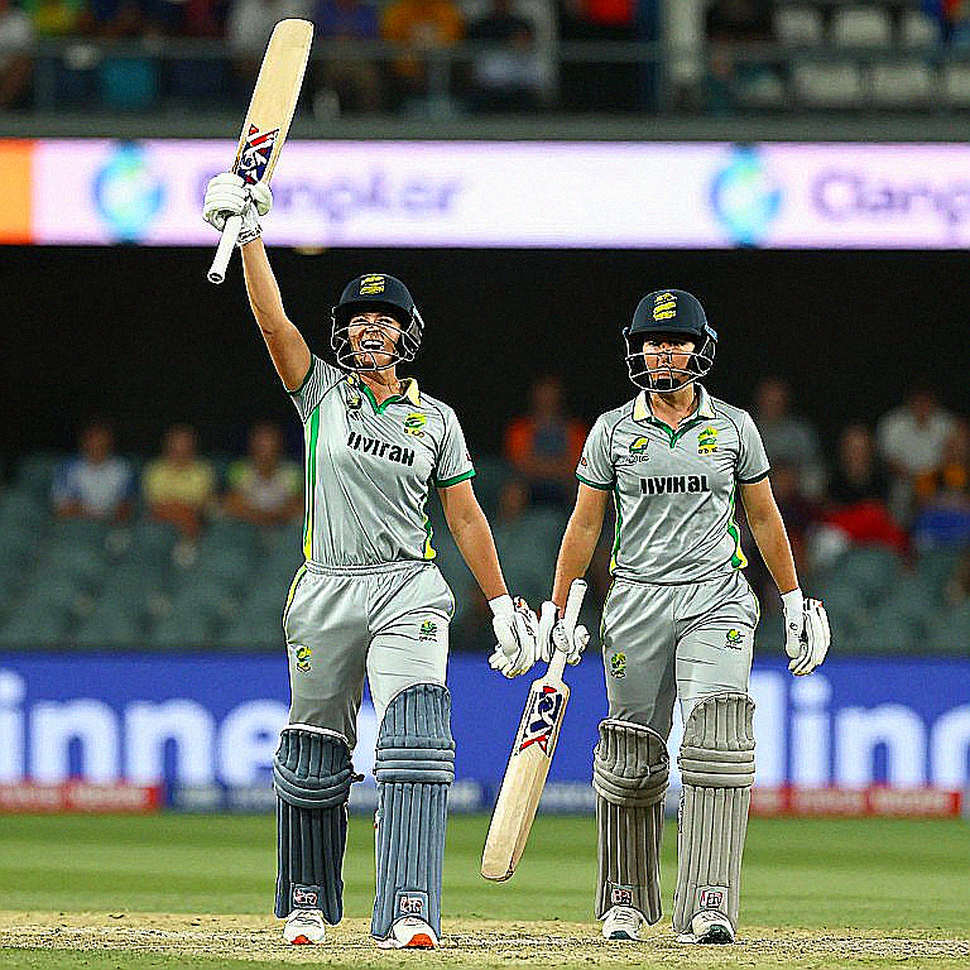
One technical detail matters here: Wellington has two venues — the Basin Reserve and Sky Stadium — and they behave very differently with wind and bounce. The available information does not confirm which ground hosted the match. Without that basic fact, a claim about 'a century in difficult conditions' remains unfinished.
The career line: verification required
The stated career numbers are 71 T20 matches, 2,267 runs, an average of 33.33, a strike rate of 196, and four centuries. Each of these needs to be re-checked. An average of 33.33 and a strike rate of 196 are not mathematically incompatible — they imply roughly 1,150 balls faced and about 68 dismissals — but the real question is whether 196 is a career figure or a recent-window figure. The same question applies to '71 T20s': is that T20Is only, or all T20 cricket? At 26, having 71 T20I caps and not a single ODI or Test cap is an unusual combination, and it needs to be confirmed against official ICC and ESPNcricinfo records. Until that verification happens, any conclusion built on 'sustained performance' should be treated as provisional.
The technical claim: expert opinion, not data
Former Pakistan captain Salman Butt says this is calculated risk rather than slogging. New Zealand's Daryl Mitchell said some of the shots were world-class. Both statements are respectable and well-timed, but both are statements, not data. What could have substantiated the claim is a distribution of dismissal modes — how often he is bowled or LBW playing across the line versus caught in the deep — and a scoring split by delivery type: short ball, full ball, spin, left-arm pace. None of that is available. It is also worth noting that while Salman Butt's technical opinion is legitimate in cricketing terms, when a piece builds its central technical case on a former captain with a contested career, source quality becomes a fair question.
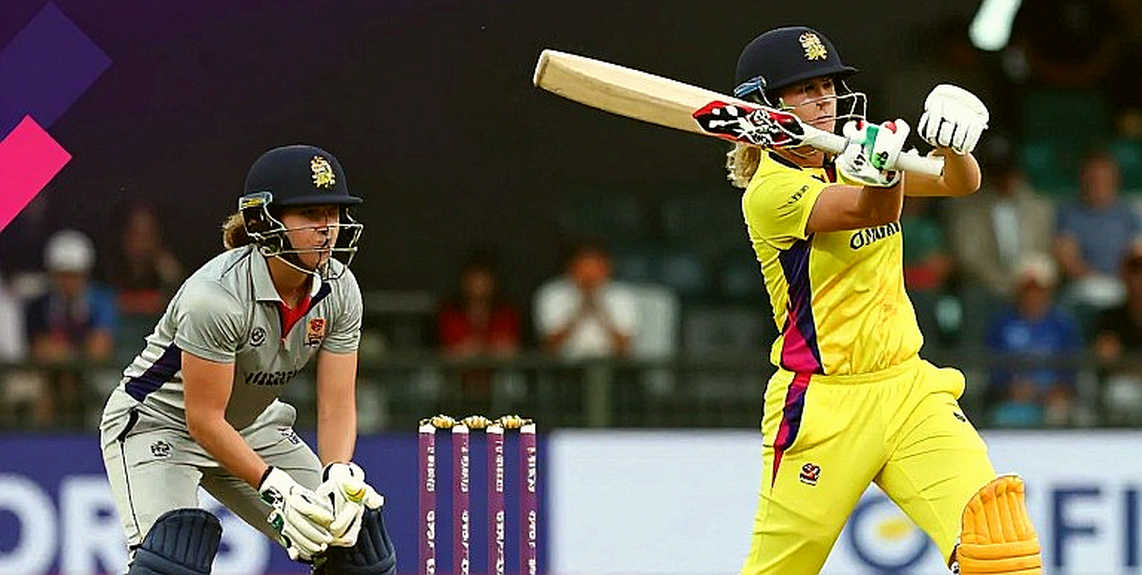
What the No. 1 ranking actually means
Abhishek has regained the top spot in the ICC T20I batting rankings. That is an achievement, not an illusion. But the mechanics of the ranking need to be understood: it is a weighted system that leans heavily on recent performance and adjusts for opposition strength and match volume. A single strong series can put a player at the top without a multi-year body of work behind it. The ranking is evidence of recent form, not of sustained dominance. Where the article treats the ranking as a crown, it also treats it as a guarantee — and that is the fundamental difference.
India's top order: a surplus problem, not a talent problem
India's T20I top order is widely regarded as the deepest in the world. Sanju Samson and Vaibhav Suryavanshi are competitors for the same slot. Sharda Ugra's line is the most revealing part of the piece: everyone thought Vaibhav was going to be the next superstar, but Abhishek came and snatched that place. That describes a media market, not a cricket team. There is one superstar slot, and it is taken by whoever generated the most recent headlines. When the world's No. 1 ranked batter is described as fighting for his place, it means the constraint is selection policy, not the supply of talent.
IPL and brand value: a price running ahead of the sport
The move from Delhi Capitals to Sunrisers Hyderabad is framed as a redemption arc. But there are no before-and-after numbers, no strike-rate comparison, no measure of a role change. What is measurable is this: his opening partnership with Travis Head inflates the powerplay run rate — a real, quantifiable and highly prized T20 skill. But that is the value of a role, not proof of a format-transcending game. And this is where the article's biggest blind spot sits: IPL conditions — flat surfaces, short boundaries, franchise-optimised roles — are systematically more batting-friendly than overseas T20I conditions. That is precisely how 'flat-track' reputations are manufactured.
Meanwhile, the final sections read more like brand copy than a sports report — deal after deal with one organisation or another, one of the most marketable faces of India's new generation. One sentence in particular reveals that the author felt the need to insist that his real identity remains his bat, not off-field glamour. That sentence gets written where the trend looks to be running the other way.
'Next idol' — the biggest risk of all
The article places him inside the Gavaskar-to-Tendulkar-to-Kohli-to-Rohit lineage. There is no heavier comparison framework in Indian cricket, and its historical fulfilment rate is very poor. The list of players labelled 'the next Tendulkar' is long and the success rate is very low. It is true that Rohit and Virat are in the closing phase of their careers, but one innings and one ranking do not settle who succeeds them. That is a selection question, and Samson and Suryavanshi remain live claimants.
For comparison, the most balanced assessment inside the article is Daryl Mitchell's: some of his shots were world-class, well played. It is a bounded, time-stamped judgement confined to that innings. Phrases like 'superstar of the new generation' or 'he kicked the door down' are unbounded. The voices making the smallest claims are the most credible ones in the piece.
The unresolved format question
The most important fact is also the one the article skips past most lightly: at 26, he has not played a single ODI or Test. Which means every data point comes from the format with the shortest feedback loop and the widest variance. Mohammad Kaif publicly demanding an ODI chance shows the debate is live, not settled. And BCCI's central contract structure rewards multi-format performance — a T20I-only specialist sits structurally lower in the contract hierarchy regardless of ranking. This risk is not about performance; it is about the shape of a career.
A note on credibility
It should also be said plainly that there is no betting signal, no suspicion of corruption, no selection controversy and no rules violation anywhere in this story. There is no integrity flag. What exists is a basic reporting gap: the result, the toss, the pitch, the quality of the opposition bowling and the match conditions — none of it is disclosed.
So what is the conclusion?
The innings was genuinely special. 113 off 38 balls on foreign soil is not a small thing, and it is a real argument in his favour that the article under-uses. But it does not prove the 'flat-track bully' debate is over. That debate has been postponed, not settled. Settling it requires comparative data on scoring rates and dismissal modes on seaming versus flat surfaces, separate home and away records, and a record against the short ball and left-arm pace. Until that arrives, the real story is not that he silenced his critics. The real story is that India has produced a world-class T20 powerplay asset whose multi-format future is entirely unresolved — and whose market price is already running ahead of that resolution.
The next three to five innings, especially on surfaces where the ball does something, will give the actual answer. Until then, treat the numbers as numbers, and the crown as a crown.